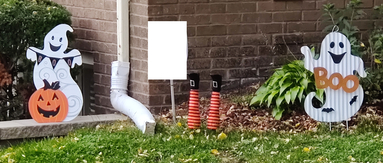
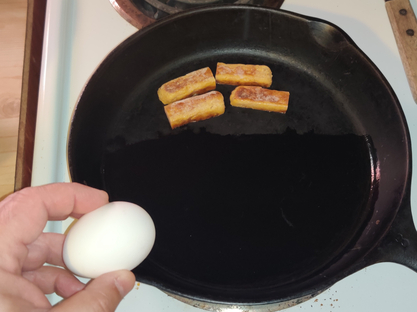
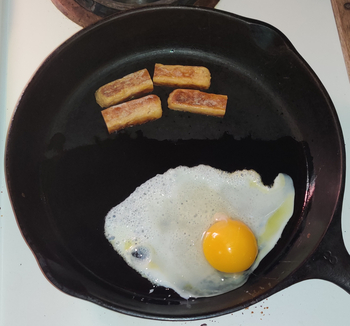
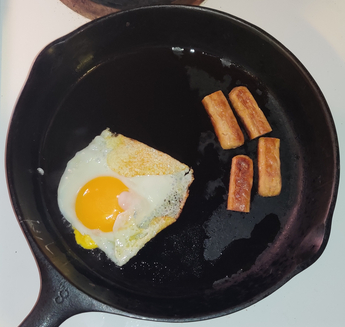
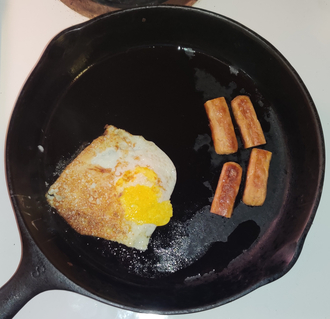
I love halloween, and for over twenty years, I have been serving candies to the local ghosties and ghoulies.
Over the years, I have been trying to do my part to make my street a destination for ghosties and ghoulies, including marquis and costumes.
Over the past few years, inflatable decorations have become the rage in my area, and I’m no exception in having fallen for their charms.
This year, things on my street have gone into overdrive; maybe some people have been organizing with each other unbeknownst to me, and maybe the pandemic has had people wanting to do *anything* to raise spirits, no pun intended.
The first house to start decorating for Halloween started, best I could tell, on the last weekend of September. As of mid October, there are fourteen of the twenty two houses on the two block stretch I can see from my house (however, there is another block of street beyond my view, with some decorations too!)
I have taken pictures for your viewing pleasure:
This is the furthest house I can just see from home, and they are also the most decorated!
Most decorated house
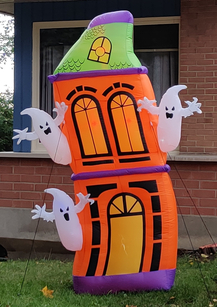
This haunted house is easily visible from my house, despite being at the second furthest house from me.
Very visible haunted house decoration
The inflatables in this house have flickering lights, as well as other decorations on the other side of the house.
Inflatable decorations with flickering lights
More decorations at the same house
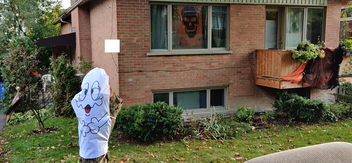
The ghost on this lawn is actually covering an old tree stump; there are also other decorations at the door on the side of the house, and in the windows out front.
Ghost covering an old tree stump
Here is another house needing two pictures for their decorations:
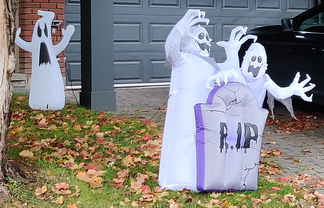
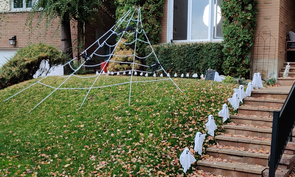
Ghosts up the stairs and a large spider’s web
Gravestones and skeletons
This is the house had the first decorations this year, first set up over the last weekend of September:
First house decorated for Halloween this year
At this house, Dracula is ready to welcome ghosties and ghoulies!
Dracula ready to welcome ghosties and ghoulies
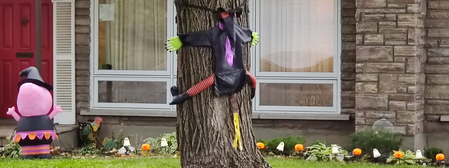
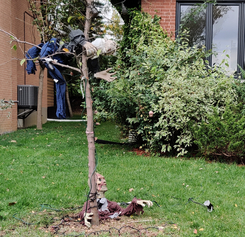
This house has a piglet dressed as a witch inflatable, and a witch who can’t fly too well on her broom!
Piglet witch, and witch in tree
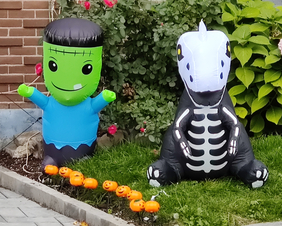
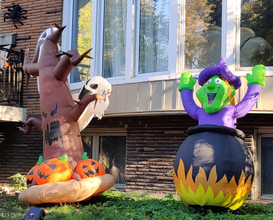
Here’s a baby Frankenstein, and an x-ray dinosaur!
Baby Frankenstein and x-ray dinosaur
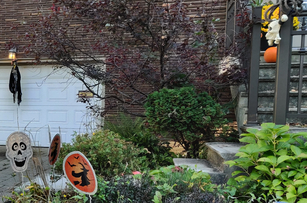
I’m not sure is this a Halloween decoration, or just a cute fall / harvest themed garden decoration.
Garden decoration
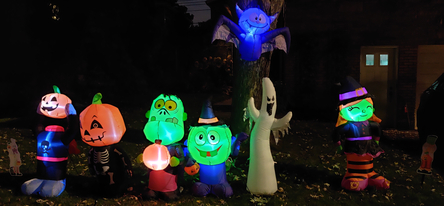
Here is the lawn at my house — a ghost, a headless person holding up a pumpkin, an x-ray pumpkin head person, a funny Frankenstein, a cute monster, another ghost, a happy witch, and a frankenstein, and — UPDATED PHOTO 20211024 — a bat in the tree. Three Four are new this year!
Decorations at my house
Decorations at my house in the dark
Here is another house with their decorations:
One of my close neighbours likes zombies:
Zombies
And, so far the last house on the street (I live on a cul-de-sac), this house has an alien visiting, and being a little confused as to whom the real locals are:
Alien
UPDATE 20211024: Another house set up their decorations this weekend, and it merits three pictures!
Inflatables at one of my neighbours
Walkway up to their door
Walkway up to the door
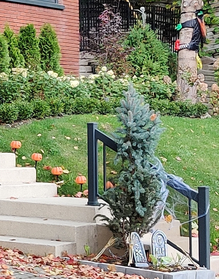
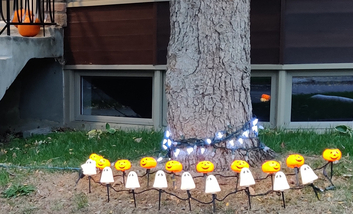
UPDATE 20211025: Another house set up their decorations this weekend! Check the little lights around the tree, and the pumpkins on the steps up to the door.
Pumpkin and ghost lights around a tree, and pumpkins on the steps up to the door
More pics will be added if, as, and when other houses are decorated.
Although over the past few weeks I have continued cooking a number of dishes from my collection of recipes, for this post, I decided to highlight another obsessive hobby of mine: Making firestarters!
I make these firestarters in such large quantities over time that I have few hard numbers quantifying “how much wax” or “how long to allow cooling” or “melt to what temperature”; it is a matter of experience and “feel”, although it is a process which could easily lend itself to measured amounts.
The process allows for me to do many of the steps below separately, as well prepare “for the next batch”.
Although I used to regularly sell these at craft fairs and flea markets, I now just liberally give them out to my neighbours at the cottage, as well as of course using them myself to light fires in the fireplace at the cottage during heating season.
Preparing the egg carton wells:
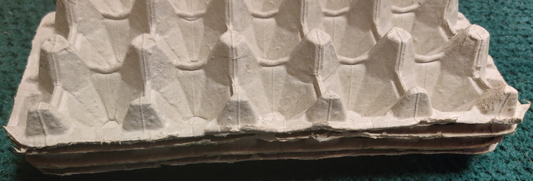
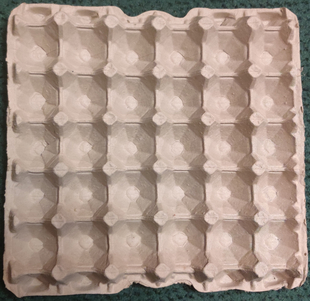
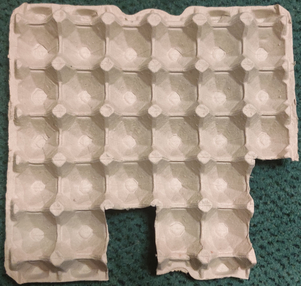
Flats from eggs sold in bulk were taken out:
Egg carton flats taken out
Egg carton flats taken out
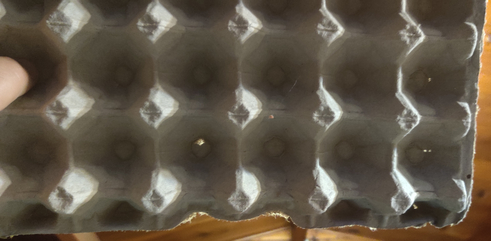
Each flat is brought up to the light and checked for holes:
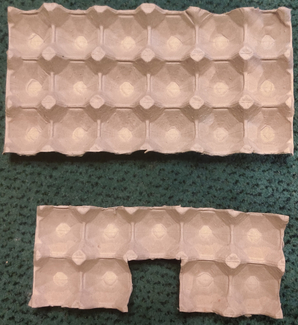
Flat checked for holes in the light. This flat has three wells with holes in them.
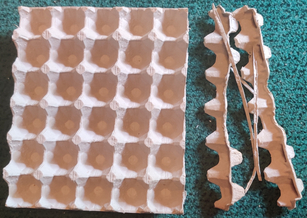
The wells with holes were cut out of the egg carton flat:
Wells with holes cut out
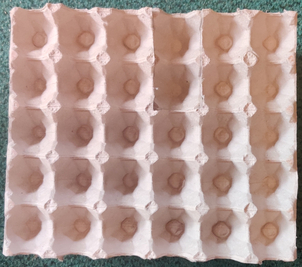
Flats were then trimmed around the edges:
Flat trimmed around the edges
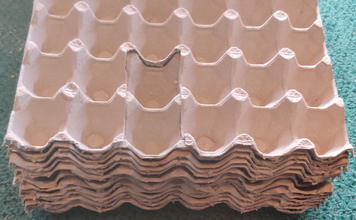
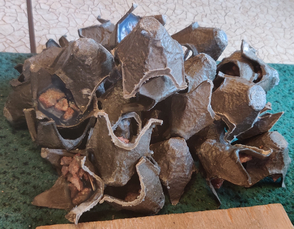
Trimmed flats are stacked together for future cutting:
Trimmed flats stacked
Trimmed flats stacked
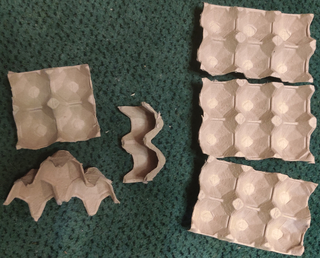
Flats were cut into pieces to be further cut:
Flat cut into pieces to be further cut into pieces
The flat pieces were again cut into manageable pieces:
Flat cut again into pieces
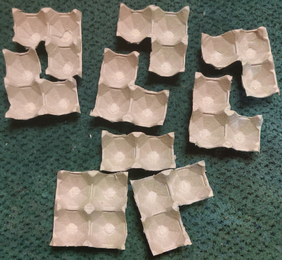
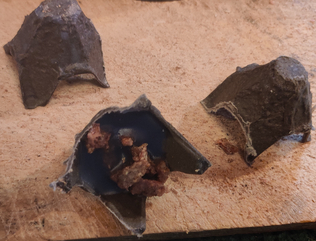
The pieces were cut into individual sets of wells of varying formats (2, 3, or 4 wells) for making the firestarters:
Flat cut into formats of 2, 3, and 4 wells
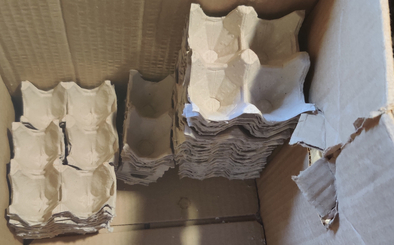
The cut wells are stored in a box:
Cut wells stored in box
Making the firestarters:
Melting the wax:
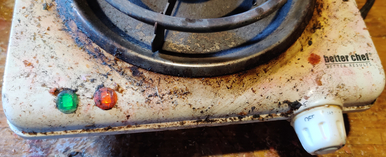
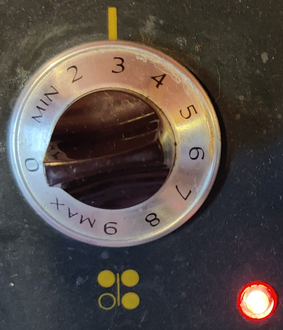
A portable electric countertop stove was turned on:
Stove turned on
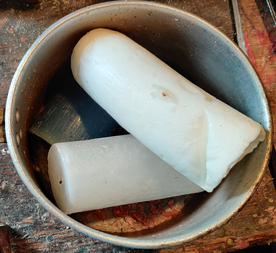
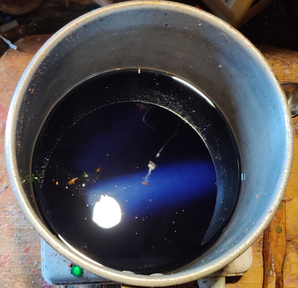
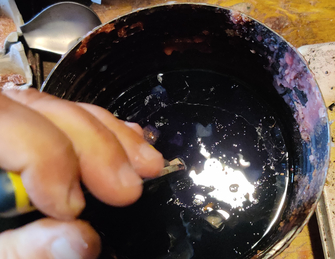
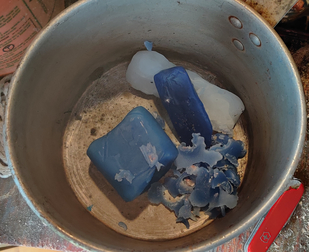
Some old candles were placed in a pot:
Old candles placed in a pot
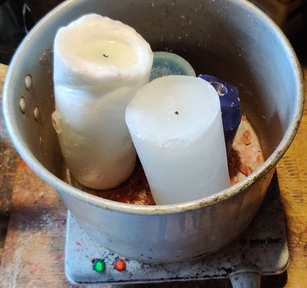
The pot of old candles was placed on the stove:
Pot of candles placed on the stove
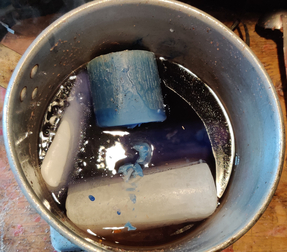
The wax was melted:
Melting wax
When “enough” wax was melted …
Melted wax
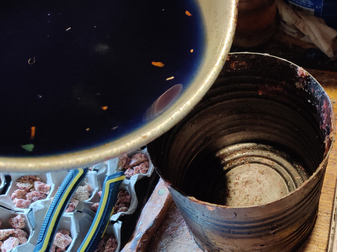
… liquid wax was poured off into a coffee can, which is a convenient size for dipping the filled egg carton wells and soaking them in wax:
Liquid wax poured into a coffee can
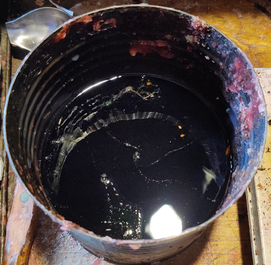
Liquid wax in coffee can
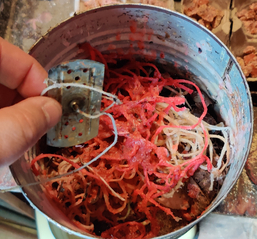
Large unmelted pieces of wax were put aside for the next batch, and some solids such as a metal wick base and a wick were transferred to another coffee can where solids from the melting of waxes is collected, to be later rendered for its wax value, and the solids burned in the fireplace:
Solids from candle meliting saved in a coffee can
Preparing the egg cartons:
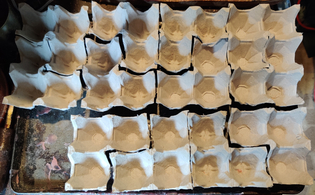
Cut egg carton wells were laid out on a tray:
Cut egg carton wells laid on a tray
Using a sawdust and wax filler:
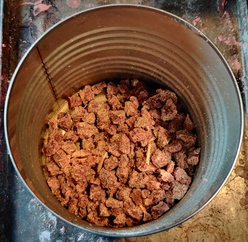
At this point, a sawdust filler is used, which I normally create after the current step; hence here, I used sawdust filler made during a previous batch. If you have not done so , see the sections (lower down) on making the sawdust and wax filler.
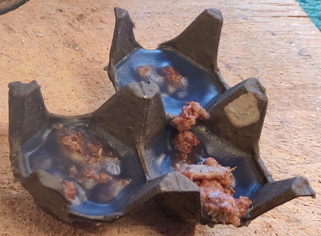
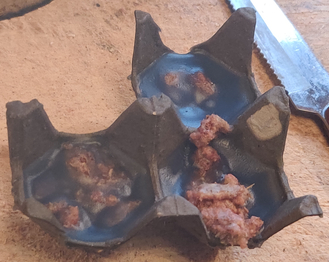
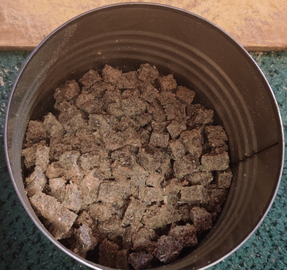
Cubes of sawdust and wax
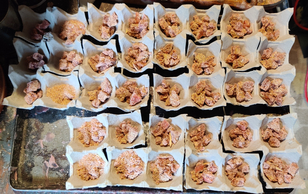
The wells of the cut egg cartons were filled with the sawdust and wax mixture:
Egg carton wells filled with sawdust and wax mix
Dipping the filled egg carton wells in the melted wax:
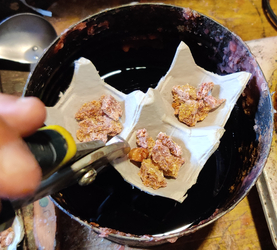
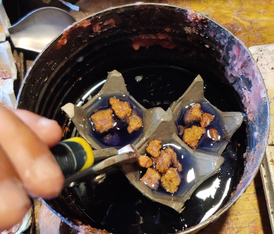
A grouping of egg carton wells filled with sawdust and wax mix was picked up with a pair of pliers, and brought over to the coffee can of liquid wax:
Egg carton wells with sawdust and wax picked up with pliers, brought to coffee can of liquid wax
The wells were dipped in the liquid wax:
Wells dipped in liquid wax
The dipped wells were lifted out of the liquid wax:
Dipped wells lifted out of liquid wax
The dipped well was returned to the tray:
Dipped well returned to tray
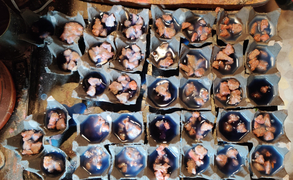
The rest of the wells were dipped in the liquid wax:
All wells dipped in liquid wax
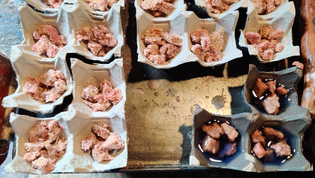
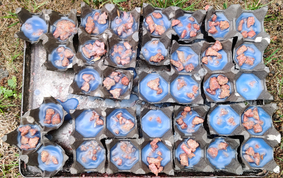
The tray of firestarters was placed on the lawn outside my shed where there was a light breeze to help cool the firestarters:
Firestarters placed in the breeze to cool
Trimming the firestarters:
The mostly cooled firestarters were picked up, in order to trim the solidified wax from the bottoms:
Mostly cooled firestarters picked up, to trim solidified wax from bottoms
The solidified wax was trimmed off the bottoms of the firestarters:
Wax trimmed off bottoms of firestarters
The wax trimmings were placed back in the pot with the unmelted candles, to be melted during the making of a future batch of firestarters:
Wax trimmings placed in pot
Making the sawdust and wax filling:
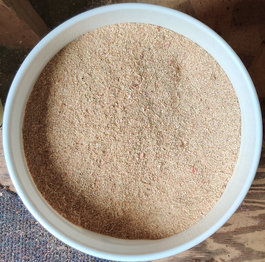
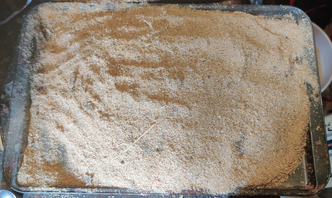
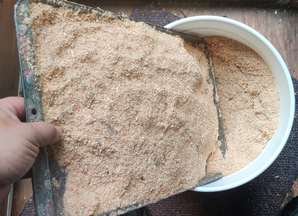
Sawdust was taken out:
Sawdust taken out
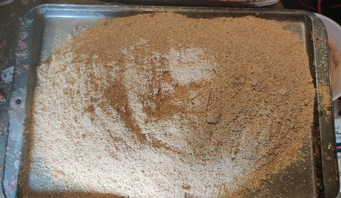
Sawdust was placed on a tray:
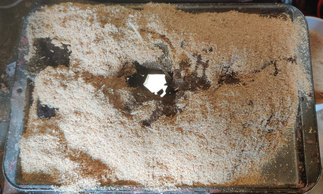
Sawdust placed on tray
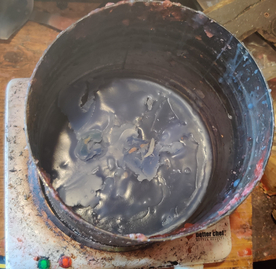
The liquid wax, which at this point had started cooling and hardening, was placed back on the stove to remelt the wax:
Melted wax placed back on stove
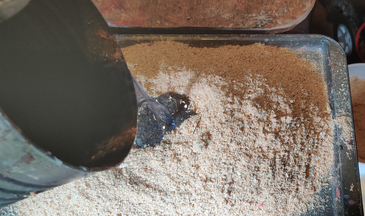
The remelted wax was slowly poured over the sawdust:
Melted wax poured over sawdust
Melted wax poured over sawdust
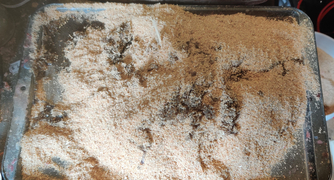
Sawdust not having absorbed any liquid wax was shifted on top of the rest with hot wax:
Sawdust covering the rest with hot wax
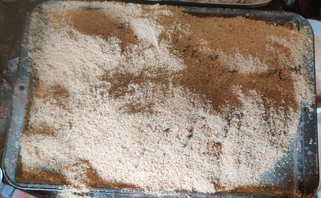
More sawdust was added to cover the wax soaked sawdust:
More sawdust added to cover the wax soaked sawdust
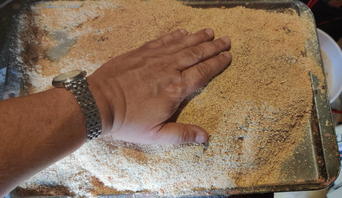
The sawdust was pressed down with my hands to spread out the hot wax:
Sawdust pressed down with my hands
The wax and sawdust were put aside in order to cool for a few hours:
Wax and sawdust allowed to cool
The rest of making the filler can be found at the end of this page, after the section on bagging the firestarters.
Cutting and trimming fireststarters:
The firestarters, now having cooled, were brought into the house, and placed on a working surface, a piece of plywood board on the floor:
Firestarters placed on a cutting surface
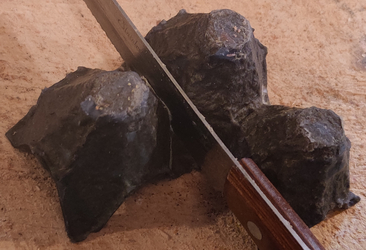
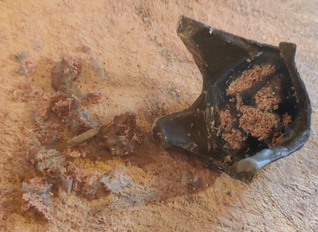
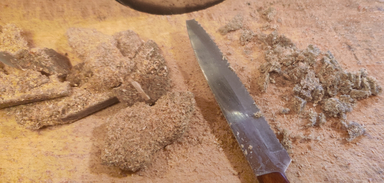
A knife with a serrated blade was taken out to cut the firestarters into individual units:
Knife with serrated blade taken out to cut firestarters into individual units
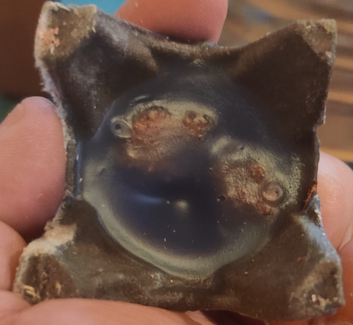
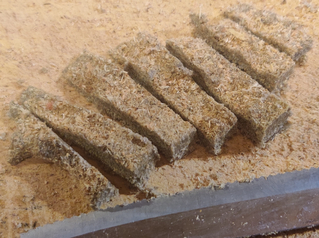
The firestarters were cut into individual units:
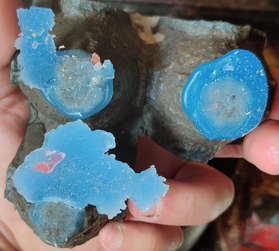
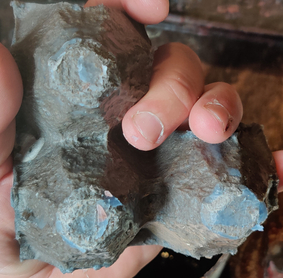
Firestarters cut into individual units
Firestarters cut into individual units
Firestarters cut into individual units
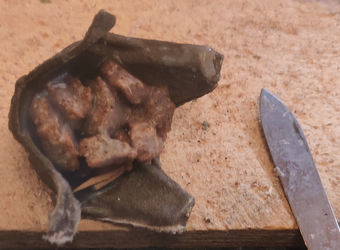
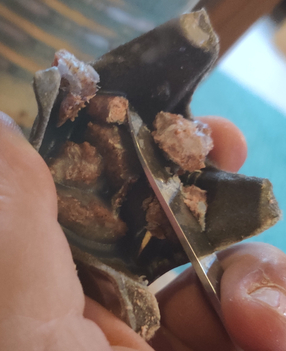
The protruding bits of sawdust and wax were trimmed with a pocket knife:
Protruding bits of sawdust and wax trimmed with pocket knife
Protruding bits of sawdust and wax trimmed with pocket knife
Protruding bits of sawdust and wax trimmed with pocket knife
Sometimes, an individual firestarter does not need to be trimmed:
Firestarter not needing to be trimmed
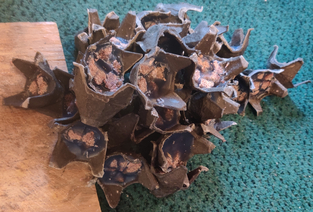
Here is the pile of trimmed firestarters:
Pile of trimmed firestarters
Trimmings from the firestarters were placed in the can, for use in a future batch of firestarters:
Trimmings placed in can, for use in a future batch of firestarters
Bagging the firestarters:
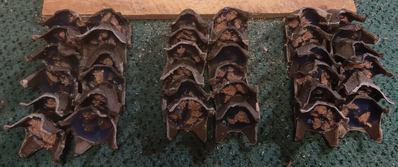
The trimmed firestarters were grouped in dozens (in this case, three dozen):
Trimmed firestarters grouped in dozens
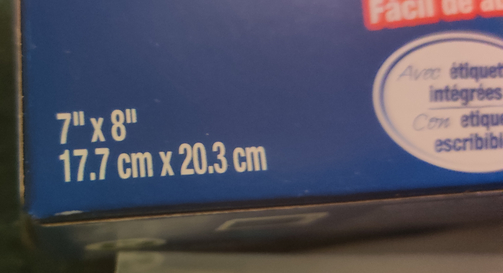
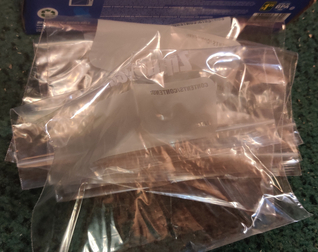
Seven inch by eight inch sealable bags were taken out:
Sealable bags taken out
Sealable bags taken out
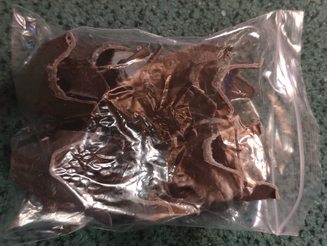
Firestarters were placed in bags, a dozen per bag:
Firestarters were placed in bag
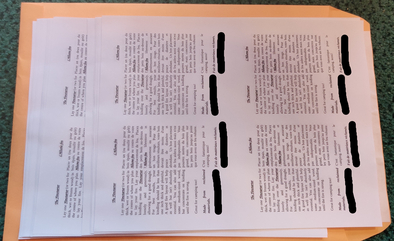
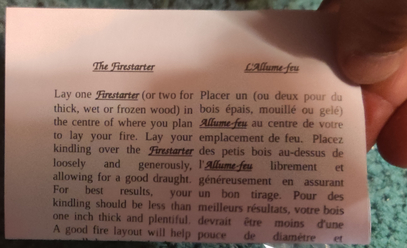
Prior to making this batch of firestarters, printed out labels were copied, four to a page (and for this post, my phone number was blacked out in the pictures):
Printed out labels, four to a page
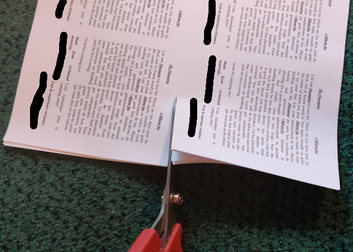
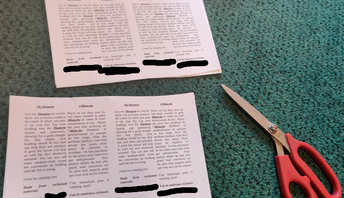
Labels were cut:
Labels cut
Labels cut
Labels cut
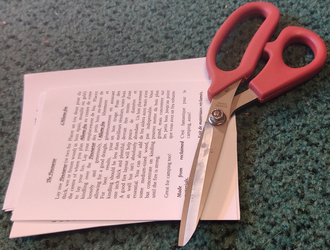
Labels were folded over (note that I live in a predominantly French-speaking area, hence the text is in both English and French):
Label folded over
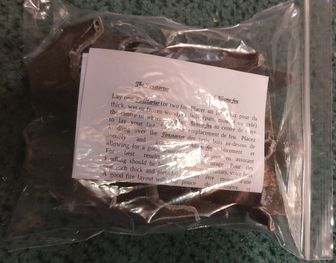
A folded over label was placed in each bag:
Folded over label placed in bag
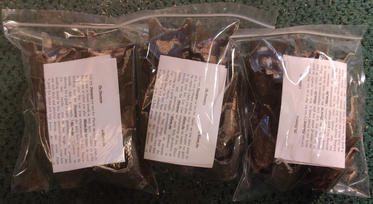
And here are the three bags of firestarters made in this batch, ready to give away or sell:
Three bags of firestarters
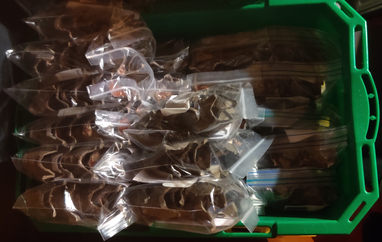
The bags of firestarters were placed in a plastic crate with other bags of firestarters:
Bags of firestarters placed in a crate with other bags of firestarters
Back to making the sawdust filling:
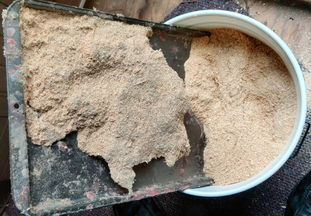
A while later, when the sawdust and wax mix had completely cooled, excess sawdust on the tray was transferred back into the bucket of sawdust:
Loose sawdust transferred back to bucket
Loose sawdust transferred back to bucket
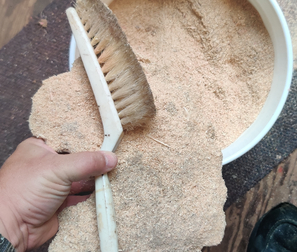
Excess sawdust was brushed off of the cooled and solidified sawdust and wax mix:
Excess sawdust brushed off cooled and solidified sawdust and wax mix
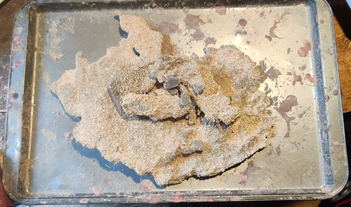
The cooled and solidified sawdust and wax mix was brought to my work surface:
Cooled and solidified sawdust and wax mix brought to work surface
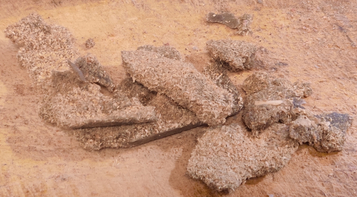
Some of the pieces of solidified sawdust and wax mixture were placed on the work surface to cut into smaller pieces:
Pieces of solidified sawdust and wax mixture placed on work surface
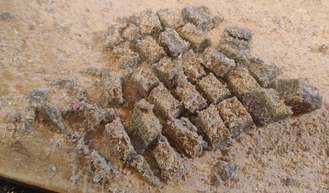
The pieces of sawdust and wax were cut into fairly small cubes (about half an inch) :
Solidified sawdust and wax mix
Some of the sawdust and wax pieces were sliced into lengths …
Some pieces sliced into lengths
… which were then cut into about half inch cubes:
Slices of sawdust and wax cut into half inch cubes
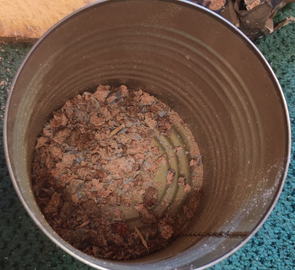
Finally, the cubes and crumbs were placed into a container, to be used as filler for a future batch of firestarters.
Cubes and crumbs placed in container
If you came from the top section to see how to make the sawdust filler, return to the section on filling the egg carton wells.
This is just a little note to mention that malak.ca has been down for the past 28 hours or so for an upgrade only planned as of a few days ago, when the site had been hanging for anywhere from a few hours to a few days, and diagnostics suggested that the hard drive may have been on its last legs.
A backup of the blog database was created, and saved on an external drive;
The external drive, used as a backup for my other computers and the location of the static parts of my website, was separated from the machine, which was then powered down;
The old hard drive was physically removed;
The SSD was connected;
Fedora 34 workstation, which had been previously downloaded and installed on a USB key, was installed on the SSD yesterday evening (I’m currently still running on F33 for my desktop, laptop, and one of my worldcommunitygrid.org nodes)
The desktop for F34, on the core 2 duo, is faster, although some of that is due to the SSD, of course;
Interesting to see the dock moved from a vertical position on the left to a horizontal position at the bottom;
I find it interesting that at bootup, the activities screen appears to be the default;
This evening, the web server was installed;
Although we had planned to use php-fpm to separate permissions, but since this is a single domain box, we used a simple virtualhost;
MariaDB was installed;
The re-registration of my redirections for things like www.malak.ca with noip.com to account for the dynamic nature of my IP address was done;
The re-registration for my Let’sEncrypt was performed;
Various linux kung-fu tricks were performed, and magical linux incantations were uttered, and the setup was complete;
The external drive was reconnected;
The blog was restored from a backup.
The system is peppy, and this blog, which is hosted on the SSD instead of the external drive (as is the rest of malak.ca), loads somewhat more quickly.
As usual, great thanks go to my brother whose herculean efforts were at the core of the setup. Thank you!
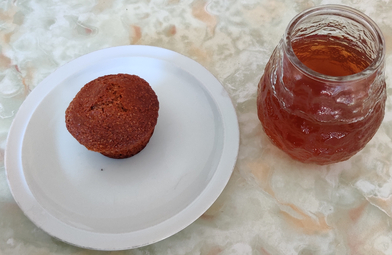
This week’s cooking projects from my collection of recipes included bran muffins for mom using her recipe, some more bread in my bread machine, chocolate buttercrunch, cooked ground beef and onions frozen in ice cube trays, my breakfast sandwiches, and the subject of this post, my version of a favourite dish my mom has made for me almost all my life, a corned beef hash using a commercial, canned, corned beef luncheon meat.
The principal differences between this version and mom’s version is that she has always used, and continues to use, commercial frozen hash brown potatoes purchased at the supermarket frozen goods section, instead of making and cooking them from fresh potatoes, and, she uses margarine instead of olive oil. She also noted the importance of not using cheap quality onion salt; my personal experiences so far in making the dish have indicated the value that onion salt itself brings to the dish. All this being said, though, my efforts have largely replicated mom’s dish to the point that my version is rather close to mom’s.
It should be noted that in this post, there is a very small number of photos which were taken either later in the evening after cooking, or the following morning, either as retakes, or to outright take some photos which I forgot to take the evening before during the cooking of the dish. Also, I made the dish at the cottage.
Making the corned beef hash:
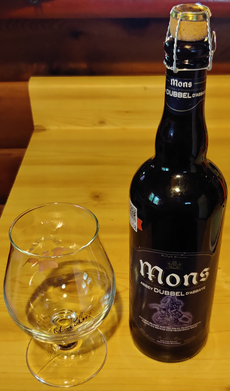
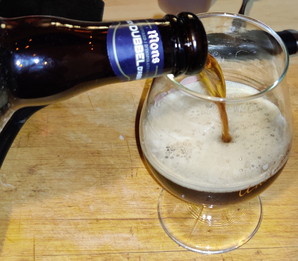
First, a nice beer was taken out — Mons Dubbel, a Belgian-style Dubbel 8% alc/vol in a 750mL bottle, from the Belgh Brasse Brewery, in Amos, Québec:
Beer taken out
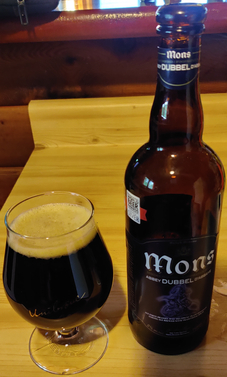
Next, the beer was poured into a glass:
Beer poured out
… and of course, right away I had to do a bit of quality control on the beer:
aaaaahhhhh ….
Now to the cooking of the corned beef hash, really, this time:
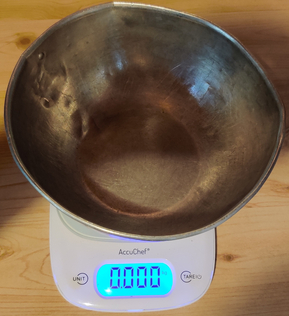
A bowl was placed on a kitchen scale, and the scale was set to zero:
Bowl placed on kitchen scale, and scale set to zero
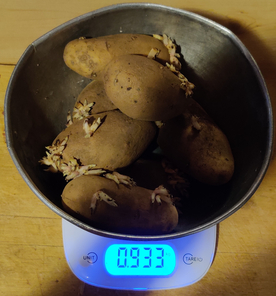
About 900 grams, or about two pounds, of potatoes were measured out in the bowl:
About 900g of potatoes measured out
Water was placed in a pot:
Fresh water added to pot
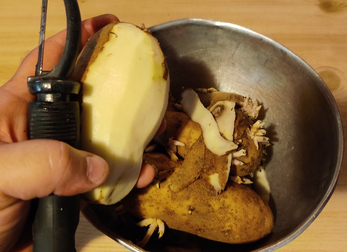
The potatoes were peeled:
Potatoes peeled
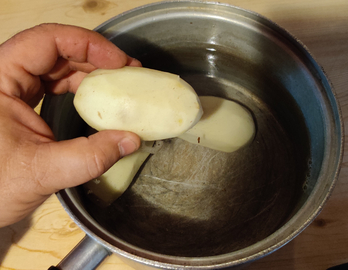
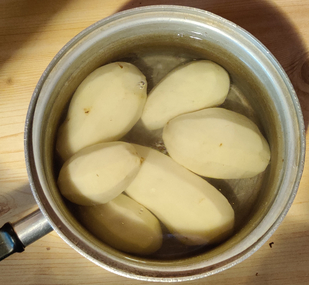
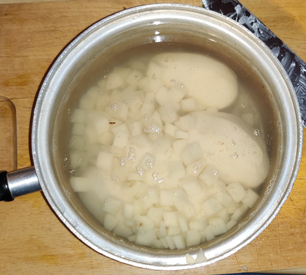
The peeled potatoes were placed in the pot of water:
Peeled potatoes placed in pot of water
Peeled potatoes placed in pot of water
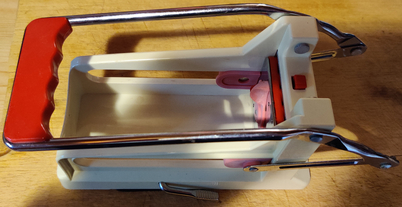
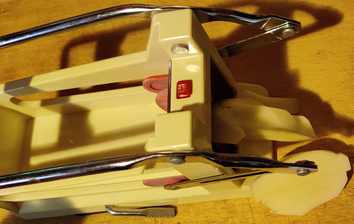
A French-fry cutter was taken out:
French-fry cutter taken out
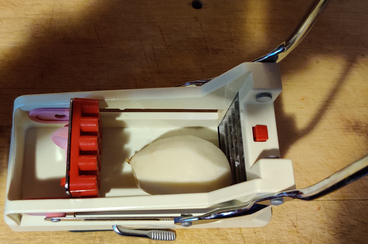
Potatoes were placed in the French-fry cutter:
Potato placed in the French-fry cutter
The potatoes were sliced with the French-fry cutter:
Potatoes sliced with the French-fry cutter
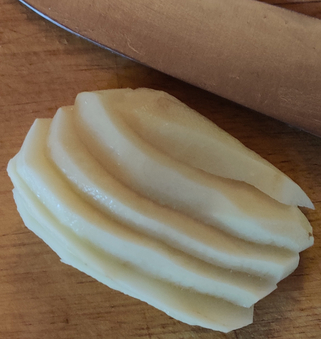
If you don’t have a French-fry cutter, you can slice the potatoes lengthwise with a kitchen knife:
Potatoes sliced lengthwise with a kitchen knife
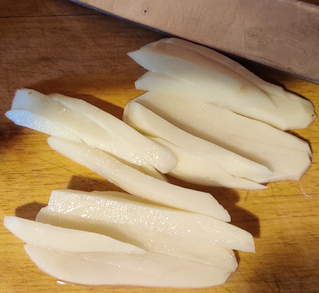
… and then slice the potatoes again lengthwise to make French fries:
Potatoes sliced lengthwise again to make French fries
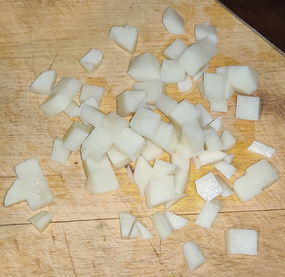
The French fries were cut into cubes, about half an inch in all dimensions:
French fries cut into half inch cubes
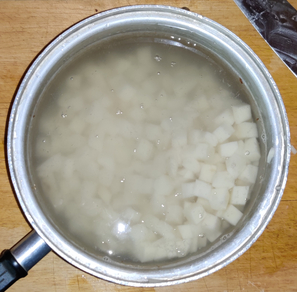
The potato cubes were placed back in the pot of water:
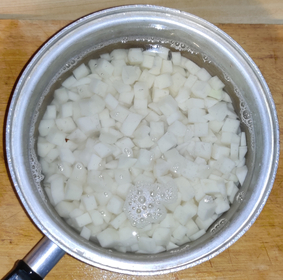
Potato cubes placed back in pot of water
Potato cubes placed back in pot of water
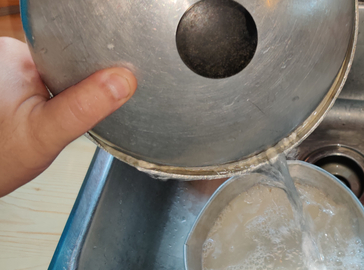
The water was drained from the potato cubes:
Potato cubes drained
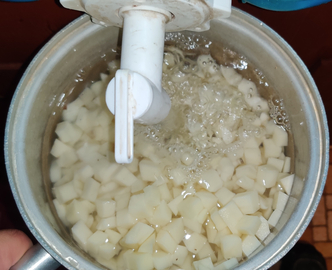
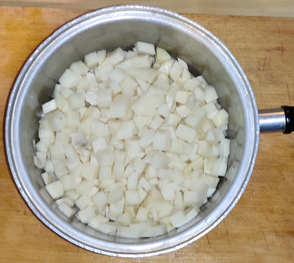
The potato cubes were again covered with fresh water, for rinsing the potatoes:
Potato cubes covered with fresh water
Potato cubes covered with fresh water
The water was again drained from the potato cubes, and the potato cubes were put aside:
Potato cubes drained again
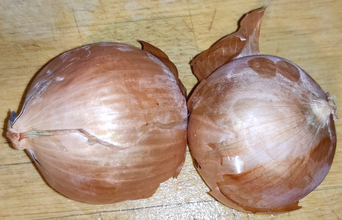
Onions were taken out:
Onions taken out
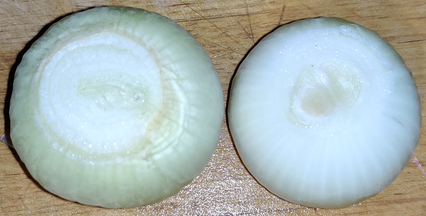
The onions were cleaned and trimmed:
Onions cleaned and trimmed
The onions were sliced into halves:
Onions sliced into halves
The onion halves were sliced into half-coins …
Onions sliced
… and then the onions were coarsely chopped:
Onions coarsely chopped
The onions were added to the potatoes:
Onions added to potatoes
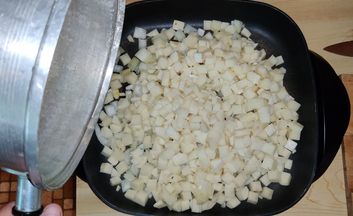
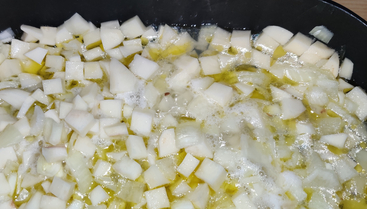
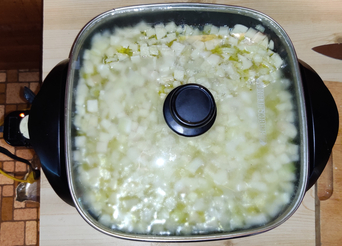
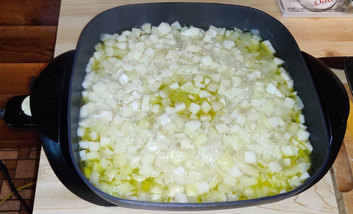
The onions and potatoes were transferred to an electric skillet:
Onions and potatoes transferred to electric skillet
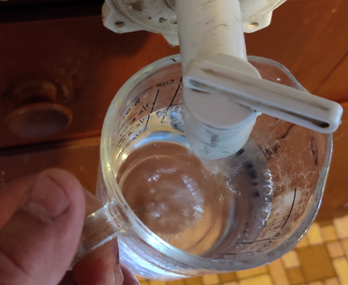
Water was measured out:
Water measured out
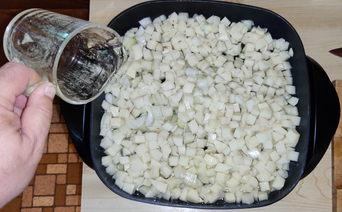
The water was transferred to the skillet with the onions and potatoes:
Water transferred to skillet with onions and potatoes
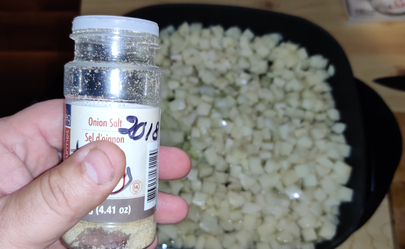
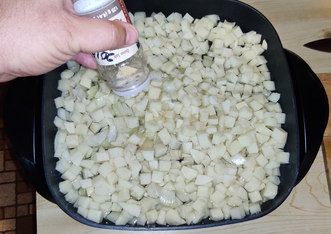
Onion salt was added to the ingredients:
Onion salt added to ingredients
Onion salt added to ingredients
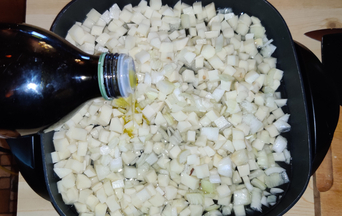
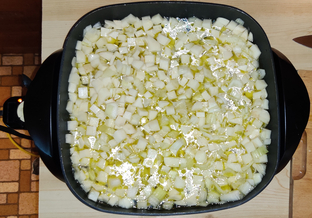
Olive oil was added to the ingredients:
Olive oil added to ingredients
Olive oil added to ingredients
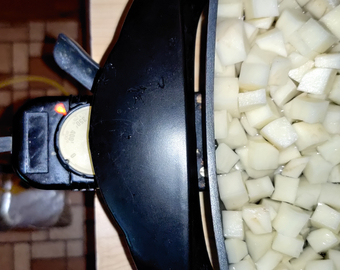
The electric griddle had been turned on by this point:
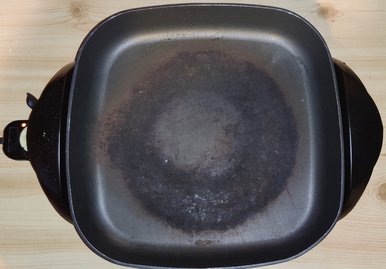
Electric skillet turned on
The water was brought to boiling:
Water brought to a boil
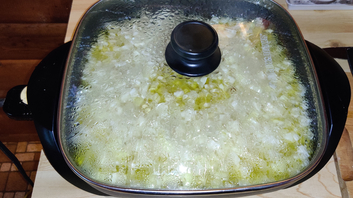
The electric skillet was covered:
Electric skillet covered
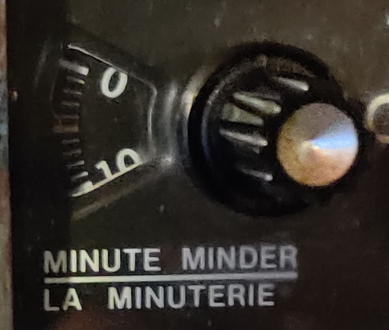
A timer was set to five minutes:
Timer set to five minutes
The potato and onion mix was boiled for five minutes:
Potatoes and onions boiled for five minutes
After five minutes, the cover was removed:
Cover removed
At this point, my beer glass was empty, so I refilled it with the rest of the yummy beer from the double bottle:
Beer glass refilled
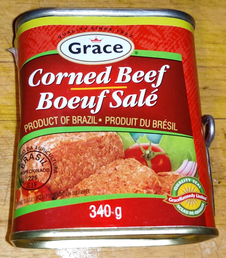
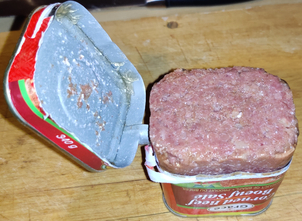
While the water fraction was boiling off in the electric skillet, a can of corned beef luncheon meat was taken out:
Corned beef taken out
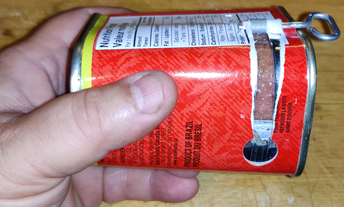
The can of corned beef was opened:
Can of corned beef opened
Can of corned beef opened
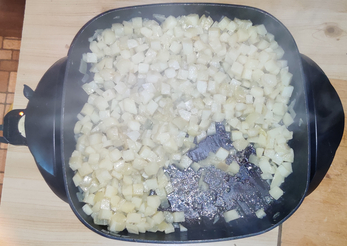
After a few minutes, the water fraction had begun to boil off, and the potatoes and onions began to fry:
Water fraction boiled off
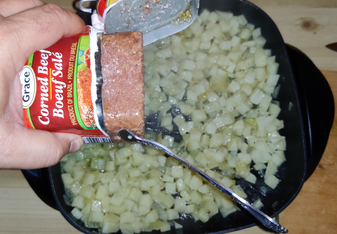
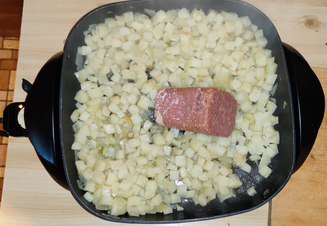
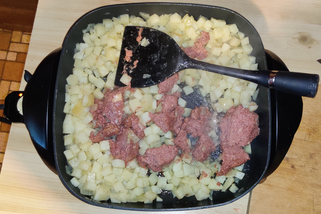
The corned beef was added to the frying potatoes and onions:
Corned beef added to frying potatoes and onions
Corned beef added to frying potatoes and onions
The corned beef was broken up with a spatula / egg flipper:
Corned beef broken up with a spatula / egg flipper
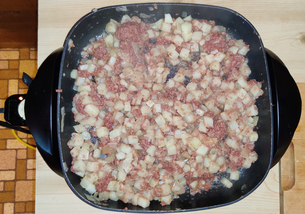
The corned beef, potatoes, and onions were mixed together:
Corned beef broken up and mixed with the potatoes and onions
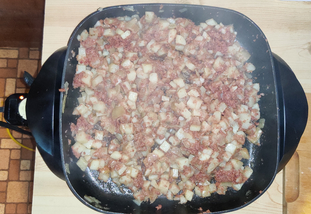
The corned beef hash continued to be fried and mixed:
Corned beef hash continuing to be fried and mixed
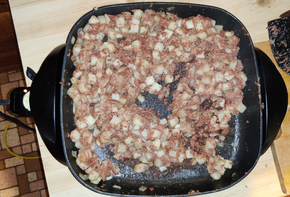
The corned beef hash was just about ready:
The corned beef hash just about ready
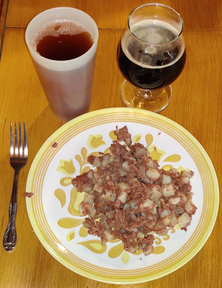
Once the potatoes began browning, a yummy supper was served on a plate, while the rest was placed in a container to freeze and have a lunch:
This past week was again a busy week with no cooking projects from my collection of recipes; however, I took advantage of this past weekend to both develop my version of a favourite dish my mom continues to this day to make for me, a corned beef hash, but for which, strictly speaking, she doesn’t have a formal recipe, and, prepare a future post on firestarters. 🙂
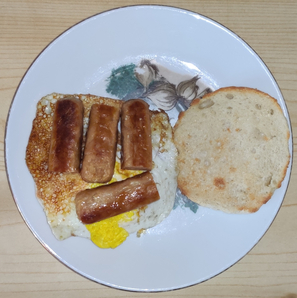
I am therefore posting the photos I’d taken of cooking sausages a few weeks ago at the cottage and which I’d kept in reserve. The subject of cooking sausages would normally not qualify for a post in this cooking series, since I am “only” highlighting the cooking of (admittedly somewhat large quantities of) commercially prepared breakfast sausages — for which I of course do not have a recipe — as opposed to highlighting a non-existent hypothetical recipe for making sausage from scratch. However, I am including this post since several of my recipes call for cooked breakfast sausages, such as my stuffed potato skins, my breakfast sandwiches, and my english muffin breakfast sandwiches.
Note that these photos were taken in the month of May 2021, at the cottage, not this past weekend.
Cooking the sausages:
First, an electric skillet was taken out:
Electric skillet taken out
The electric skillet was turned on:
Electric skillet on
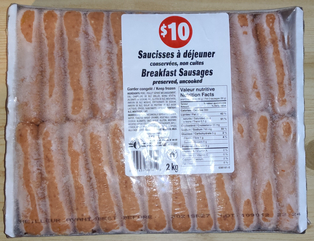
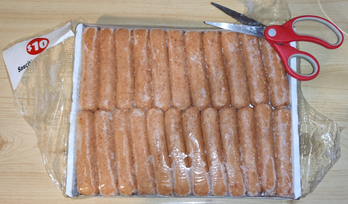
A frozen, two kilogram store-bought flat of breakfast sausages was taken out:
Package of commercial breakfast sausages taken out
The package of sausages was unsealed:
Package of sausages unsealed
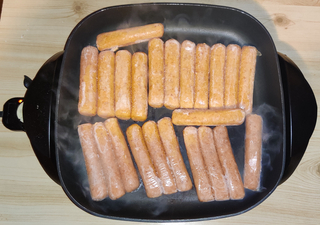
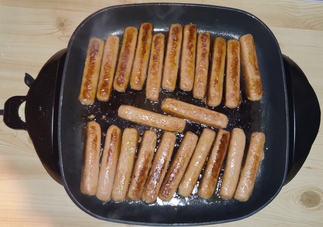
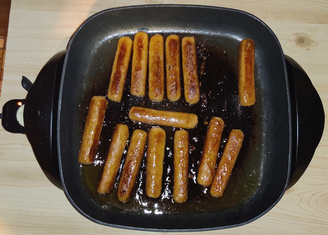
Sausages were taken out and placed in the electric skillet — in this case, half of the package, or the top layer of two layers of sausages:
Sausages placed in the electric skillet
I turned over the sausages after a few minutes:
Sausages turned after a few minutes
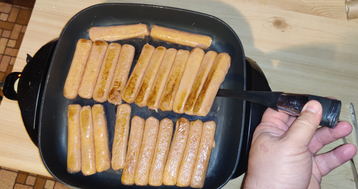
Sometimes, a flipper is needed to loosen the sausages in order to turn them over:
Using a flipper to lift and turn over sausages
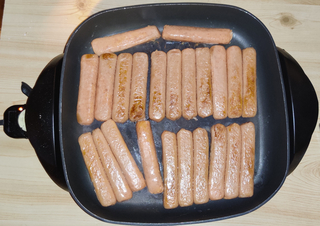
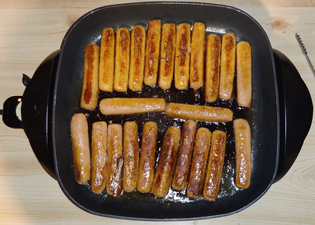
The sausages were turned again and were beginning to brown:
Sausages turned again after a few minutes
The sausages were turned yet again and continued to brown:
Sausages turned yet again after a few minutes
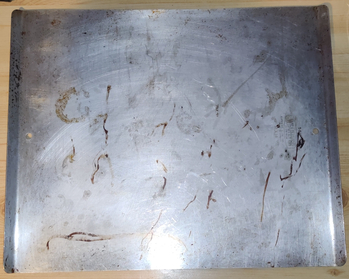
At this point, a cookie baking tray was taken out:
Cookie baking tray taking out
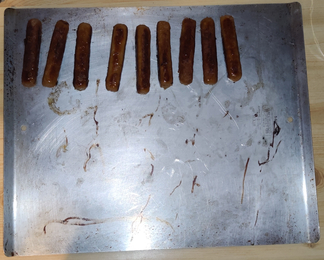
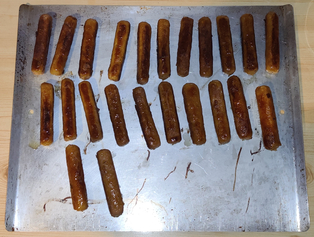
As the sausages began to be cooked, they were taken out of the electric skillet and placed on the cookie baking tray …
Cooked sausages placed on cookie baking tray
… while the rest of the sausages were kept in the skillet to continue cooking …
Finishing cooking the rest of the sausages
… and once all of the sausages were cooked, they were all placed on the cookie baking tray:
First half of the cooked sausages on the cookie baking sheet
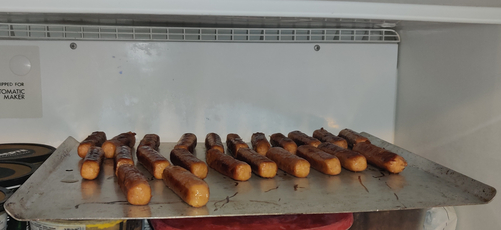
The cookie baking tray of sausages were placed in the freezer:
Cookie tray of cooked sausages placed in freezer
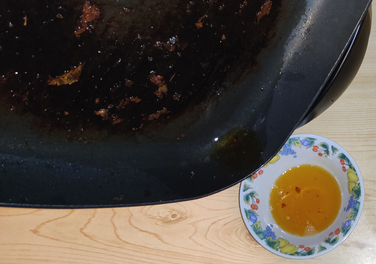
The grease was drained from the electric skillet:
Grease drained from electric skillet
The process was repeated and the rest of the package of sausages was also cooked in the skillet the same way.
The grease was allowed to cool, and when it had solidified, it was wrapped up with the other kitchen wastes from the weekend’s other cooking projects, and brought home to place in the curbside kitchen waste brown box for municipal composting:
Grease allowed to solidify
A plastic container was taken out:
Plastic container taken out
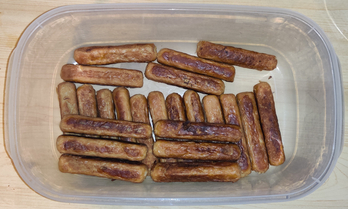
The first round of cooked sausages, now partly frozen, were placed in the plastic container, and placed back in the freezer:
Cooked sausages placed in plastic container
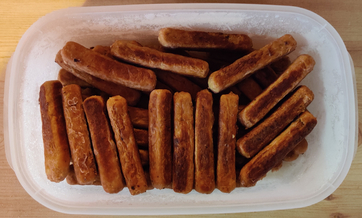
When the second half of the sausages were all cooked and frozen, they too were placed in the plastic container, and placed back in the freezer:
Cooked sausages placed in plastic container
I now have several months’ worth of yummy, cooked sausages in the freezer, and I have indeed already eaten some!
This post is a double length feature because both recipes are very similar to the point of just having different fillings. As such, the narrative shows the concurrent preparation of both recipes, just as they were actually prepared.
Making the barbecup and chicken cup fillings:
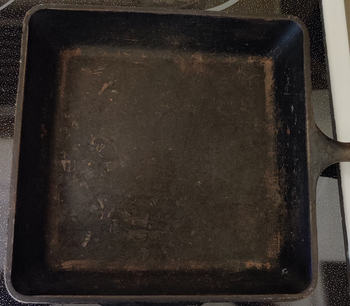
First, a cast iron skillet was taken out, and placed on the stove:
Cast iron skillet taken out and placed on stove
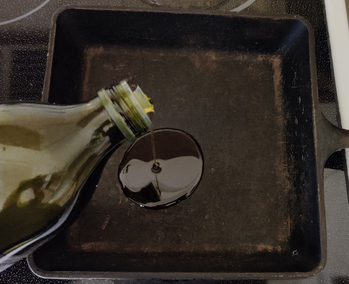
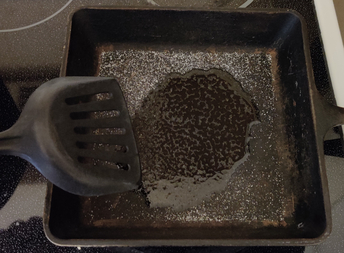
A bit of olive oil was poured in the cast iron skillet:
Olive oil poured in cast iron skillet
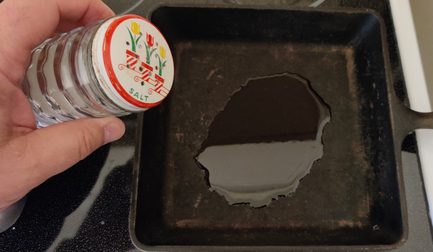
Salt was added to the cast iron skillet:
Salt added to the cast iron skillet
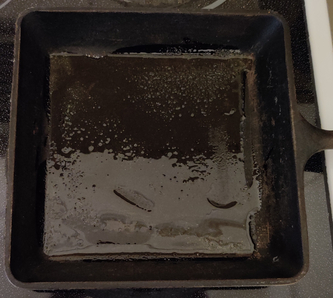
The olive oil and the salt were spread around the cast iron skillet:
Olive oil and the salt spread around the cast iron skillet
Olive oil and the salt spread around the cast iron skillet
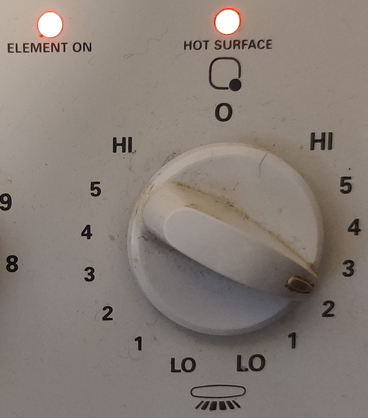
The stove was turned on:
Stove turned on
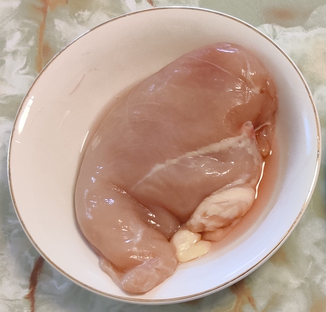
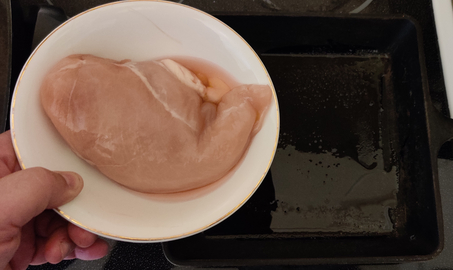
A chicken breast — this one in the 200g to 225g range — was taken out:
Chicken breast taken out
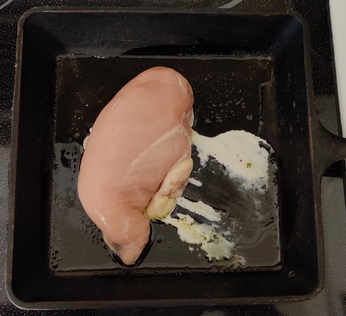
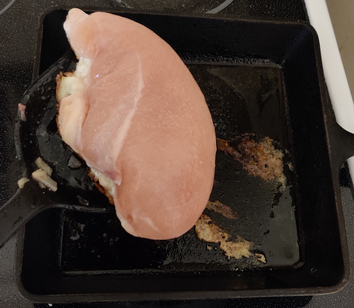
The chicken was placed in the cast iron skillet:
Chicken placed in cast iron skillet
Chicken placed in cast iron skillet
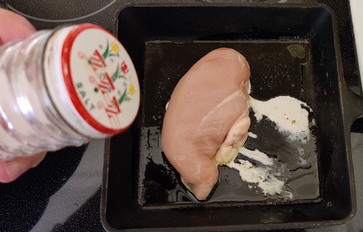
A bit more salt was added to the top of the chicken:
More salt added to chicken
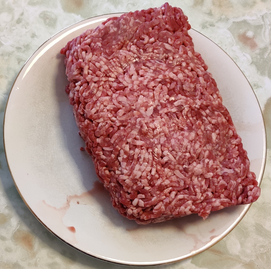
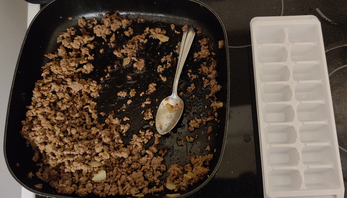
Ground beef was taken out — in this case, about two pounds of ground beef instead of only one pound of ground beef, as specified in the recipe, because in addition to making barbecups, I wanted to freeze some cooked ground beef and onions in an ice cube tray (see later):
Ground beef taken out
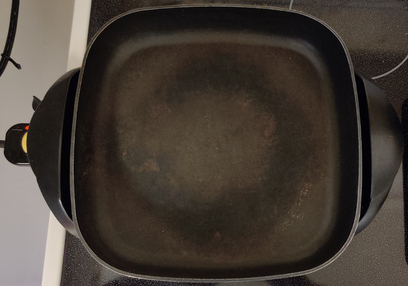
An electric skillet was taken out:
Electric skillet taken out
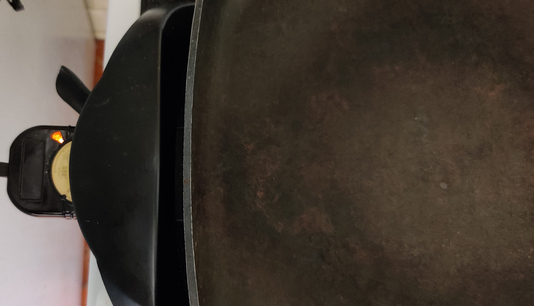
The electric skillet was turned on:
Electric skillet turned on
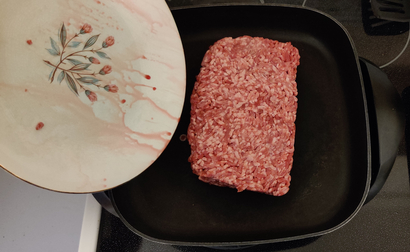
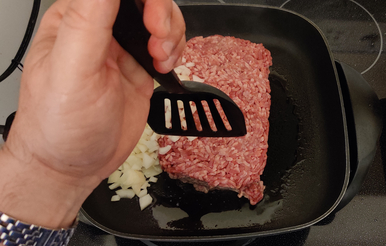
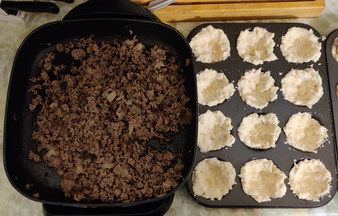
The ground beef was placed in the electric skillet:
Ground beef placed in electric skillet
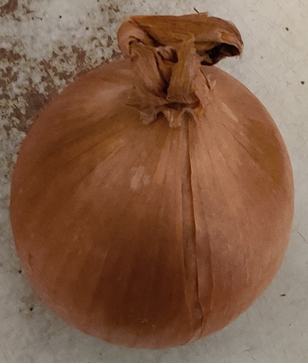
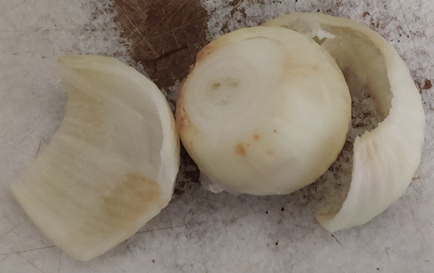
An onion was taken out:
Onion taken out
The onion was trimmed — yes, I know that this onion is definitely on the older side:
Onion taken out
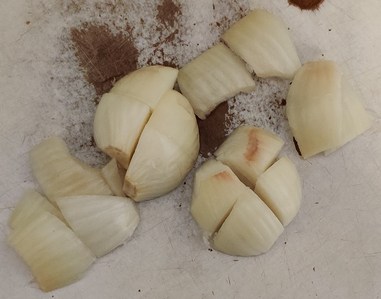
The onion was quartered:
Onion quartered
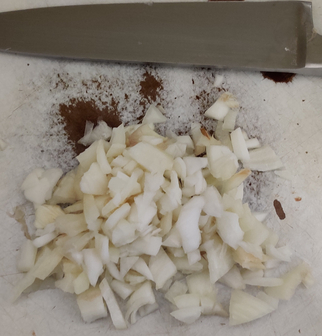
The onion was coarsely chopped:
Coarsely chopped onion
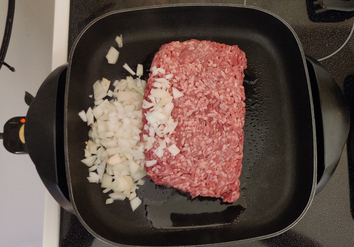
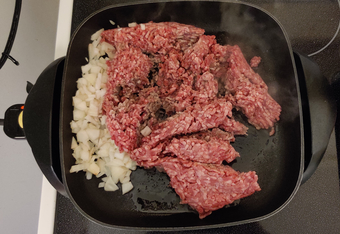
The chopped onion was added to the electric skillet with the ground beef:
Chopped onion added to electric skillet with ground beef
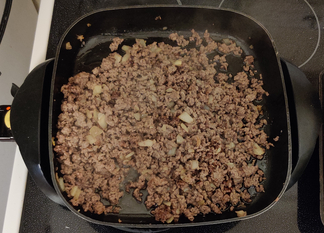
The ground beef was broken up:
Ground beef being broken up
Gound beef partly broken up
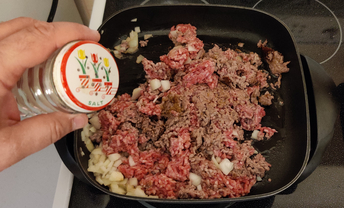
Salt was added to the ground beef and chopped onions:
Salt added to ground beef and chopped onions
The ground beef was broken up some more as it was cooking, mixing in the chopped onions and salt:
Ground beef broken up some more
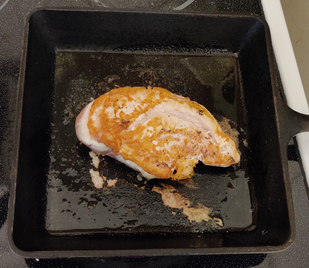
It was time to pay attention to the frying chicken, which was picked up with an egg flipper:
Chicken picked up with egg flipper
… and was turned over in the cast iron skillet:
Chicken turned over in cast iron skillet
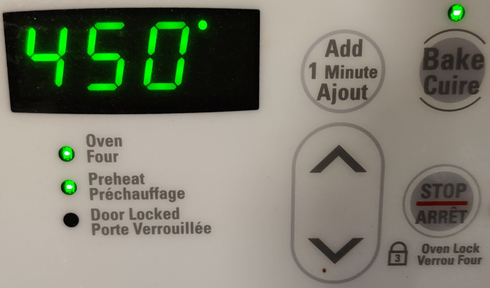
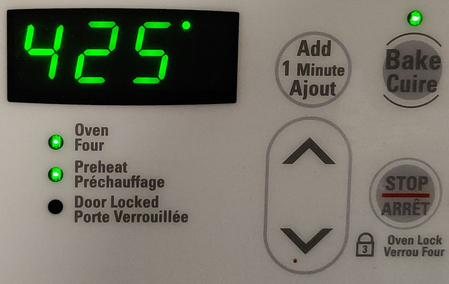
At this point, an oven rack transferred to the top slot in the oven, and the oven was preheated to 425F:
Oven preheating to 425F
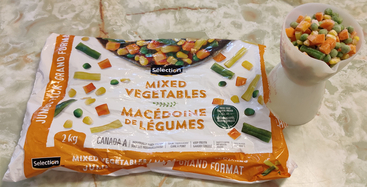
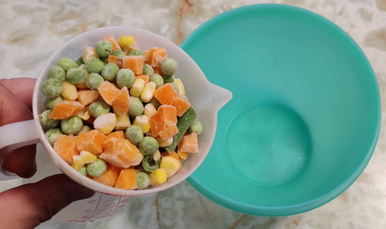
Frozen mixed vegetables were measured out:
Frozen mixed vegetables measured out
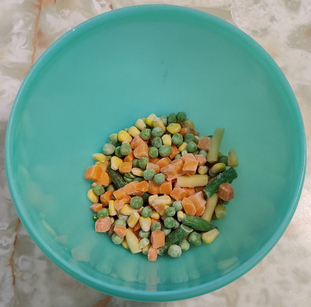
The mixed vegetables were transferred to a mixing bowl:
Mixed vegetables transferred to mixing bowl
Mixed vegetables transferred to mixing bowl
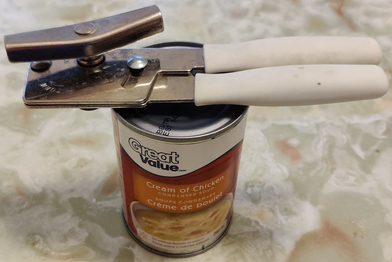
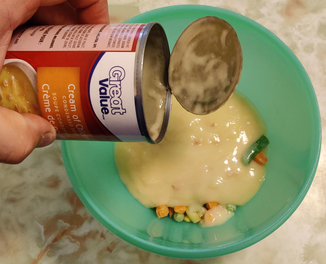
A can of condensed cream of chicken soup was taken out:
Can of condensed cream of chicken soup taken out
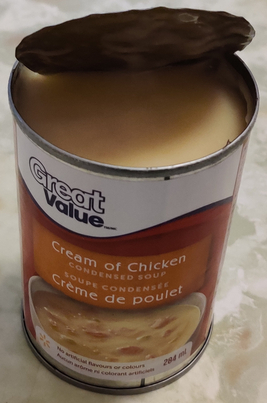
The can of condensed cream of chicken soup was opened:
Can of condensed cream of chicken soup opened
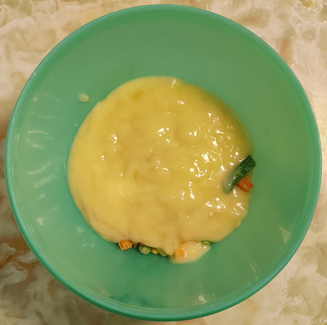
The condensed cream of chicken soup was added to the mixing bowl with the frozen mixed vegetables:
Condensed cream of chicken soup added to mixing bowl with frozen mixed vegetables
Condensed cream of chicken soup added to mixing bowl with frozen mixed vegetables
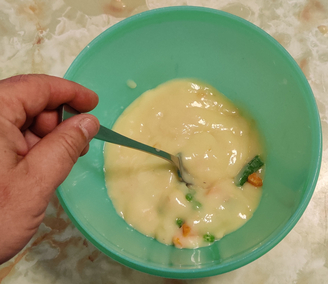
The condensed cream of chicken soup and mixed vegetables were mixed together with a fork:
Condensed cream of chicken soup and mixed vegetables mixed together with a fork
Condensed cream of chicken soup and mixed vegetables mixed together with a fork
The condensed chicken soup and mixed vegetables were put aside.
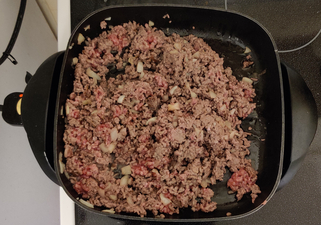
The ground beef was broken up well and well mixed with the onions, and was coming along to being fully cooked:
Ground beef and onions well mixed, and almost cooked
Once cooked, the ground beef and onions were covered and put aside.
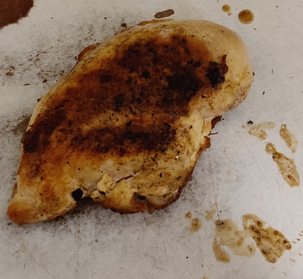
At this point, the chicken was cooked and taken out of the cast iron skillet, and placed on a cutting board:
Cooked chicken placed on cutting board
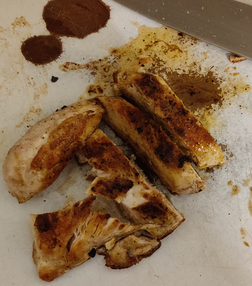
The chicken was sliced:
Sliced cooked chicken
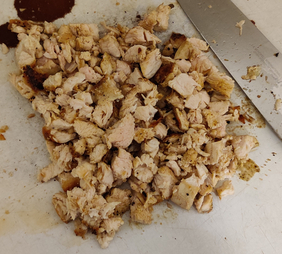
The cooked chicken was then chopped coarsely:
Coarsely chopped cooked chicken
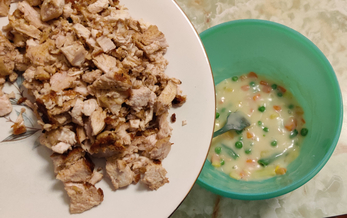
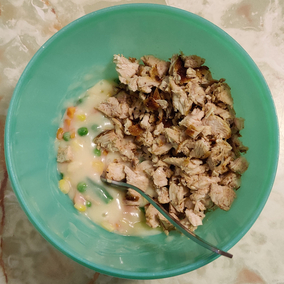
The chopped chicken was added to the mixture of condensed cream of chicken soup and mixed vegetables:
Chopped chicken added to mixture of condensed cream of chicken soup and mixed vegetables
Chopped chicken added to mixture of condensed cream of chicken soup and mixed vegetables
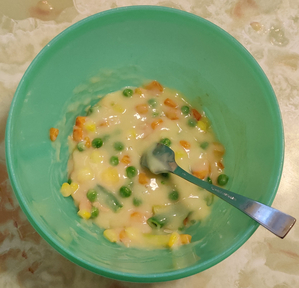
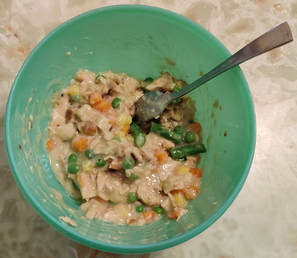
The chopped cooked chicken and mixture of condensed cream of chicken soup and mixed vegetables were all mixed together again with a fork:
Chopped cooked chicken and mixture of condensed cream of chicken soup and mixed vegetables all mixed together with fork
The chicken cup filling was put aside.
Making the biscuit dough cup part:
I was taught that the base recipe I use for the biscuit dough does not double well, so I started off making the dough for one of the recipe’s worth, and then repeated the process afterwards for the second recipe’s worth.
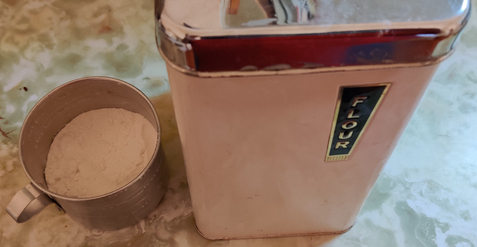
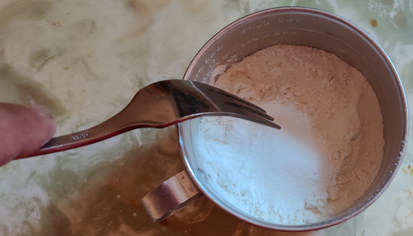
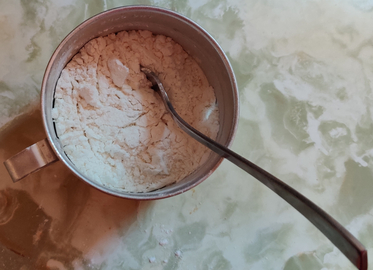
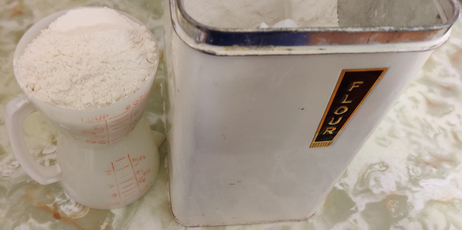
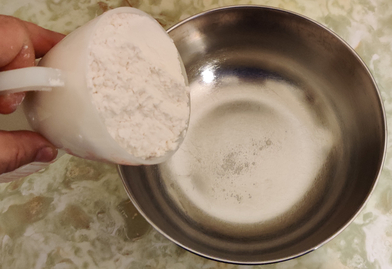
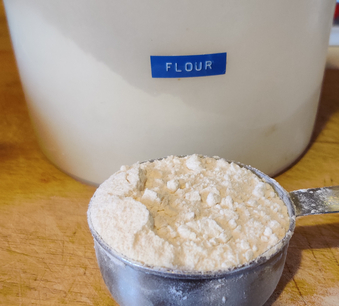
The flour was measured out:
Flour measured out
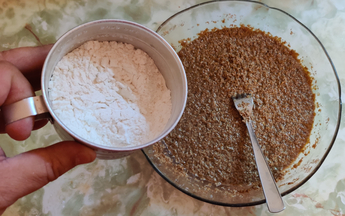
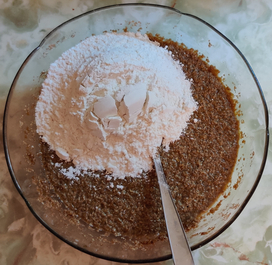
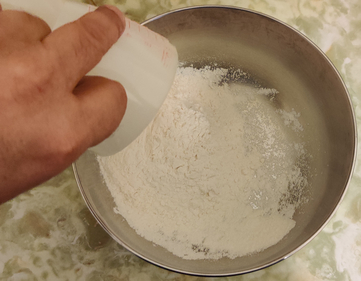
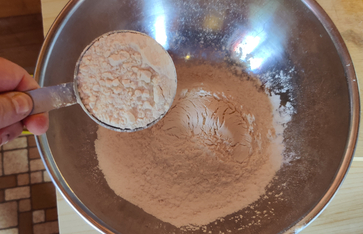
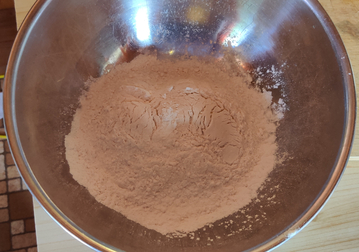
The flour was transferred to a mixing bowl:
Flour transferred to mixing bowl
Flour transferred to mixing bowl
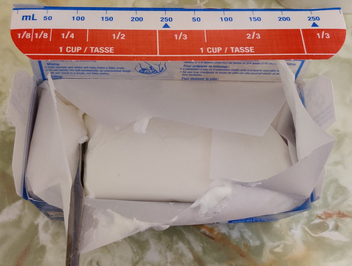
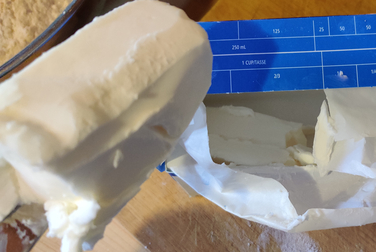
Shortening was measured out:
Shortening measured out
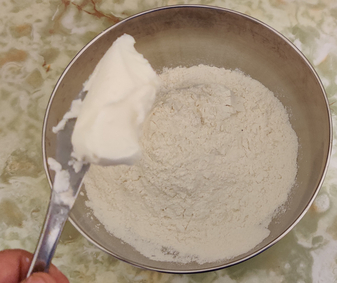
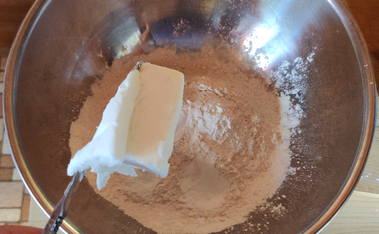
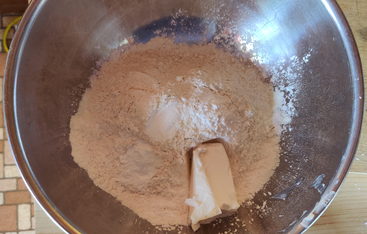
The shortening was added to the flour in the mixing bowl:
Shortening added to flour in mixing bowl
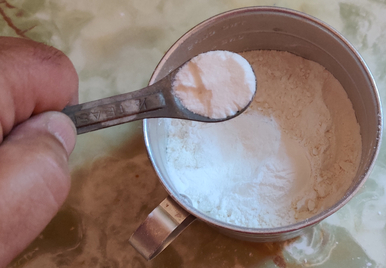
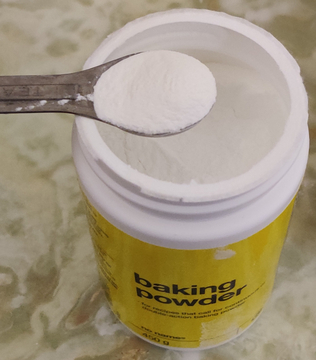
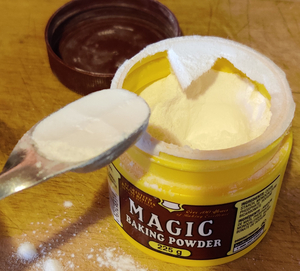
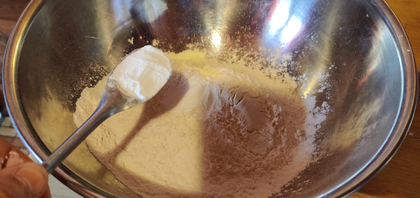
Baking powder was measured out:
Baking powder measured out
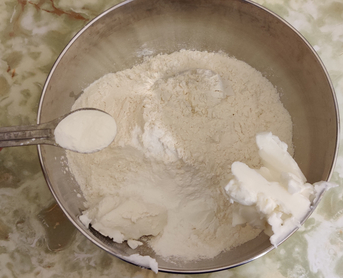
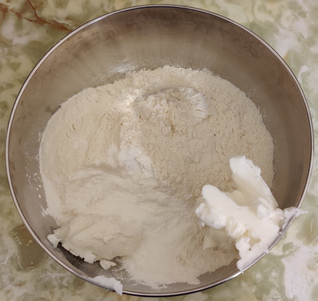
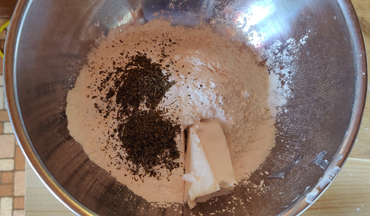
The baking powder was added to the mixing bowl with the flour and the shortening:
Baking powder added to mixing bowl with flour and shortening
Baking powder added to mixing bowl with flour and shortening
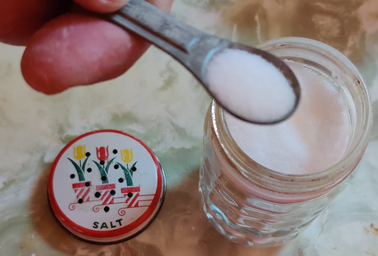
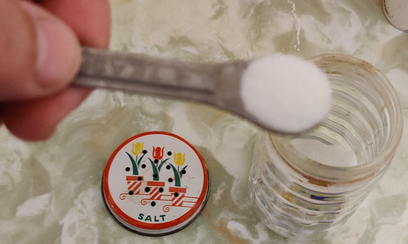
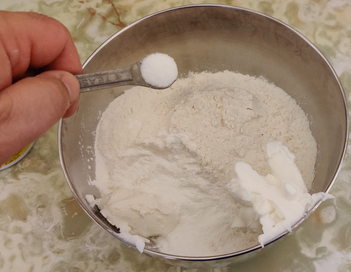
Salt was measured out
Salt measured out
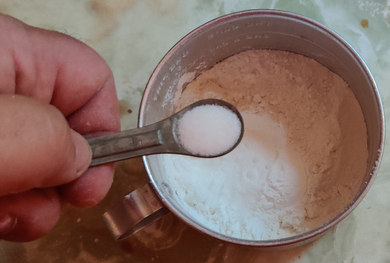
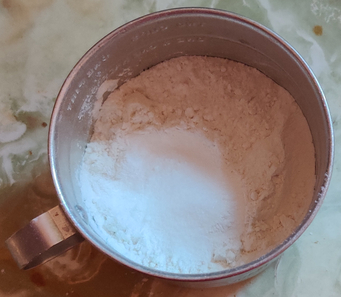
The salt was added to the mixing bowl with the flour, shortening, and baking powder:
Salt added to mixing bowl with flour, shortening, and baking powder
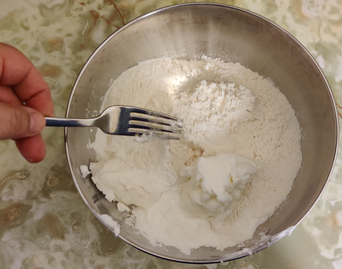
The shortening was broken up with a fork, roughly to the size of peas:
Shortening broken up with a fork to the size of peas
Shortening broken up with a fork to the size of peas
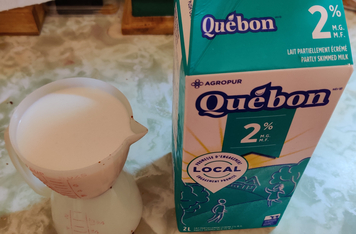
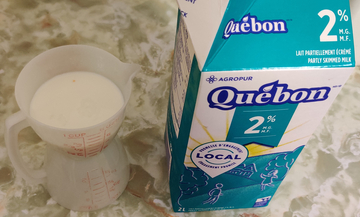
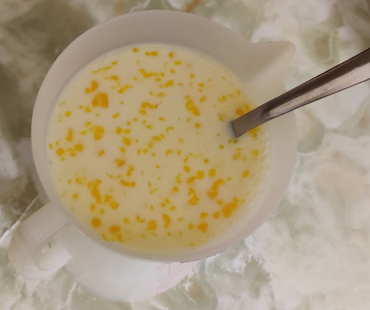
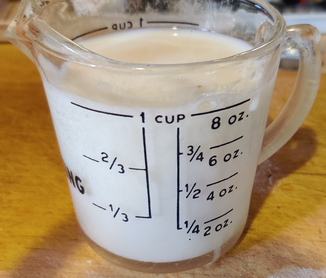
Milk was measured out:
Milk measured out
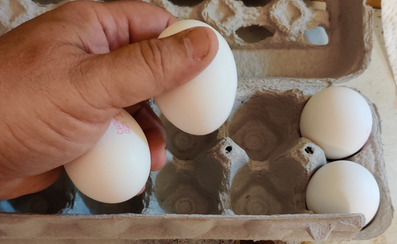
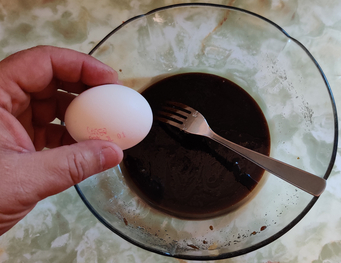
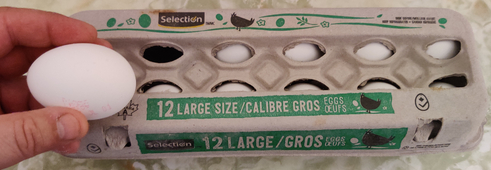
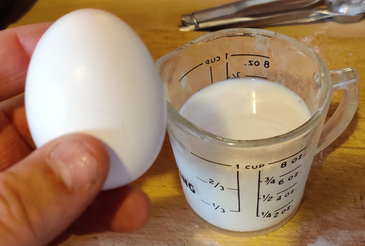
An egg was taken out:
Egg taken out
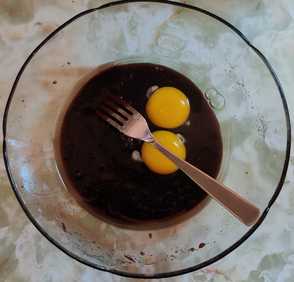
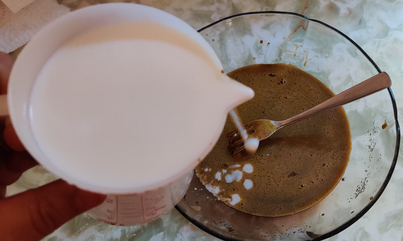
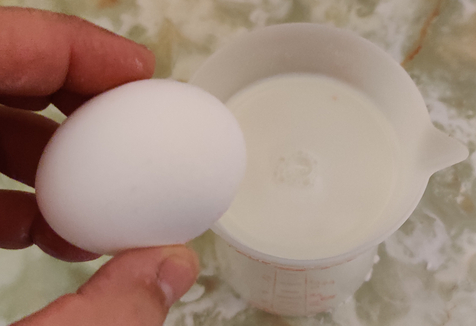
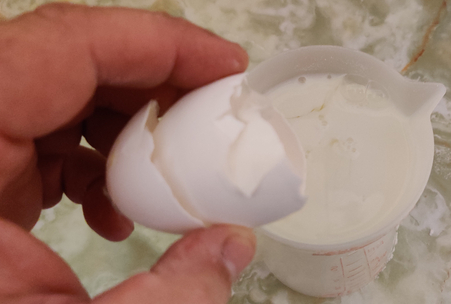
The egg was cracked into the measuring cup with the milk:
Egg cracked into measuring cup with milk
Egg cracked into measuring cup with milk
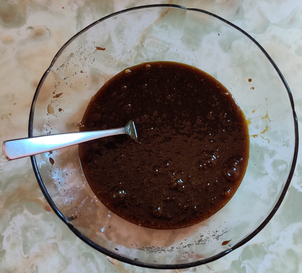
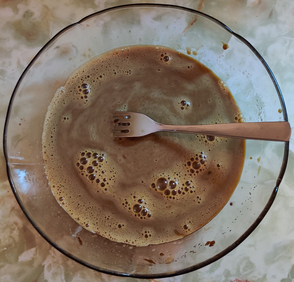
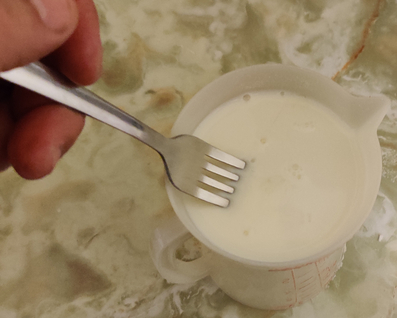
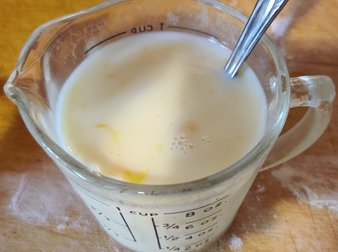
The egg and milk were mixed together with a fork:
Egg and milk mixed together with fork
Egg and milk mixed together with fork
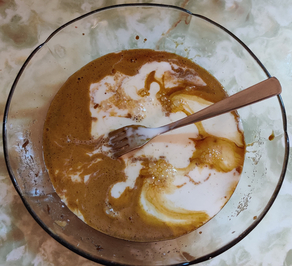
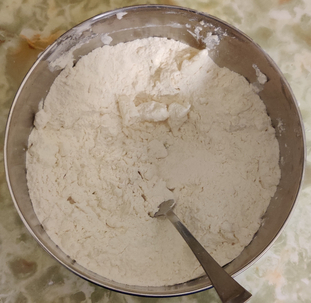
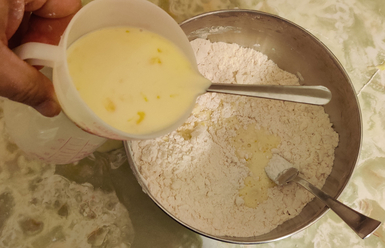
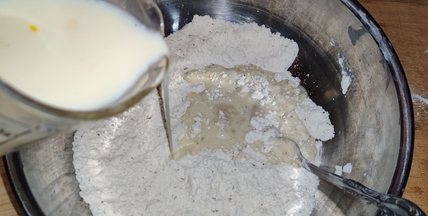
About a third of the egg and milk mixture was added to the mixture of dry ingredients:
A third of egg and milk mixture added to mixture of dry ingredients
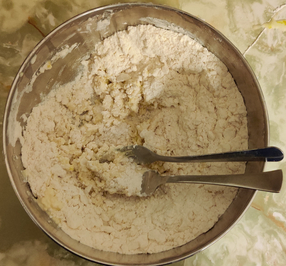
The ingredients were mixed with a fork, well at this point two forks:
Ingredients were mixed with fork
The rest of the egg and milk mixture was added to the dough and the ingredients mixed.
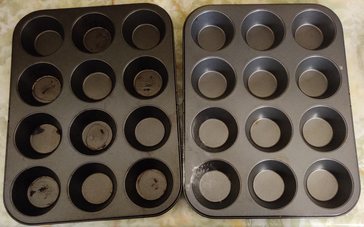
A couple of muffin baking tins were taken out:
Muffin baking tins taken out
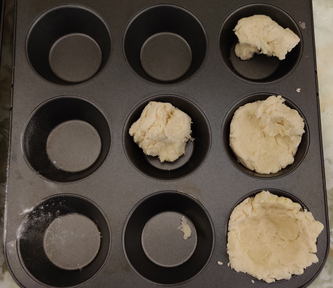
Balls of dough were placed in the wells, and formed into cups around the form of the wells:
Balls of dough transferred to muffin tin wells and formed into cups
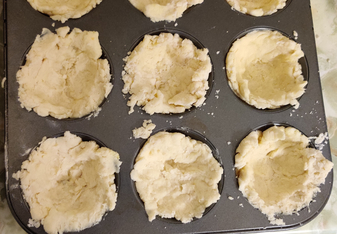
The rest of the dough was transferred to the muffin baking tin and a dough cup was formed in each well:
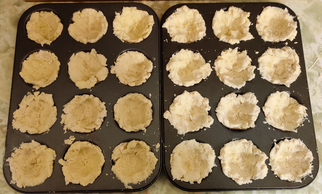
Dough cups formed in each well of a muffin baking tin
Dough cups formed in each well of a muffin baking tin
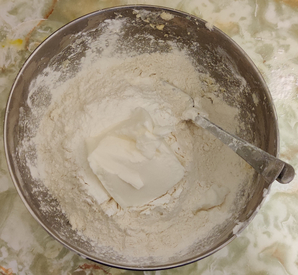
A second batch of dough was prepared for the second muffin baking tin, this picture showing the shortening just having been added to the flour (see above for the whole process):
Second batch of biscuit dough, shortening added to flour step
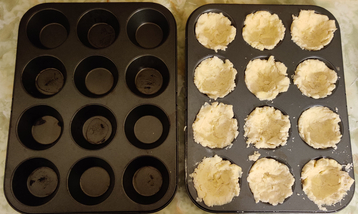
… and the dough from the second batch was used to form more cups in the second muffin baking tin’s wells:
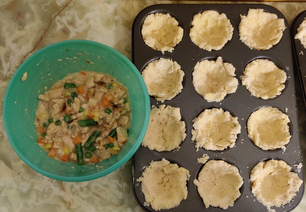
Two muffin tins’ worth of dough cups
The chicken filling mixture was taken out:
Chicken filling mixture
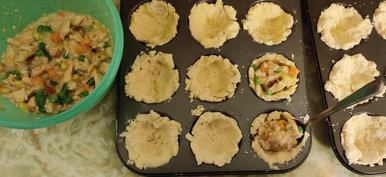
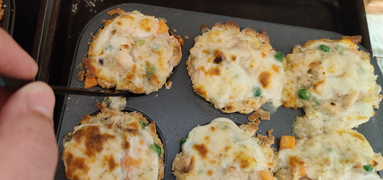
The chicken filling mixture was spooned into the dough cups of one of the muffin baking tins:
Spooning chicken filling mixture into dough cups
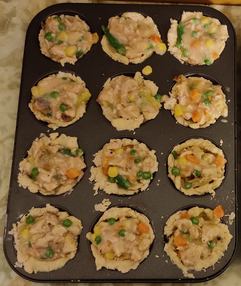
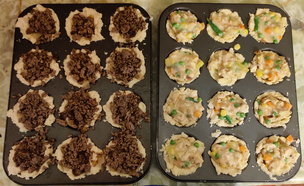
Chicken filling in the dough cups
The chicken filling-filled dough cups were put aside for a few moments.
The cooked ground beef and onion mix was taken out:
Cooked ground beef and onion mix taken out
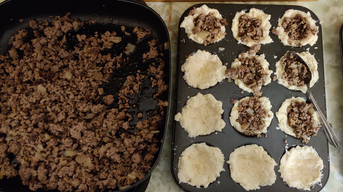
The cooked ground beef and onion mixture was spooned into the dough cups of one of the muffin baking tins:
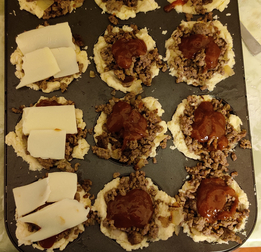
Spooning cooked ground beef and onion mixture into dough cups
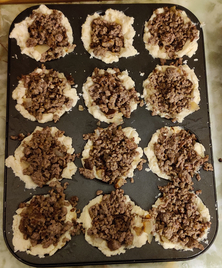
Cooked ground beef and onion mix in the dough cups
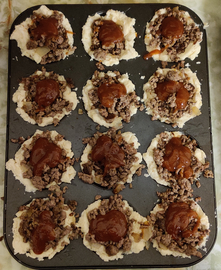
And here is what all the filled dough cups looked like:
24 dough cups filled with cooked ground beef and chicken mixture
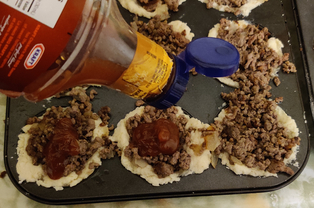
Commercial barbecue sauce in a squeeze bottle was taken out, and barbecue sauce was squeezed onto the cooked ground beef and onion mix:
Barbecue sauce squeezed onto cooked ground beef and onion mix
Barbecue sauce squeezed onto cooked ground beef and onion mix
The filled cups of both varieties were put aside for a moment.
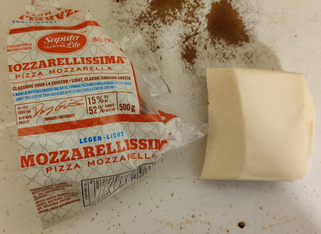
Mozzarella cheese was taken out:
Mozzarella cheese taken out
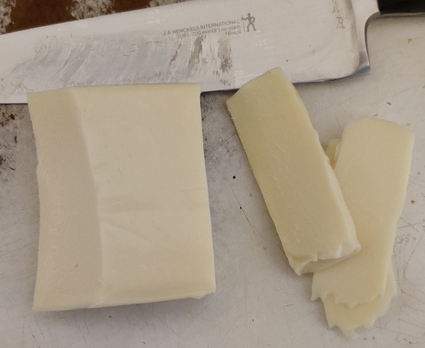
Mozzarella cheese was sliced off the block:
Mozzarella cheese sliced off the block
Slices of mozzarella cheese were placed on top of the filled dough cups:
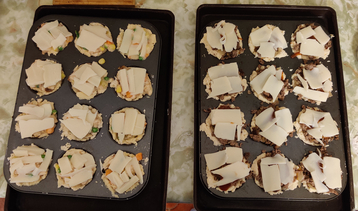
Slices of mozzarella cheese placed on top of filled dough cups
The mozzarella cheese was sliced until there was enough to cover all the filled dough cups:
Slices of mozzarella cheese placed on top of filled dough cups
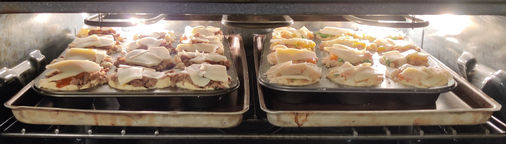
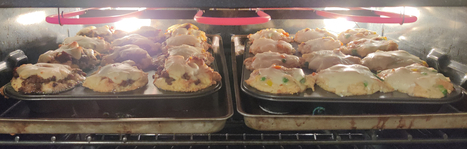
The barbecups and chicken cups were placed in the preheated oven on the top rack:
Barbecups and chicken cups placed in preheated oven on top rack
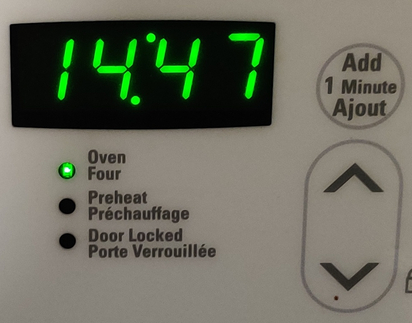
The oven timer was set to fifteen minutes:
Oven timer set to 15 minutes
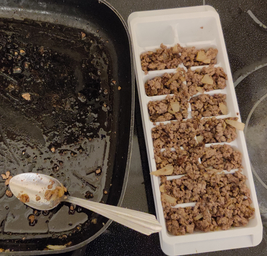
While the barbecups and the chicken cups were baking, the remaining cooked ground beef and onion mixture was transferred with a spoon to an ice cube tray:
Remaining cooked ground beef and onion mixture transferred with spoon to ice cube tray
Remaining cooked ground beef and onion mixture transferred with spoon to ice cube tray
The ice cube tray with the cooked ground beef and onion mixture was placed in the freezer. When the ground beef and onion mixture was frozen, the individual cubes were placed in a freezer bag and placed back in the freezer, ready for future meal cooking.
At this point, the barbecups and chicken cups were cooked, the broil cycle was turned on for a couple of minutes to brown the cheese on top:
Broil cycle turned on to brown the cheese
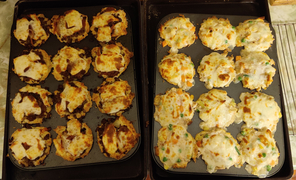
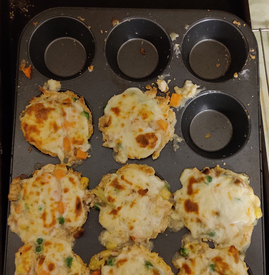
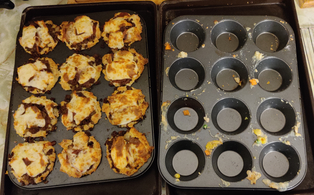
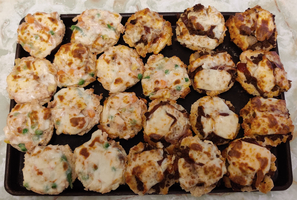
When the barbecups and chicken cups were fully baked, they were taken out of the oven and placed on cooling racks:
Barbecups (on left) and chicken cups (on right) taken out of oven and placed on cooling racks
The chicken cups were loosened with a plastic knife:
Chicken cups loosened with plastic knife
The chicken cups were removed from the muffin baking tin, and placed on cooling racks:
Chicken cups removed from muffin baking tin
Chicken cups removed from muffin baking tin
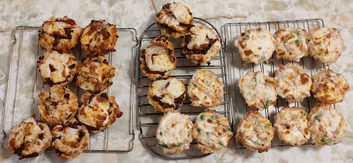
The barbecups (on the left, photo above as well as photo below) were then removed from the muffin baking tin, and placed on a cooling rack alongside the chicken cups:
Barbecups and chicken cups placed on cooling racks
The chicken cups (now on the left in the photo below) and the barbecups (now on the right in the photo below) were placed on a cookie baking tray:
Chicken cups (on left) and barbecups (on right) placed on a cookie baking tray
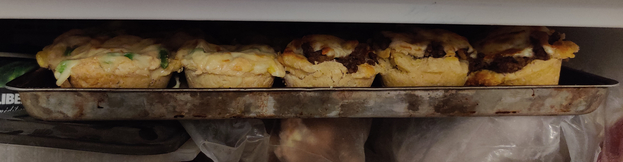
The tray of chicken cups and barbecups was placed in the freezer:
Tray of chicken cups and barbecups placed in freezer
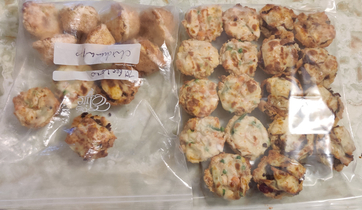
Once the barbecups and the chicken cups were frozen, they were placed in freezer bags, including one that still had some from the last time I cooked these recipes:
Frozen barbecups and chicken cups placed in freezer bags
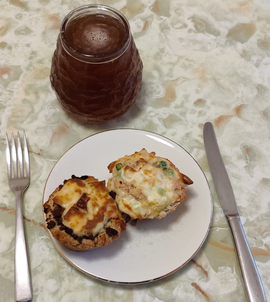
A barbecup (left) and a chicken cup (right) were kept aside for supper, and reheated in a countertop toaster oven:
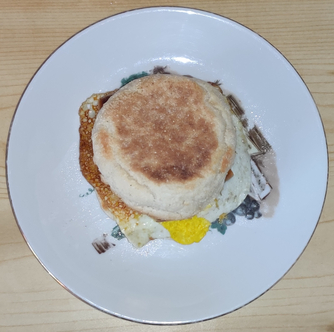
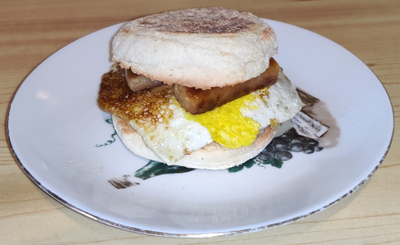
This week’s single cooking project from my collection of recipes was yet more pickled eggs; this week has been busy, so, I took the photos from one of the extra projects I did last weekend while I was still at the cottage, cooking a large number of breakfast sausages for the freezer, and the subject of this post, English muffin breakfast sandwiches.
This is a bit of a no-brainer of a recipe, since as I was mounting this post, I saw a photo of a virtually identical sandwich printed on the bag of English muffins!
If you don’t cook breakfast sausages in advance to keep in the freezer, begin with the cooking of some sausages in the number of sandwiches you will be making for breakfast. You may also use the resulting grease, appropriately drained and wiped up from the skillet, later when the egg will be fried, instead of the specified olive oil.
Making the sandwiches:
First, a frozen, cooked sausage was taken out, and allowed to partly defrost:
Frozen, cooked sausage was taken out
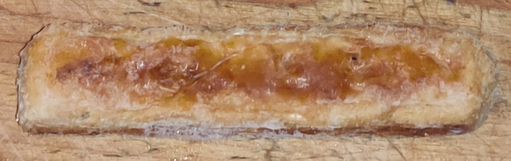
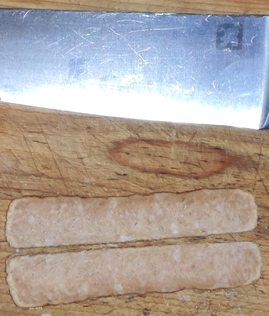
The sausage was sliced along its length:
Sausage sliced along its length
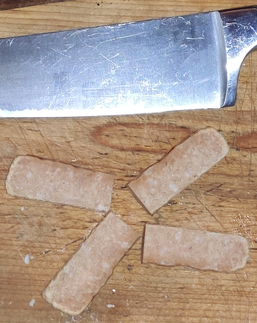
The two sausage halves were then cut in half crosswise, and then put aside for a moment:
Sausage halves cut in halves crosswise
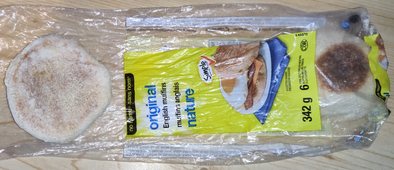
An English muffin was taken out (notice the picture of this recipe on the label):
English muffin taken out
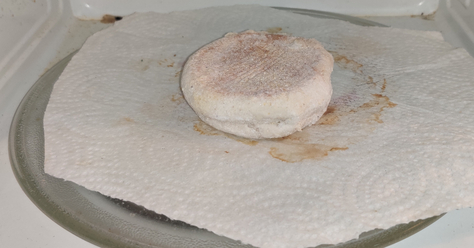
Since I keep English muffins in the freezer, I placed the English muffin in the microwave oven …
English muffin placed in the microwave oven
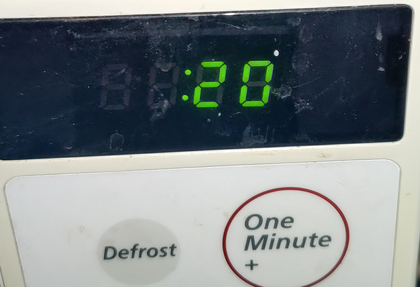
… and the microwave oven was set to a short time period to partly defrost the English muffin:
20 seconds set on microwave oven to partly defrost English muffin
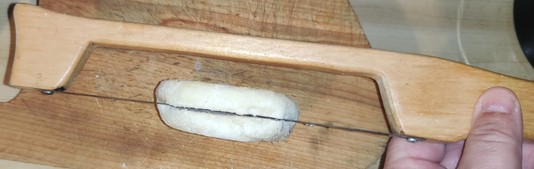
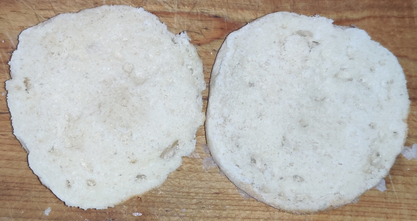
The English muffin was sliced into two halves, and put aside for a moment:
English muffin sliced into two halves
English muffin sliced into two halves
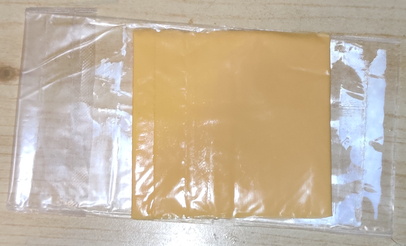
A slice of processed cheese was taken out and unwrapped, and placed on the counter to warm up to room temperature (note that natural cheese sliced off the block may also be used):
Processed cheese taken out
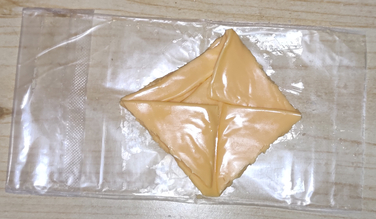
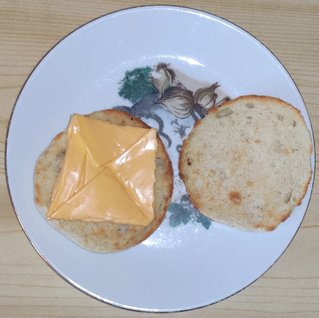
The corners of the slice of cheese were folded over toward the centre, to resize the cheese to the English muffin, and then put aside for a moment:
Corners of the cheese folded over toward centre
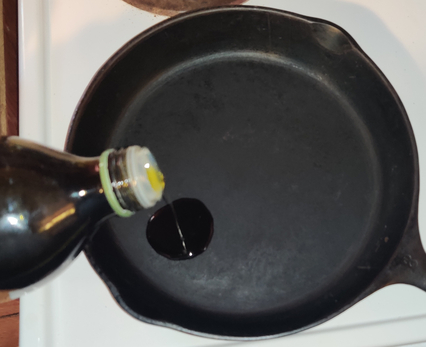
Olive oil was poured into a cast iron skillet on the stove:
Olive oil poured into a skillet
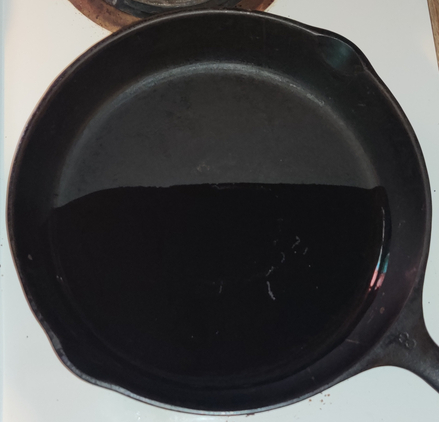
The olive oil was spread over part of the surface of the skillet:
Olive oil spread over part of the surface of the skillet
The stove was turned to a medium heat:
Stove burner set to a medium setting
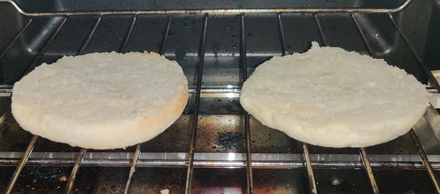
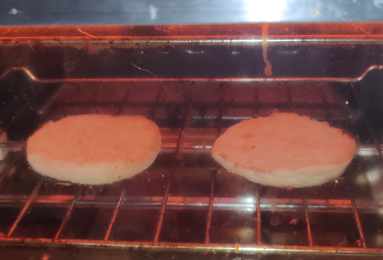
While the skillet was heating up, the English muffin halves were placed in the toaster oven:
English muffin halves placed in the toaster oven
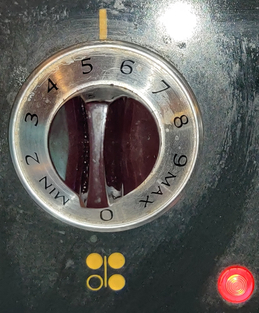
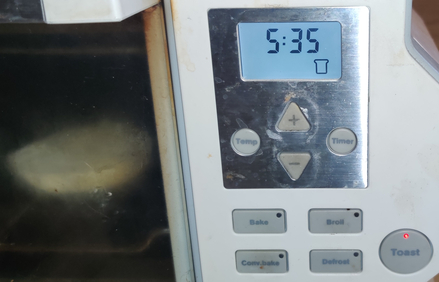
The toast oven was set to the time setting required to toast English muffins:
Toaster oven set to toast English muffins
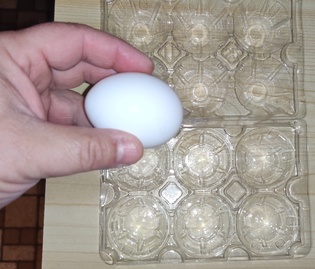
An egg was taken out:
Egg taken out
The sausage pieces were placed in the skillet, and the egg was cracked into the skillet:
Sausage pieces placed in the skillet, and egg cracked into the skillet
Egg and sausage in skillet
The egg was fried, and edges folded into the centre to resize the frying egg to the English muffin:
Egg frying and edges folded inward
I like fried eggs turned over, so the egg was flipped over:
Frying egg flipped over
At this point, the English muffins were almost toasted:
English muffins toasting
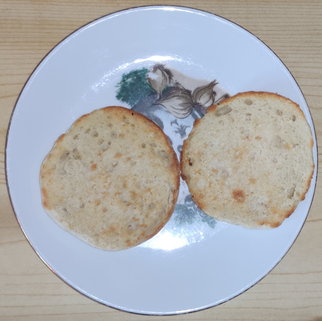
The toasted English muffins were taken out of the toaster oven:
Toasted English muffin taken out of toaster oven
The folded over processed cheese slice was placed on one of the English muffin halves:
Processed cheese slice placed on English muffin half
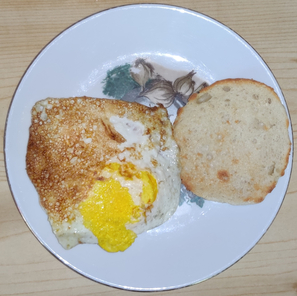
The fried egg was transferred on top of the processed cheese:
Fried egg transferred on top of processed cheese
The sausage pieces were placed on top of the fried egg:
Sausage pieces placed on top of fried egg
The other half of the English muffin was placed on top of the sausage pieces:
Second English muffin half placed on top of sausage pieces
I was pleased to have on hand the pictures from making the crisped rice treats I made last weekend at the cottage!
Making the Crisped Rice Treats:
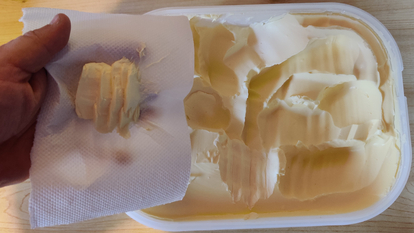
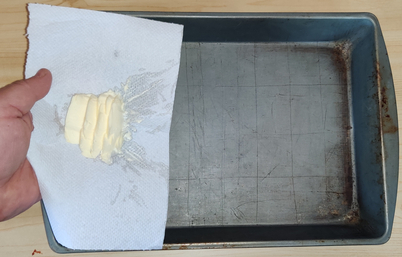
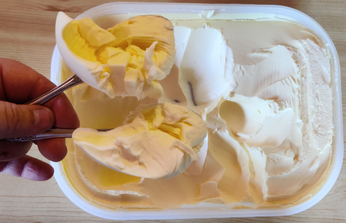
First, margarine was taken out, and some margarine was picked up on a paper towel:
Margarine picked up by hand with a paper towel
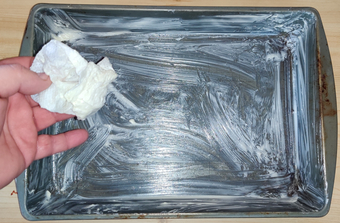
The margarine was spread in a 13″ x 9″ x 2″ cake pan:
Greasing a 13″ x 9″ x 2″ baking pan
Greasing a 13″ x 9″ x 2″ baking pan
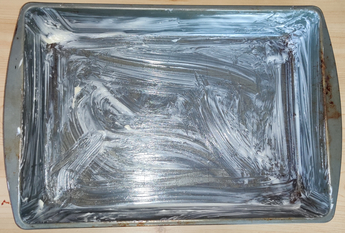
Greased 13″ x 9″ x 2″ baking pan
The greased pan was then put aside.
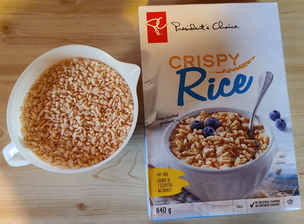
6-1/2 cups of crisped rice breakfast cereal were measure out:
Crisped rice cereal measured out
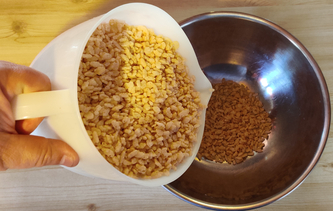
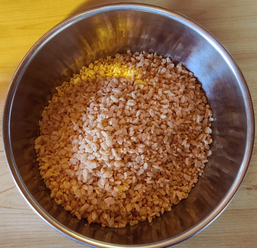
The crisped rice cereal was transferred to a mixing bowl and put aside:
Crisped rice cereal transferred to a mixing bowl
Crisped rice cereal transferred to a mixing bowl
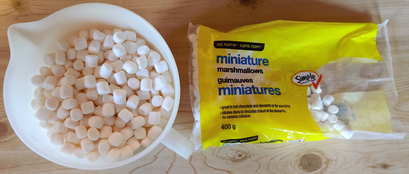
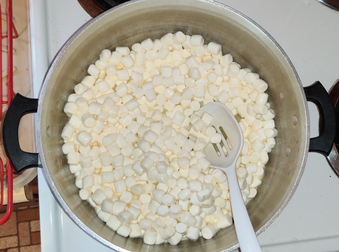
5-1/2 cups of mini marshmallows were measured out:
Mini marshmallows measured out
The marshmallows were put aside.
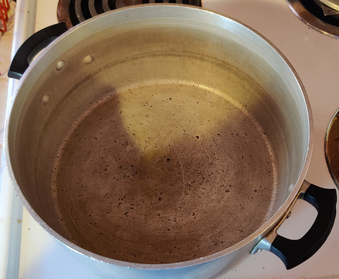
A large, heavy pot was taken out:
Large, heavy pot taken out
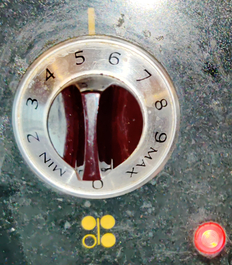
The stove burner was set to a low heat:
Stove set to a low heat
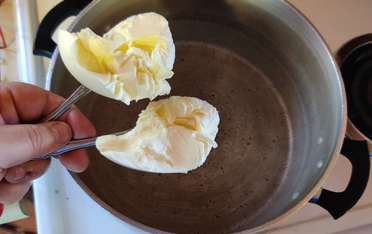
Two dollops of margarine were “measured” out:
Two dollops of margarine “measured” out
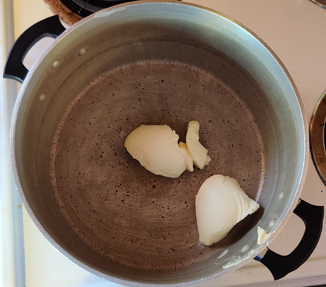
The margarine was transferred to the heavy pot:
Margarine transferred to the heavy pot
Margarine transferred to the heavy pot
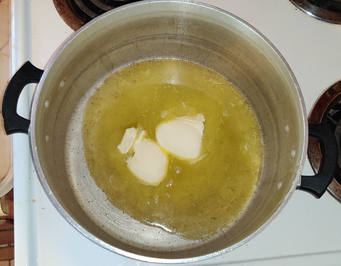
The margarine was melted in the heavy pot:
Margarine melting in the heavy pot
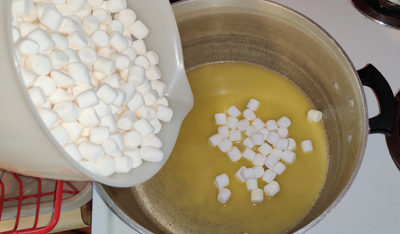
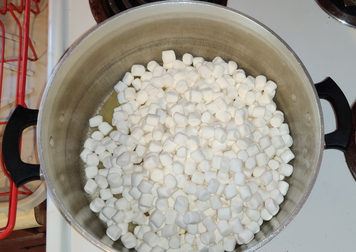
Once the margarine was fully melted, the mini marshmallows were added to the heavy pot with the melted margarine:
Mini marshmallows added to the melted margarine
Mini marshmallows added to the melted margarine
The stove setting was raised to medium heat:
Stove setting raised to medium
The marshmallows were constantly stirred while melting, to avoid burning:
Constantly stirring the marshmallows while melting to avoid burning
While the marshmallows were melting a few feet away and being constantly watched, a cutting board was taken out, to use as a trivet a few moments later:
Cutting board taken out to be used as a trivet
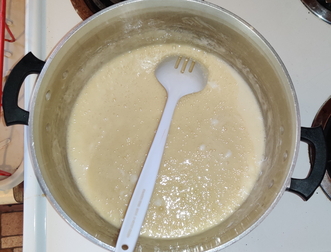
Very soon, the marshmallows were completely melted, and well mixed with the margarine:
Melted marshmallows and margarine mix
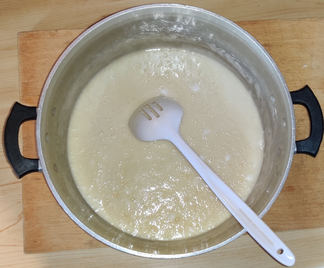
The pot of melted mini marshmallows and margarine mix was transferred to the cutting board:
Pot of melted marshmallows and margarine mix transferred to cutting board
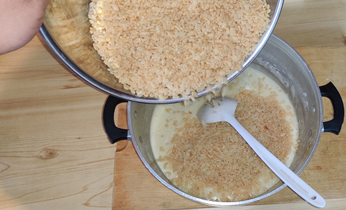
The crisped rice cereal was transferred to the melted marshmallow and margarine mix:
Crisped rice cereal transferred to melted marshmallow and margarine mix
Crisped rice cereal transferred to melted marshmallow and margarine mix
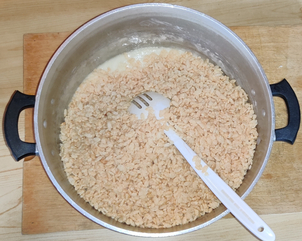
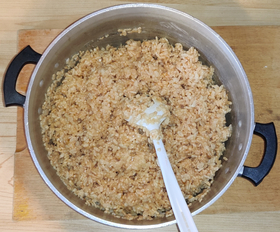
The crisped rice cereal and melted marshmallow and margarine mix were thoroughly mixed together:
Crisped rice cereal and melted marshmallow and margarine mix thoroughly mixed together
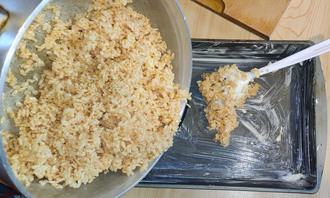
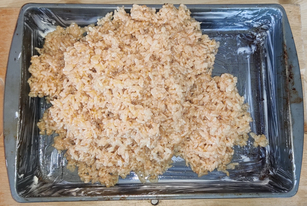
The mixture was transferred to the greased 13″ x 9″ x 2″ cake pan:
Mixture transferred to greased 13″ x 9″ x 2″ cake pan
Mixture transferred to greased 13″ x 9″ x 2″ cake pan
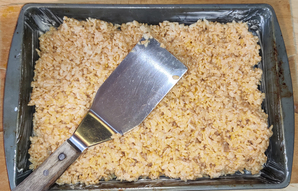
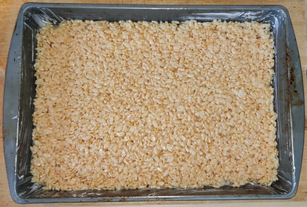
The mixture was allowed to slightly cool, but while still warm, it was spread out evenly in the baking pan with a stiff stainless steel egg flipper:
Mixture spread out evenly in the baking pan with an egg flipper
Mixture spread out evenly in the baking pan
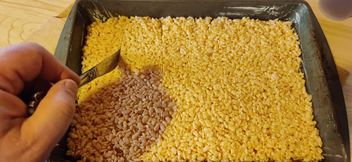
After cooling completely, the contents of the pan were cut into various bite-sized pieces:
Cooled crisped rice and marshmallow mix cut into pieces
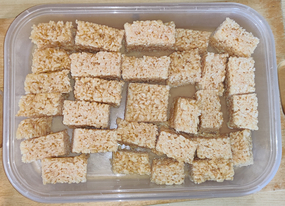
Finally, the treats were transferred to a sealable plastic container:
Treats transferred to a sealable plastic container
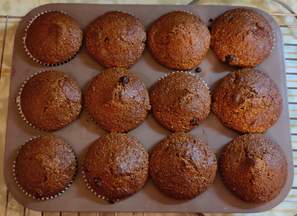
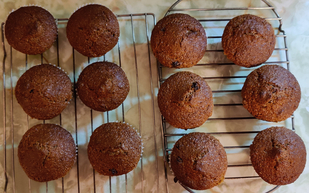
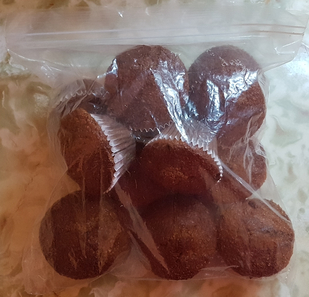
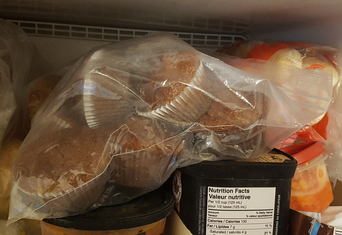
This past week’s cooking projects from my collection of recipes included yet again more bran muffins for mom, crisped rice treats (which will be the subject of a future post since I also took photos of the process, to keep for future use), and the subject of this post, my pepperoni pizza.
A post that is an ancestor to my current project of creating photo posts of my personal recipes was for my pepperoni pizza, the same recipe for this post; however, it was a simple posting with only some photos of a few of the steps, and the post was created more on a dare after I randomly texted said photos to my brother, who replied “A blog post, perhaps?”
Note that in this post, while some photos below may betray the order in which they were actually taken relative to the others (although all were taken in the same session), some ingredients’ preparation steps are presented at the beginning as part of the mise-en-place steps for the sake of the narrative. Also note that these pizzas were made at the cottage, hence the use of different kitchen equipment.
Making the pizza:
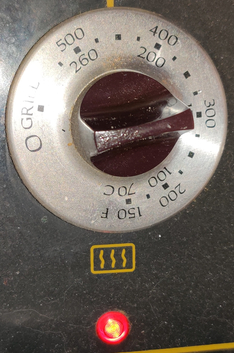
An oven rack was placed on the top position in the oven, and the oven was preheated to 450F:
Oven preheated to 450F
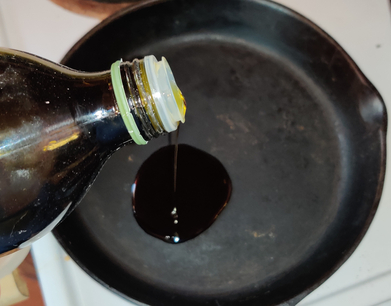
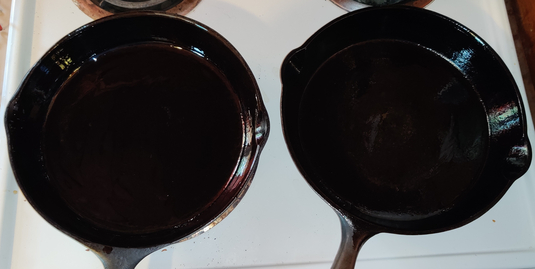
Olive oil was added to two #8 cast iron skillets:
Olive oil added to a cast iron skillet
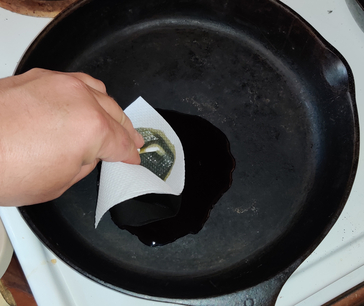
… and the olive oil was evenly spread over the skillets’ surfaces with a paper towel:
Spreading the olive oil with a paper towel
Two oiled cast iron skillets
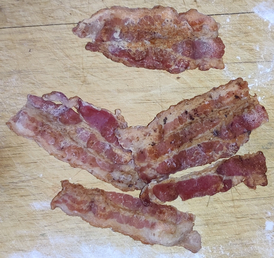
I keep cooked bacon in the freezer; a few slices of which were taken out (or at this point, cook some bacon):
Bacon cooked in advance taken out
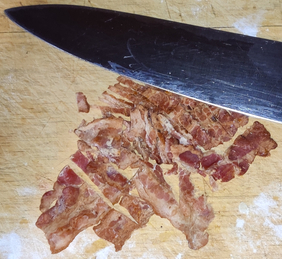
The cooked bacon was sliced:
Cooked bacon sliced
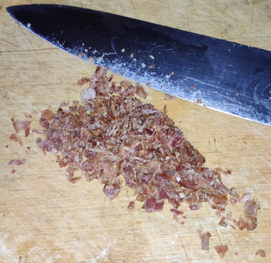
… and then the bacon was chopped finely:
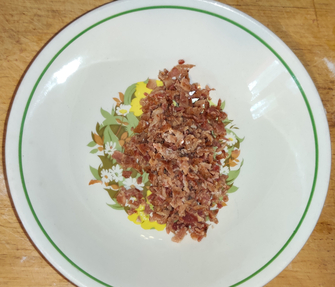
Bacon finely chopped
The finely chopped bacon was transferred to a bowl and kept at hand:
Finely chopped bacon placed in a bowl
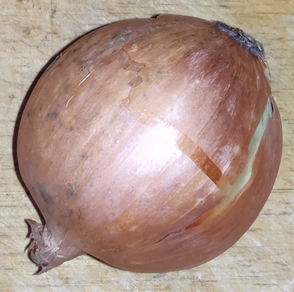
An onion was taken out:
Onion taken out
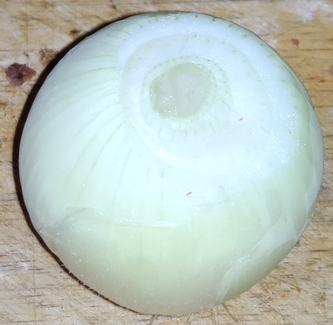
The onion was trimmed:
Trimmed onion
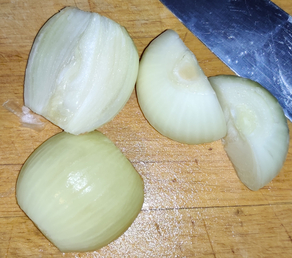
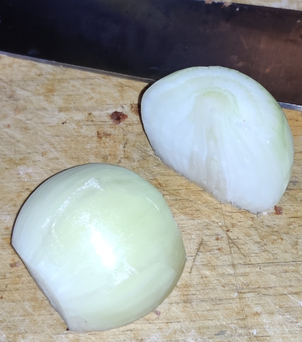
The onion was halved:
Onion halved
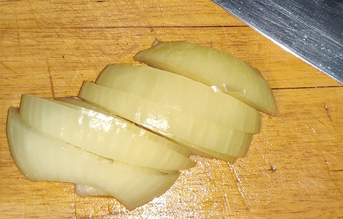
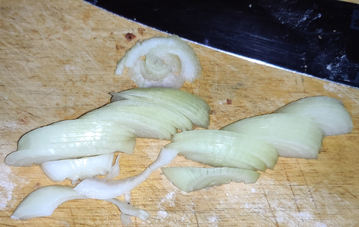
The onion was then sliced thinly:
Onion sliced thinly
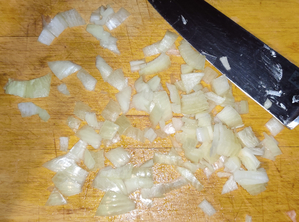
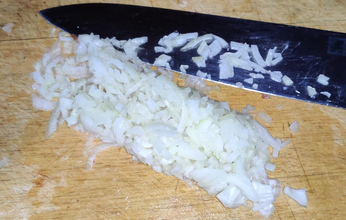
And the onion was chopped finely:
Onion sliced finely
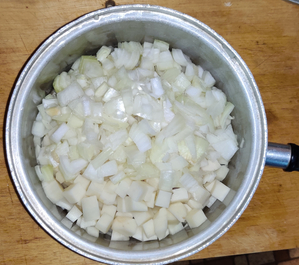
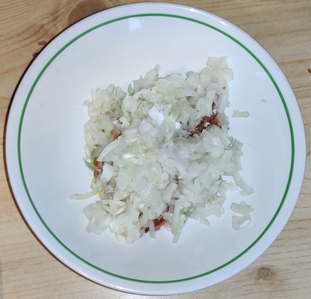
Then, the onion was transferred to the bowl with the chopped bacon:
Chopped onion transferred to bowl with chopped bacon
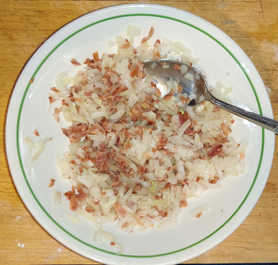
And the chopped onion and chopped bacon were mixed together:
Chopped onion and chopped bacon mixed together
The bowl of chopped onion and chopped bacon was then put aside.
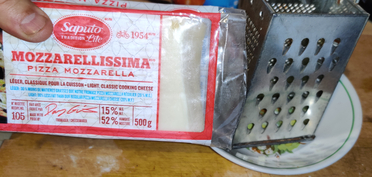
Mozzarella cheese, a grater, and a bowl were taken out:
Mozzarella cheese, grater, and bowl taken out
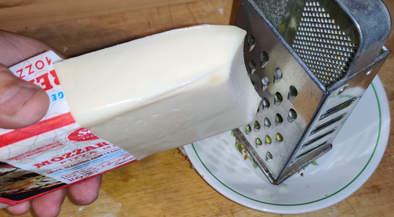
The mozzarella cheese was grated:
Grating mozzarella
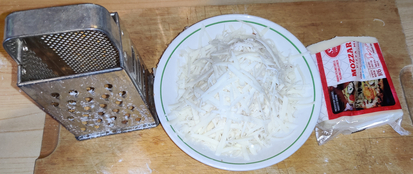
Grated mozzarella cheese
… and the mozzarella cheese was put aside.
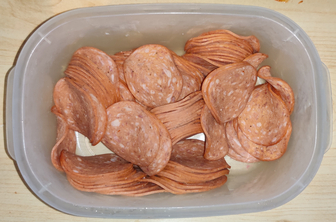
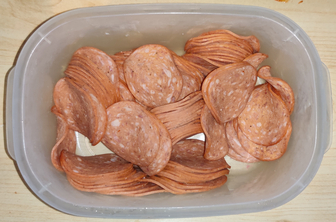
I use pre-sliced pepperoni purchased at the store; if you are slicing your own pepperoni, now would be a good time to slice 30 slices of pepperoni, and place the sliced pepperoni on a plate or in a bowl, to be put aside.
Sliced pepperoni
Flour was measured out:
Flour measured out
The flour was placed in a mixing bowl:
Flour placed in mixing bowl
Flour in mixing bowl
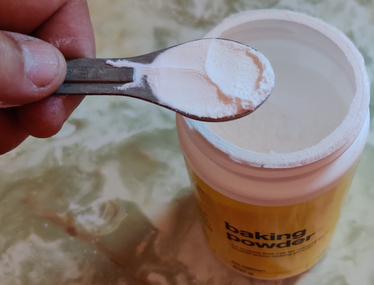
Baking powder was measured out:
Baking powder measured out
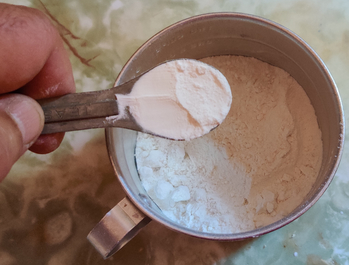
The baking powder was added to the flour in the mixing bowl:
Baking powder added to mixing bowl
Shortening was measured out:
Shortening measured out
The shortening was added to the flour and baking powder in the mixing bowl:
Shortening added to mixing bowl
Shortening in mixing bowl
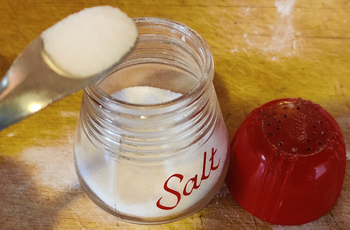
Salt was measured out:
Salt measured out
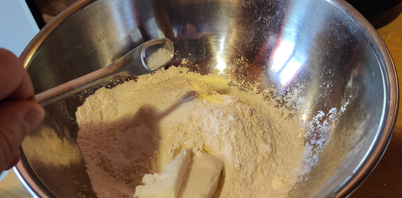
The salt was added to the flour, baking powder, and shortening in the mixing bowl:
Salt added to other ingredients
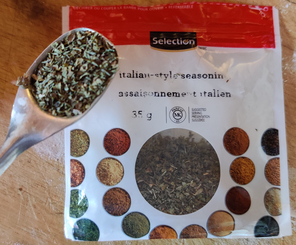
“Italian style seasoning” was measured out:
Italian seasoning measured out
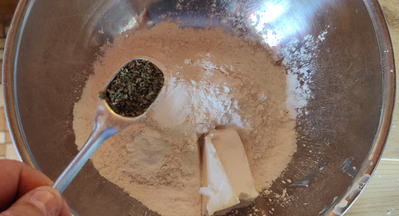
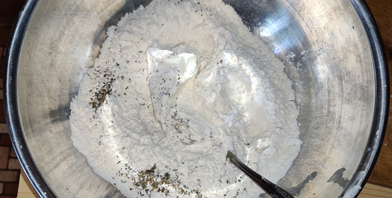
The Italian seasoning was added to the flour, baking powder, shortening, and salt in the mixing bowl:
Italian seasoning added to other ingredients
Italian seasoning added to other ingredients
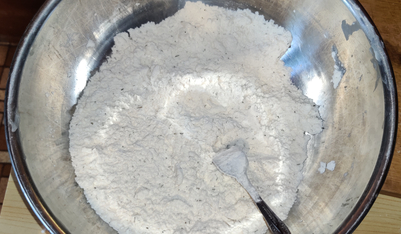
The shortening was broken up with a fork …
Breaking up the shortening with a fork
… until the shortening was broken up to roughly the size of peas, and the rest of the ingredients were well mixed:
Shortening broken up to the size of peas
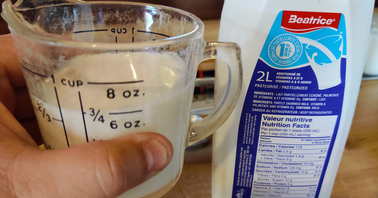
Milk was measured out:
Milk measured out
An egg was taken out:
Egg taken out
The egg was cracked into the measuring cup of milk:
Egg cracked into milk
The egg and milk were mixed together with a fork:
Egg and milk mixed together with a fork
About a third of the liquid was added to the flour mix:
Egg and milk mixture added to the flour mix
The wet and dry ingredients were mixed together:
Wet and dry ingredients mixed
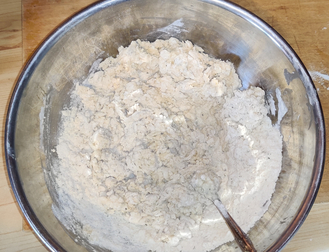
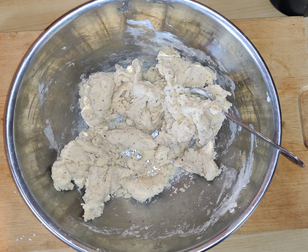
The rest of the liquid was added half at a time, mixing after each addition of liquid, resulting in a sticky to somewhat stiff dough:
Wet and dry ingredients mixed to make a dough
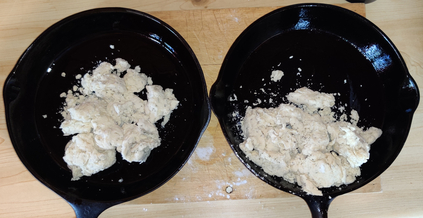
The dough was divided between the two oiled cast iron skillets:
Dough divided between the two oiled cast iron skillets
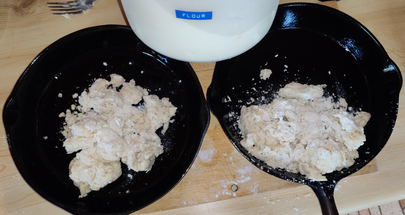
The two dough balls were lightly floured:
Dough balls lightly floured
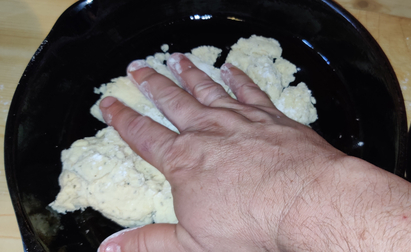
The dough was flattened out in the skillets by hand, covering the entire surface of the bases of the skillets:
Dough flattened out by hand
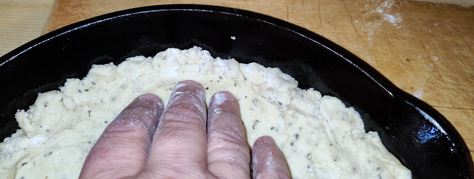
Edges were formed in the dough along the edges of the skillets:
Edges formed in dough along edges of skillets
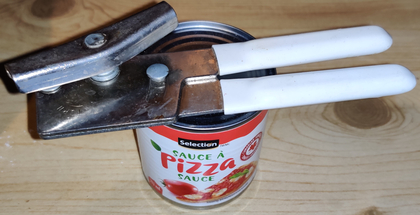
Pizza sauce was taken out:
Pizza sauce taken out
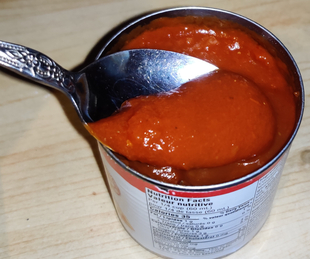
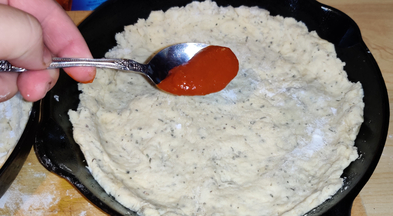
The sauce was spooned out of the can:
Sauce spooned out
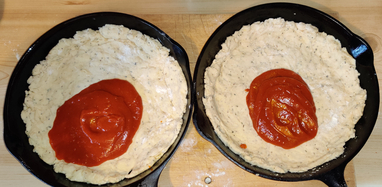
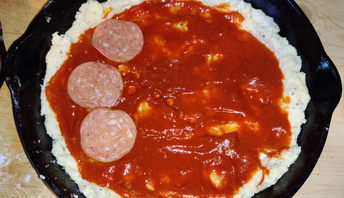
The sauce was transferred to the pizzas:
Sauce transferred to pizza
… and evenly split between the two pizzas:
Sauce split between pizzas
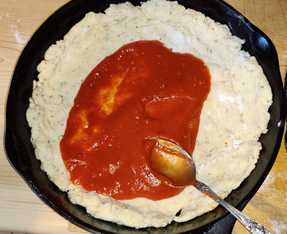
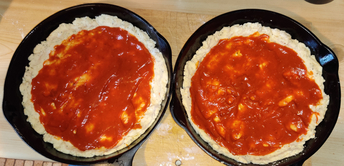
The sauce was evenly spread over the two flattened dough in each skillet, within the edges created around the pizzas:
Sauce evenly spread over dough
Sauce evenly spread over dough
The pepperoni was taken out:
Pepperoni taken out
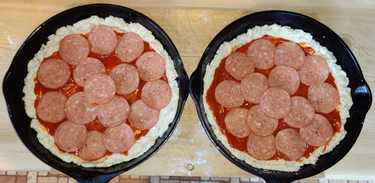
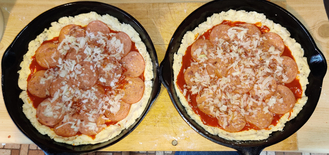
Pepperoni slices were layered on top of the sauce, generally not overlapping over each other:
Pepperoni layered on top of the sauce
Pepperoni layered on top of the sauce
The chopped onion and chopped bacon mix was divided between the pizzas:
Chopped onion and chopped bacon mix divided between the pizzas
The chopped onion and chopped bacon mix was evenly spread over the surface of the pizzas:
Chopped onion and chopped bacon mix evenly spread over the surface of the pizzas
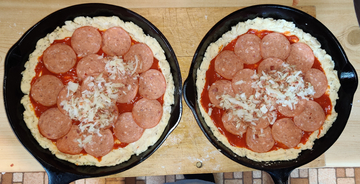
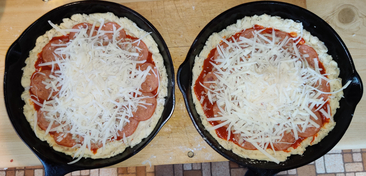
The grated mozzarella cheese was divided between the two pizzas:
Grated mozzarella cheese divided between the two pizzas
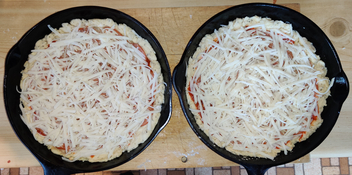
The grated mozzarella cheese was evenly spread over the surface of the pizzas
Grated mozzarella cheese evenly spread over the pizzas
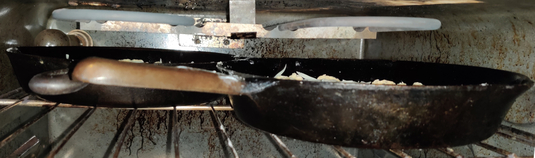
The two pizzas, skillets and all, were placed on the top rack of the preheated oven:
Pizzas placed on the top rack of the preheated oven
A timer was set to 23 minutes:
Timer set to 23 minutes
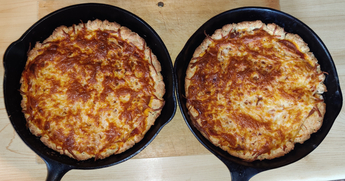
The pizzas’ positions in the oven were switched partway, and after 23 minutes, the baked pizzas were removed from the oven using oven mitts — the skillets are VERY HOT! — and placed on a cutting board:
Baked pizzas removed from oven
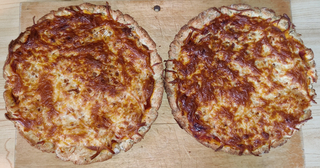
The pizzas were removed from the skillets using an egg flipper, and returned to the cutting board:
Pizzas removed from cast iron skillets
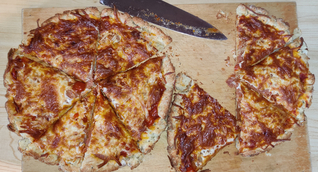
The pizzas were sliced (in this case, in six pieces each):
Pizzas sliced
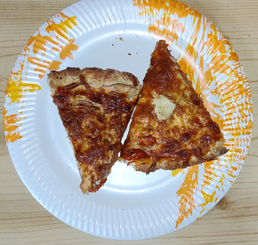
A yummy lunch is served:
Lunch is served!
Lunch was yummy!
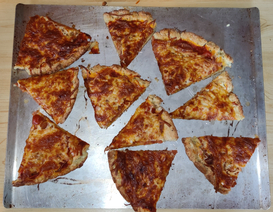
The rest of the pizza slices were placed on a cookie sheet:
Pizza slices placed on cookie sheet
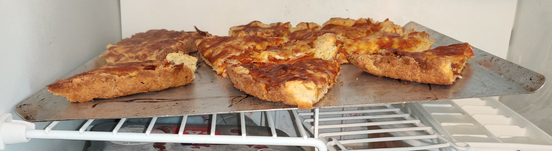
The cookie sheet was placed in the freezer:
Tray with pizza slices placed in freezer
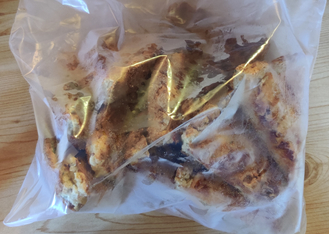
Once frozen, the extra pizza slices were placed in a freezer bag and returned to the freezer, to eat during future lunches:
Frozen pizza slices in a freezer bag and returned to the freezer