
This is another recipe focusing on a simplification — in fact, two separate simplifications — allowing for easy assembly of as many or as few units that you are willing to mount at once, as well as depending on the number of containers and freezer space you have, or to which you have access.
In the process of mounting this post, a separate, overarching narrative from how I originally viewed the recipe emerged: I originally thought that I had a recipe for (what now used to be) four lasagnes, using commercial tomato sauce in a jar. I eventually realized that I actually had a recipe for one lasagne, which happened to be particularly convenient for making four units at a time, specifically tailored to some conveniently-sized baking pans I possess, measuring 7-1/2″ x 5-1/2″ x 2″.
This led me to calculating the surface area of the particular baking pans, about 41 square inches (266cm2) each, which I realized was about half the 81 square inch surface area of somewhat more common 9″ x 9″ (22.9cm x 22.9cm) baking pans; I further realized that the fairly common 9″ x 13″ (22.9cm x 33cm) baking pans, with a surface area of 117 square inches, have almost three times the surface area of the baking pans I use.
With this realization, the core recipe and process of making my lasagnes emerged from the base unit of my small pans:
- about one pound (about 450g) of ground beef;
- about 600mL (about two to two and a half cups) of sauce;
- about five to six sheets of oven-ready lasagne sheets;
- ultimately making four layers of lasagne, and five layers of meat and sauce;
- about 100g (about 3.5 ounces) of grated mozzarella cheese;
- for a lasagne of about 41 square inches, allowing for about up to four modest but hearty servings.
Having realized this and adjusted my recipe accordingly, this leads to the easier scaling of the recipe either to the number of pans I would be making at once, or to one or more other baking pan size(s).
And to be clear: The two simplifications to this recipe lay in:
- the use of commercial spaghetti sauce in commonly available jars of 600mL (20oz) or thereabouts, which forms the basic unit of the lasagnes, and,
- the use of oven-ready lasagne sheets, which require no precooking or soaking before use, making the production of any number of units or even larger units vastly easier and quicker.
Note that I think that you should use a tomato (or other) sauce that you like, be it a commercial tomato sauce in whatever size format that suits you, or your own (or your grandmother’s) homemade tomato (or other) sauce. I can only imagine that making extremely large amounts of lasagne — especially several large format units — may well favour the use of larger commercial formats of tomato sauce, or the outright making large pots of your own tomato sauce!
Lastly, a small handful of photos may have been reordered and/or re-taken afterwards for the sake of the narrative.
Making the lasagnes:
On cooking day, I decided to make two units of lasagnes in my small baking pans.
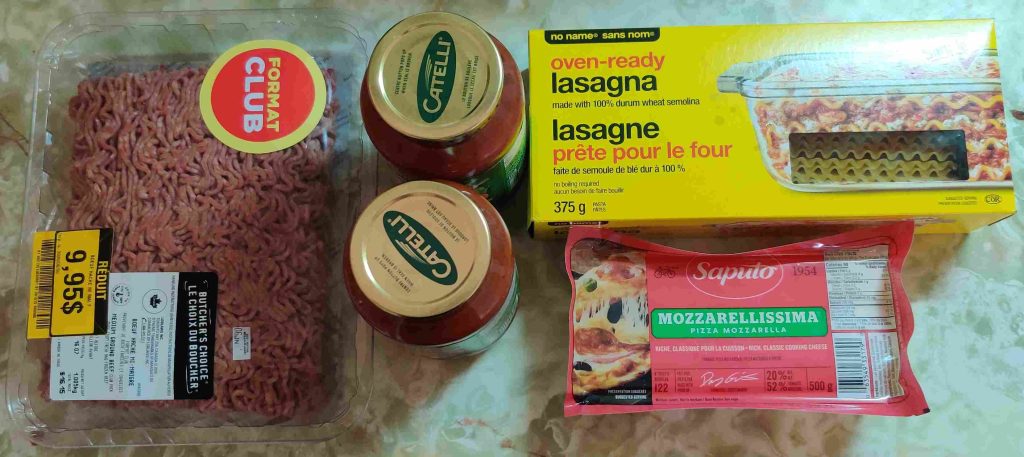
First, all the ingredients were gathered together. I will underline (given the prominent “reduced price” sticker) that the beef was purchased at a clearance price a couple of days before its due date, “a couple of months ago”, and kept in the freezer; it was defrosted overnight in the fridge before use.
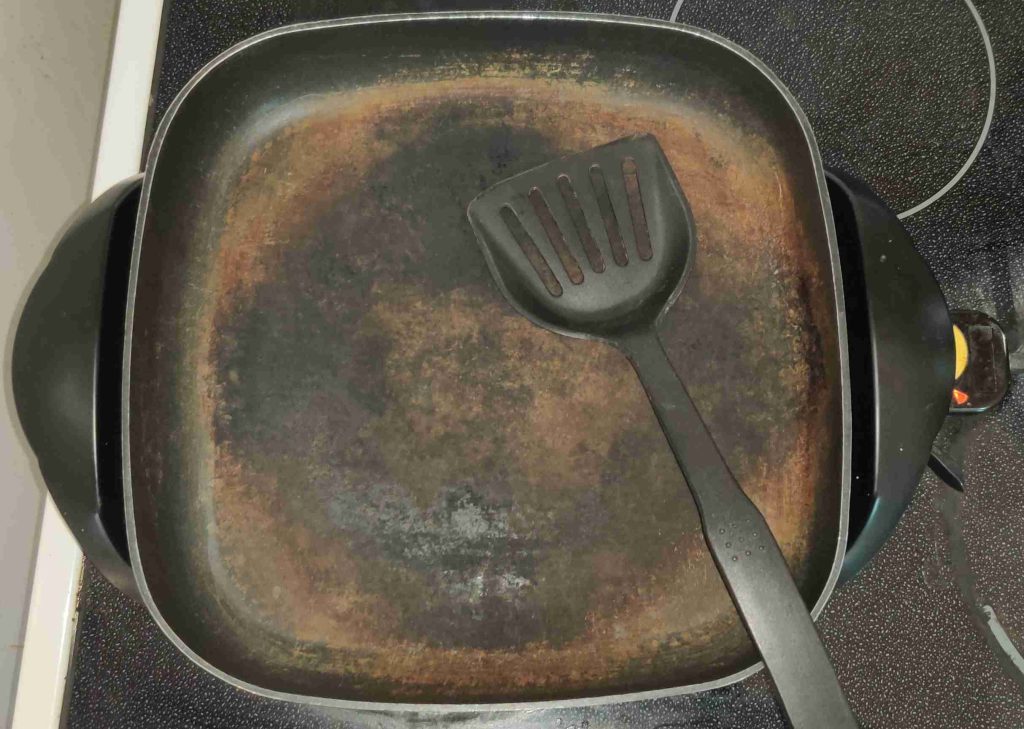
An electric frypan was taken out and plugged in, as well as a spatula / egg flipper being taken out:
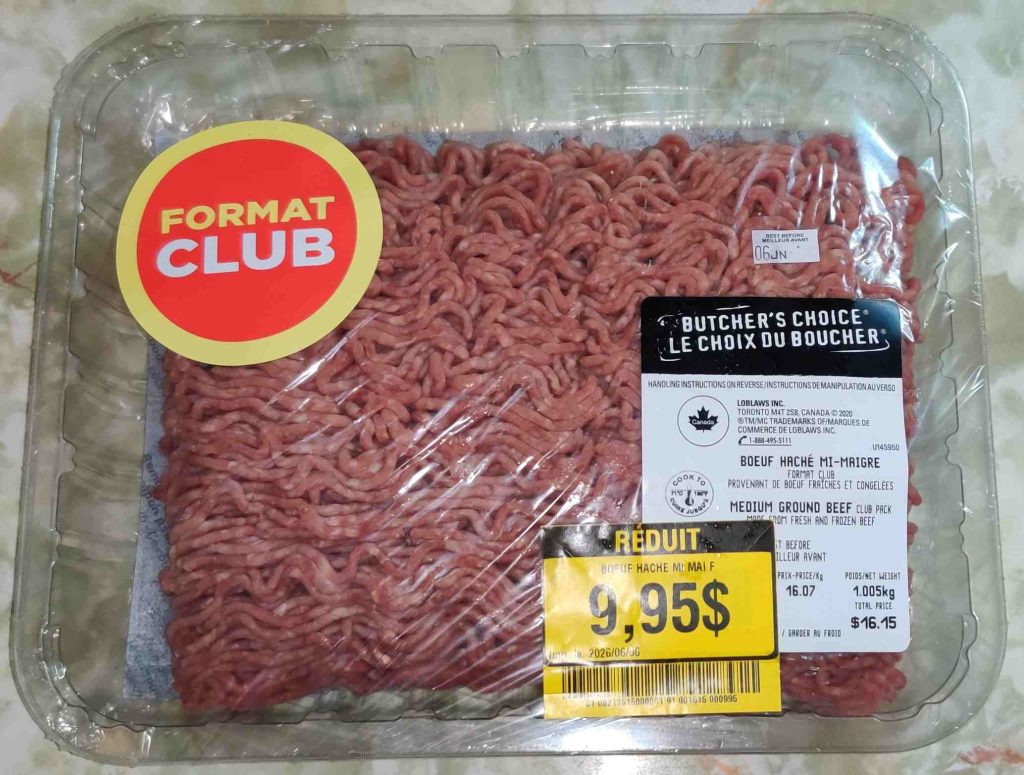
The defrosted (overnight in a fridge) ground beef was taken out:
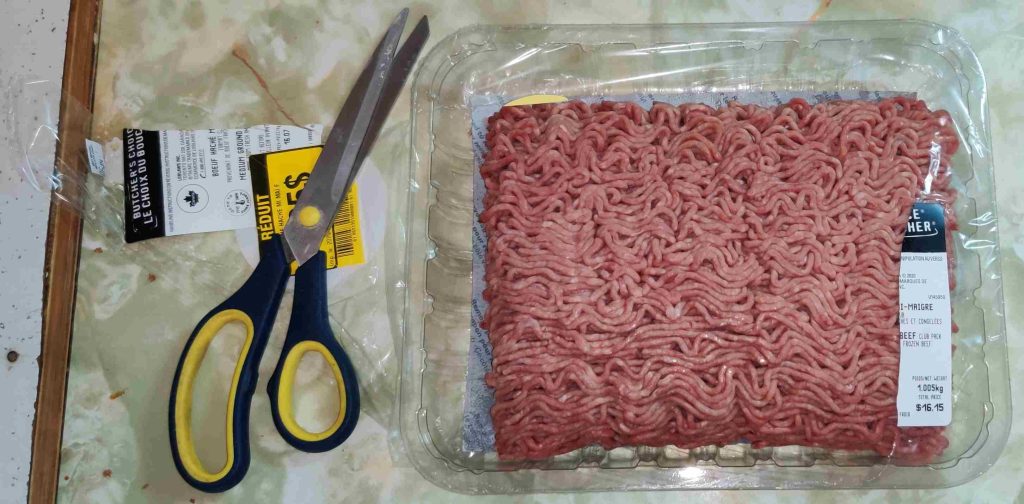
The ground beef package was opened with some scissors:
Onions and a kitchen knife were taken out:
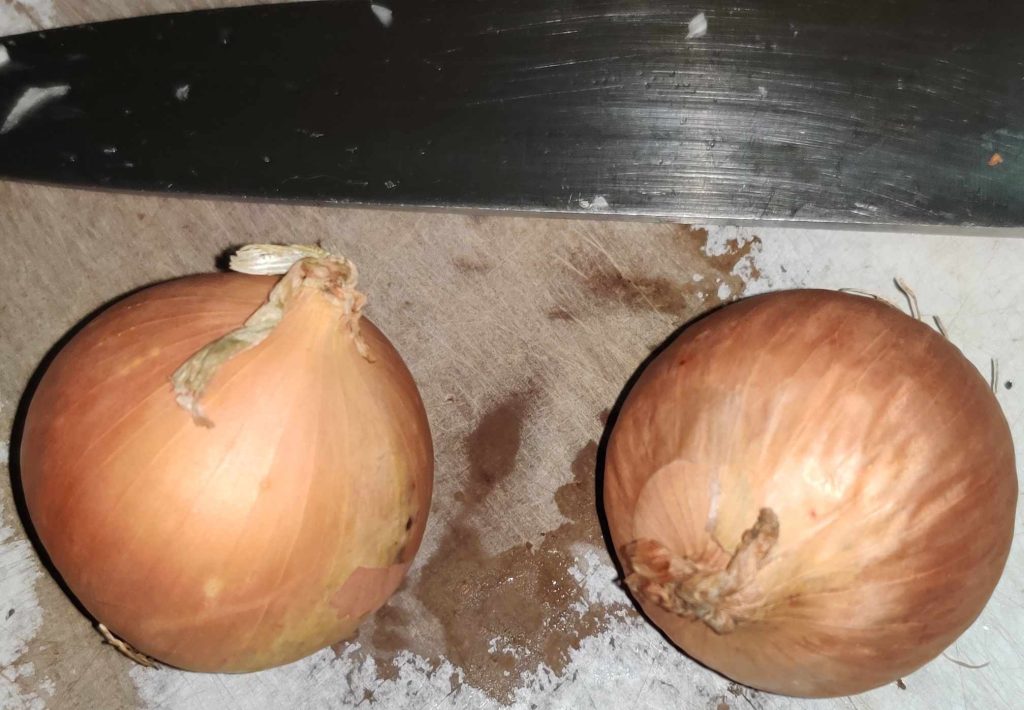
The onions were trimmed:
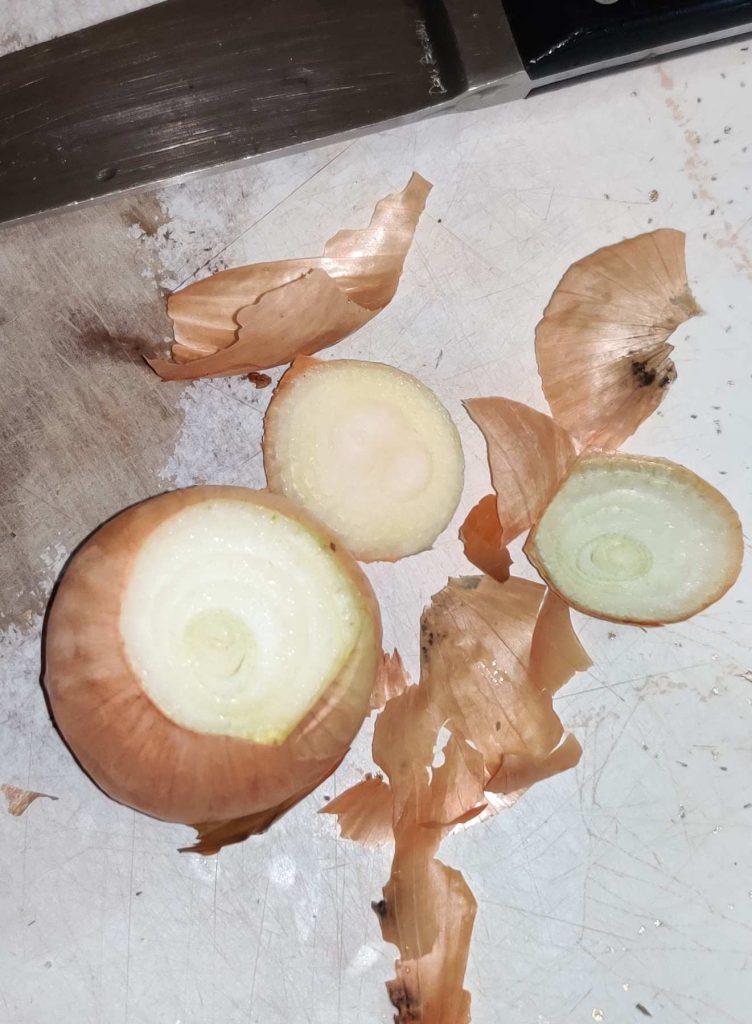
The onions were cut in half:
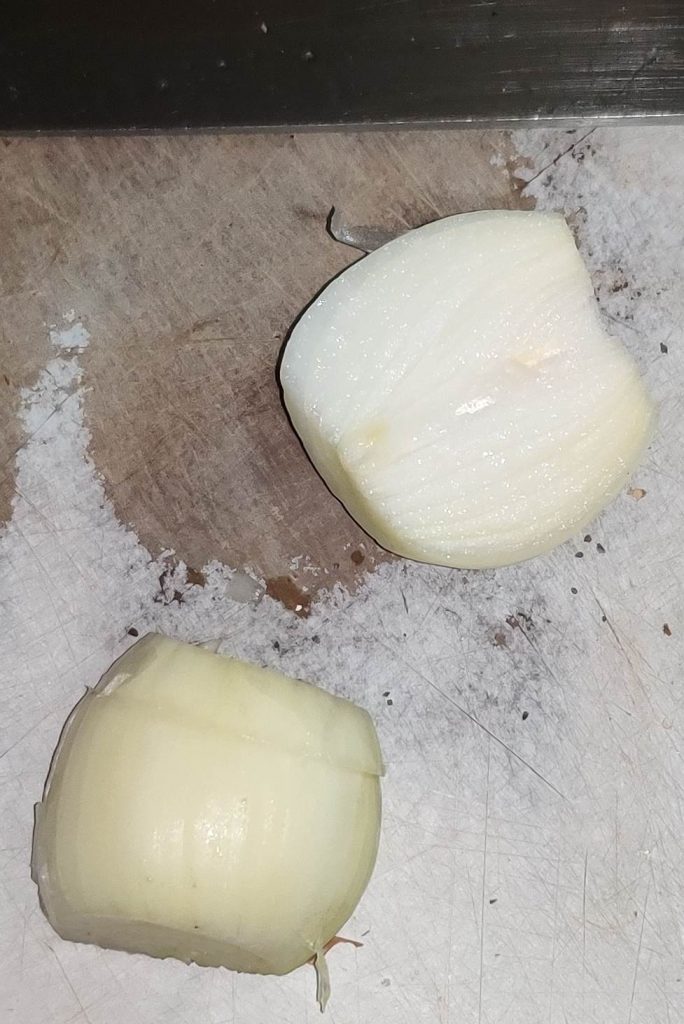
The onion halves were sliced into half-coin shapes:
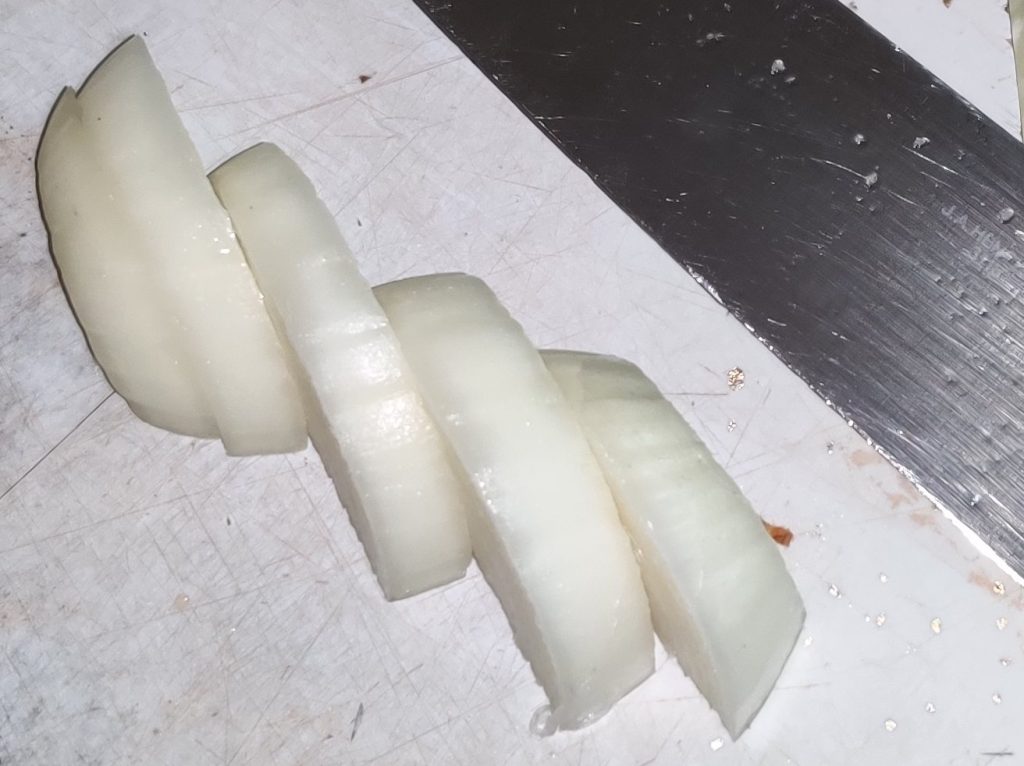
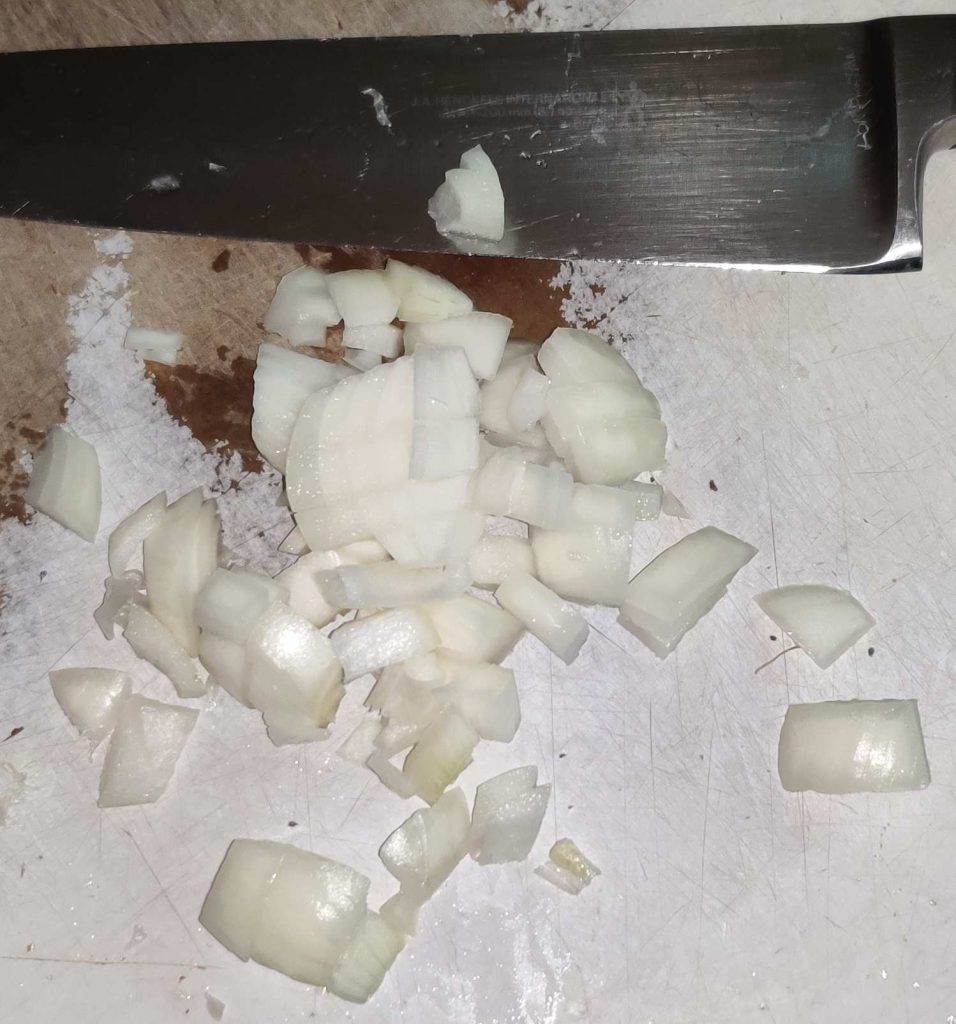
The onions were coarsely chopped:
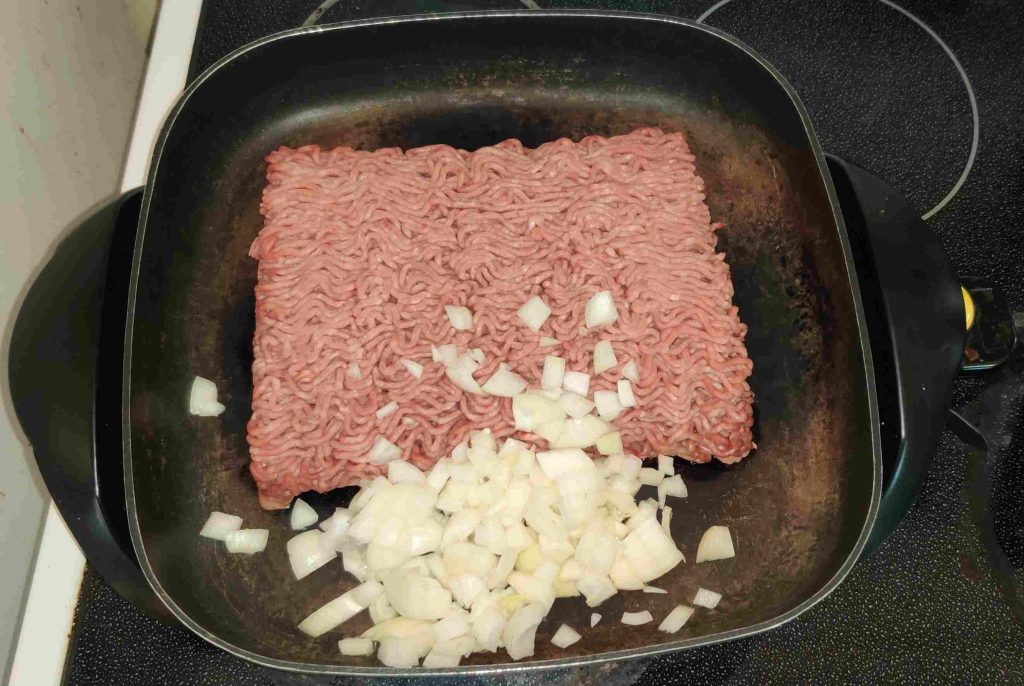
The ground beef and the onions were placed in the electric frypan:
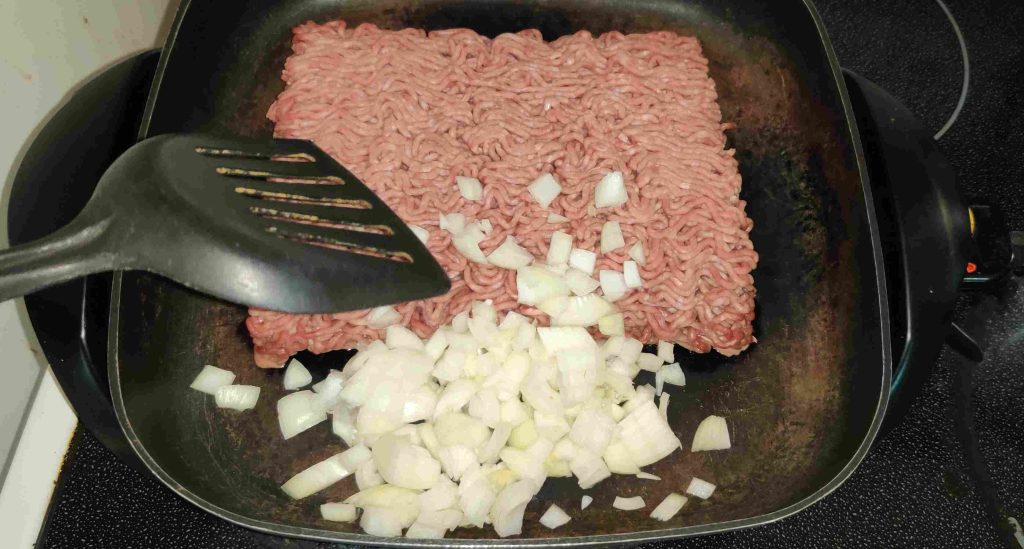
A spatula / egg flipper was taken out, and the electric frypan turned on:
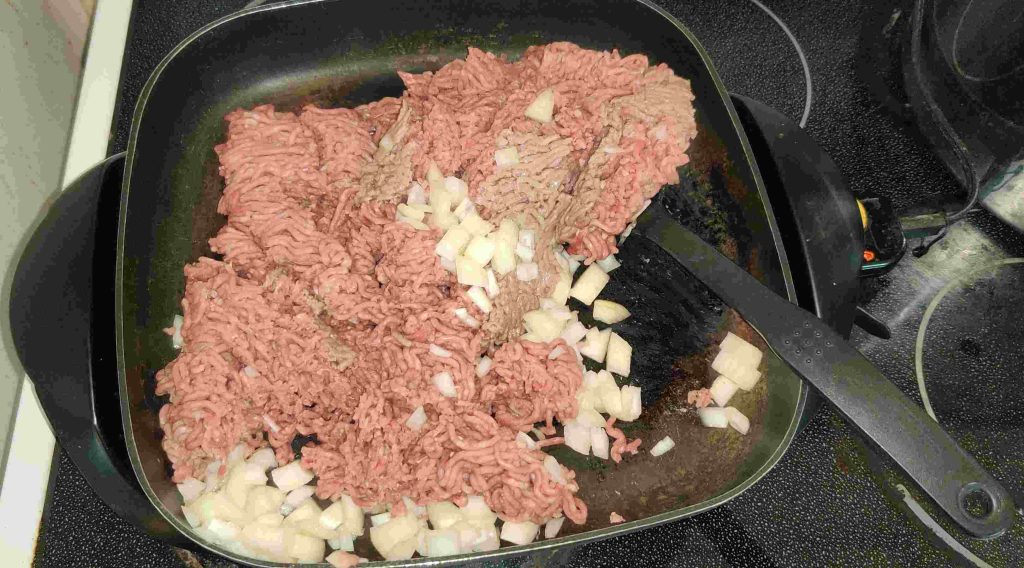
As the ground beef and the onions were cooking, I started breaking up the ground beef, and turning the mixture over:
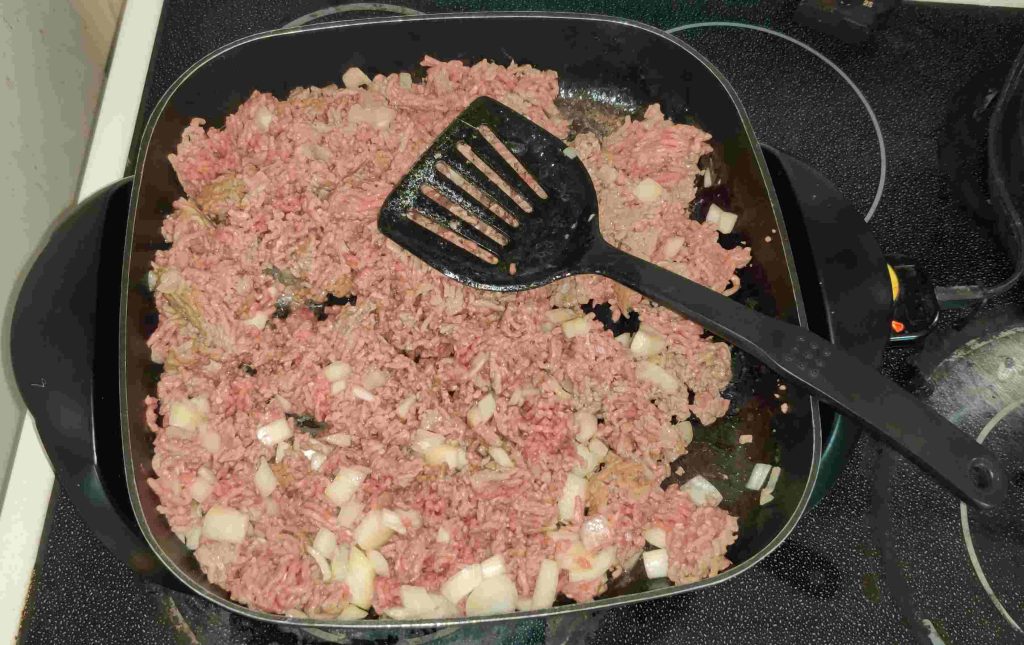
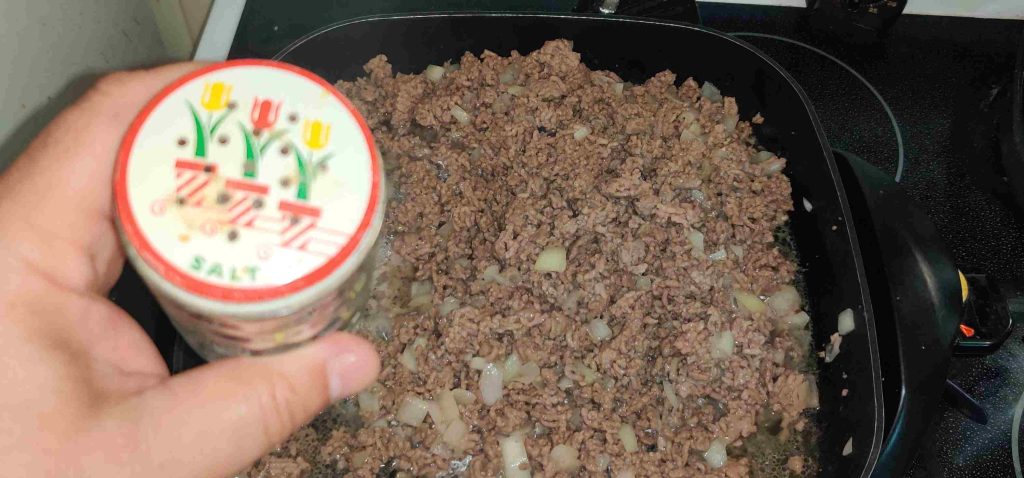
While the ground beef and onion mixture was cooking, I added some salt:
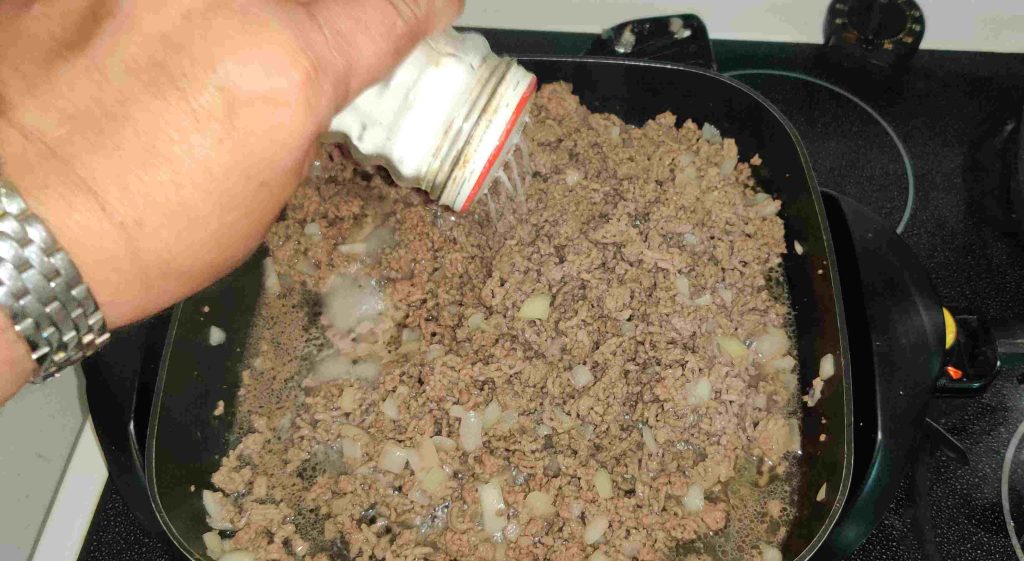
While the ground beef and onion mixture was cooking, I kept on breaking up the pieces of ground beef.
Once the ground beef and onion mixture was cooked …
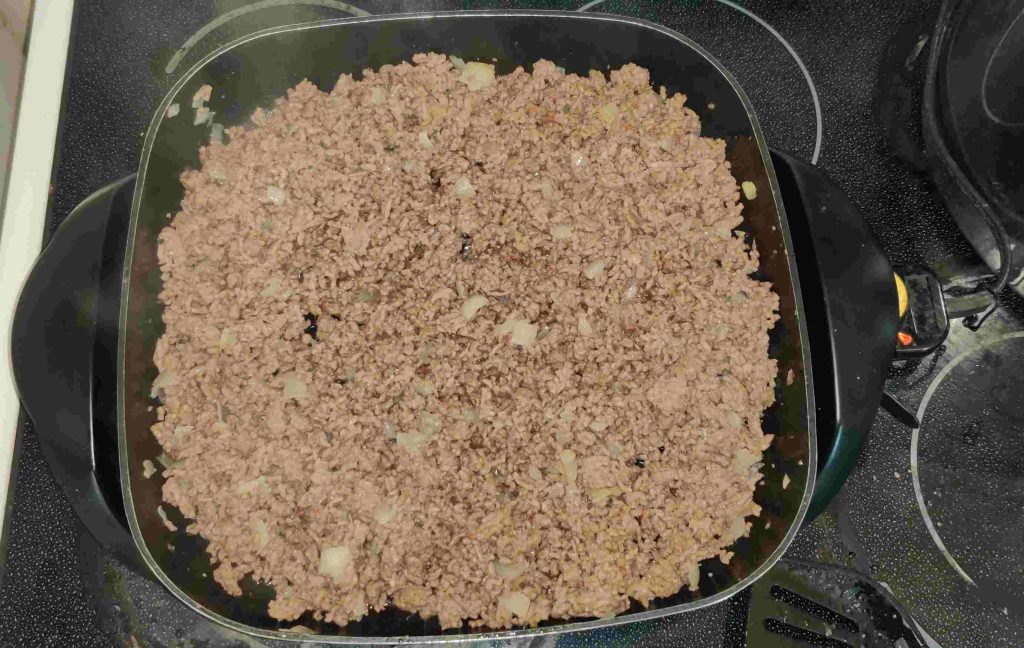
… I separated the ground beef and onion mixture in two, for when I’d be mounting the lasagnes:
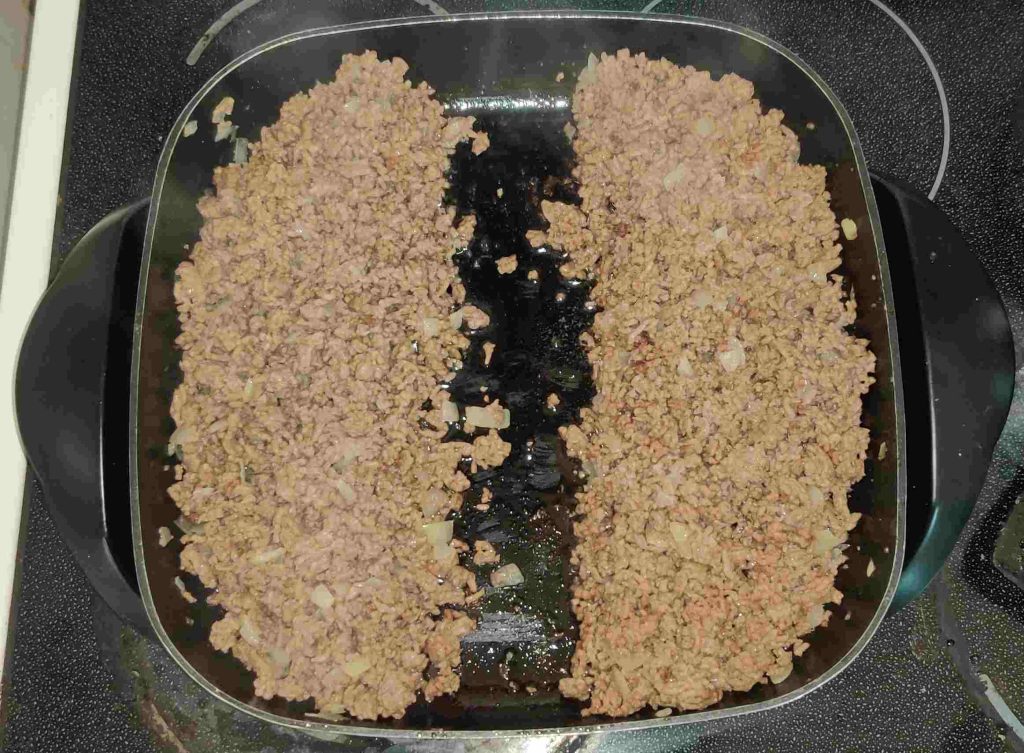
The frypan containing the cooked ground beef and onion mixture was transferred to the nearby counter where I was going to start mounting the lasagnes:
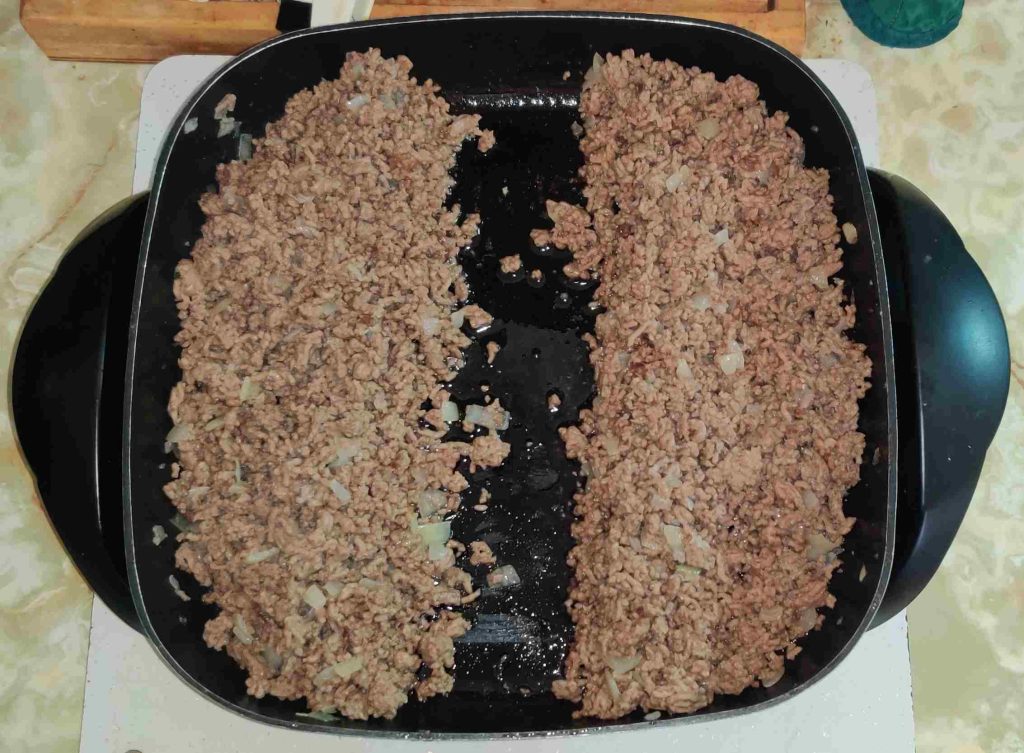
Since I had decided to make two lasagnes of the size I was accustomed to making, two baking dishes were taken out:
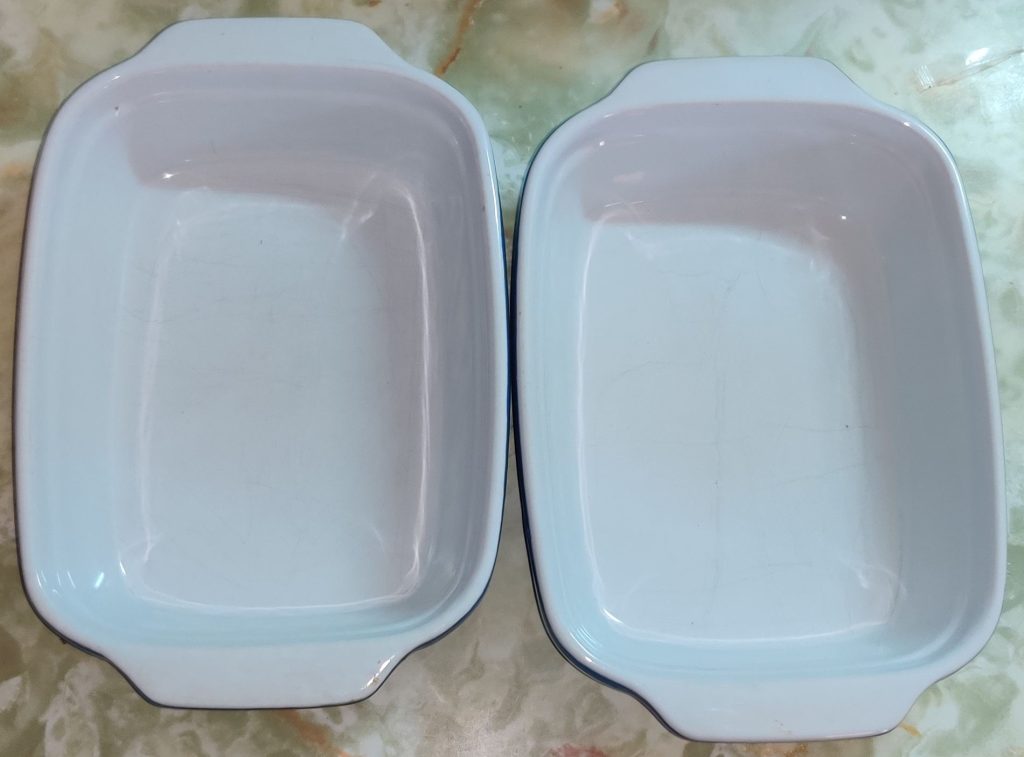
A serving spoon was taken out to start transferring the cooked ground beef and onion mixture to the first baking pan:
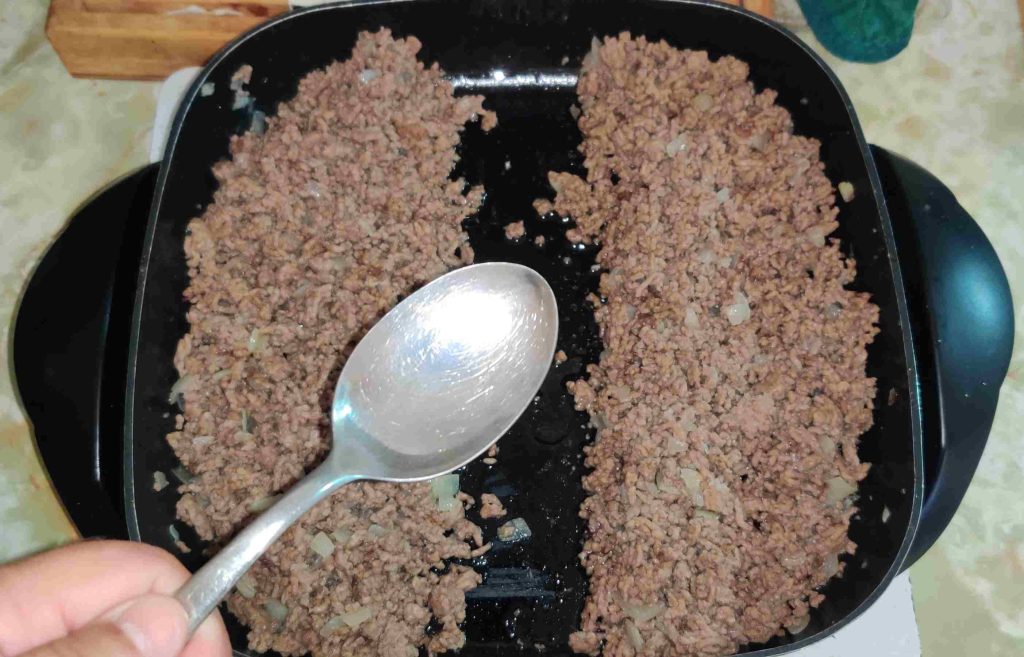
Cooked ground beef and onion mixture was picked up with the spoon:
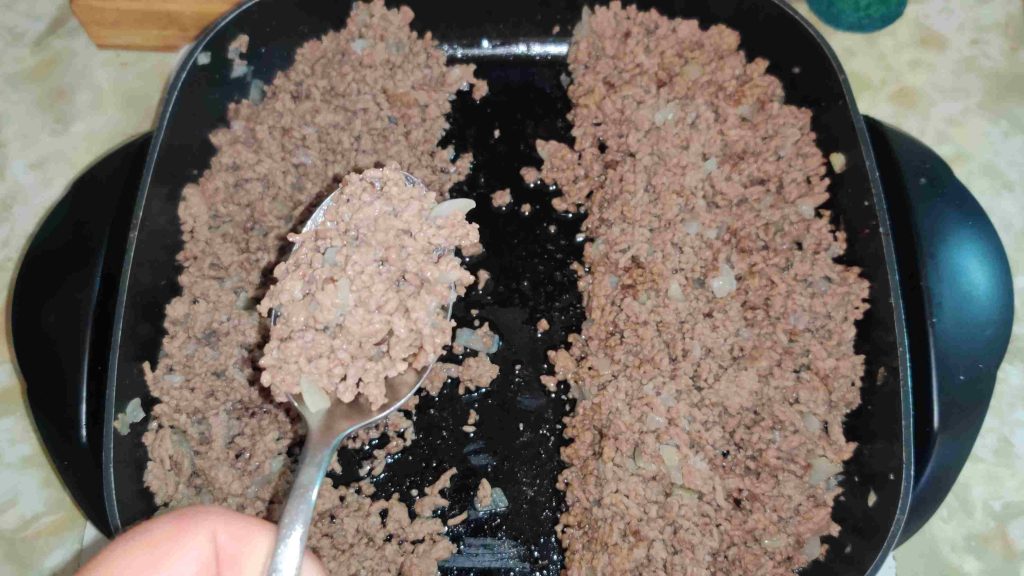
The cooked ground beef and onion mixture was transferred to the first baking pan:
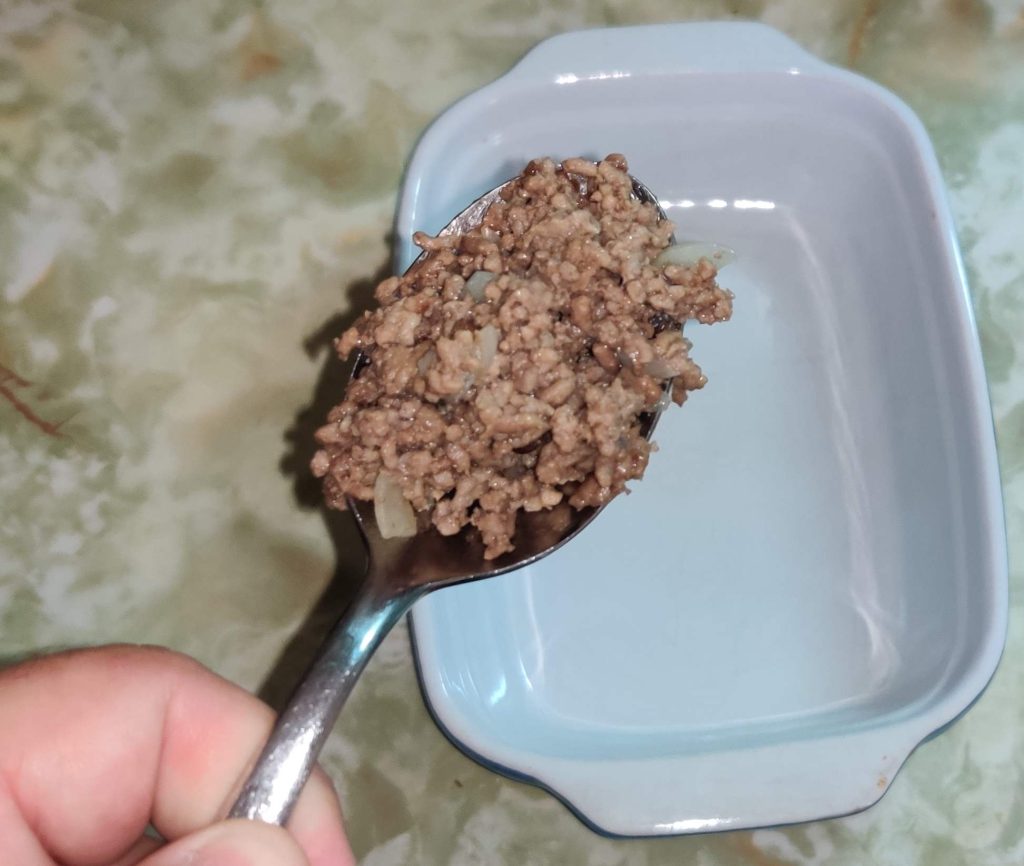
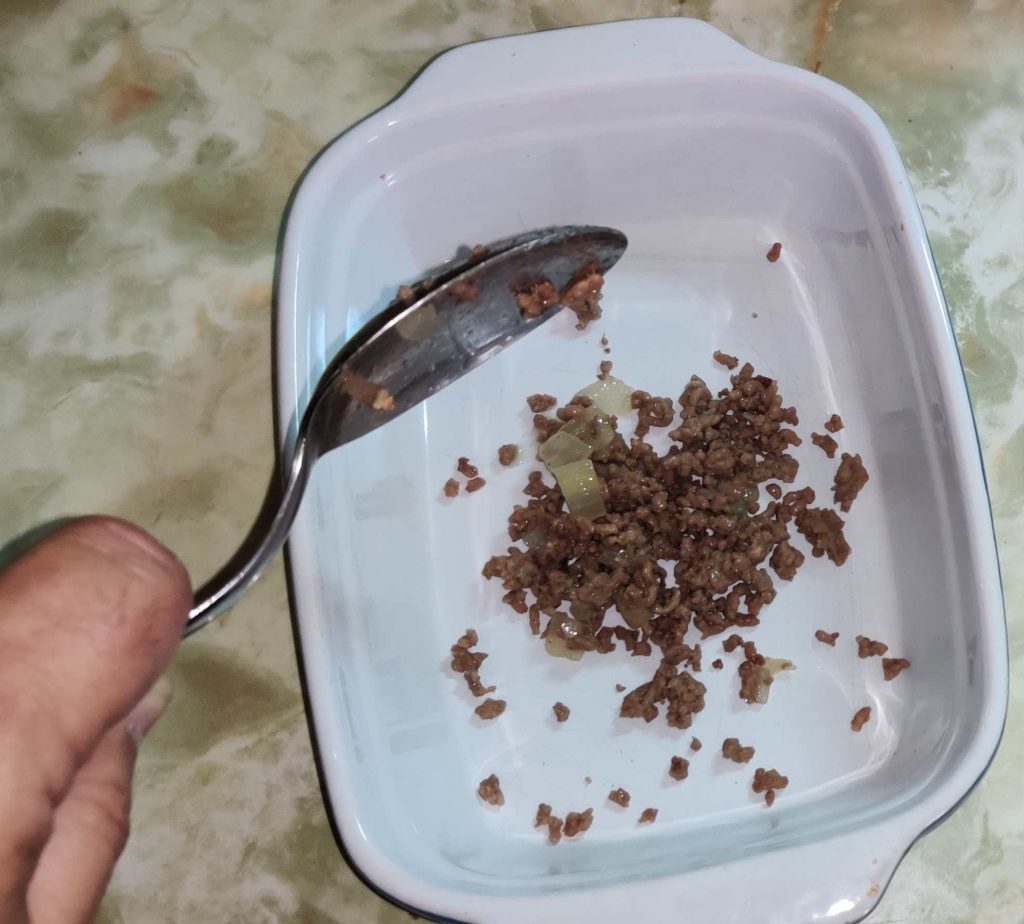
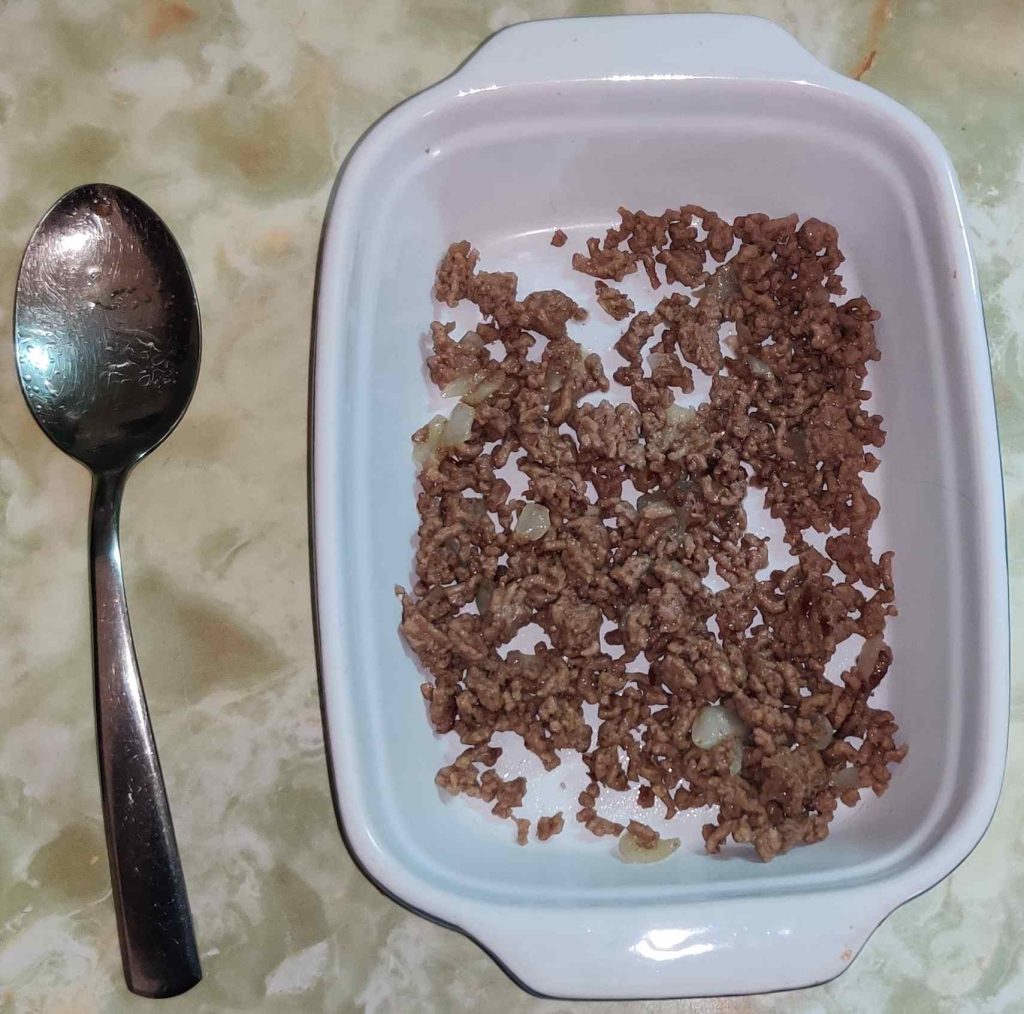
The cooked ground beef and onion mixture was spread evenly over the surface of the bottom of the baking pan:
A jar of commercial tomato sauce was taken out:
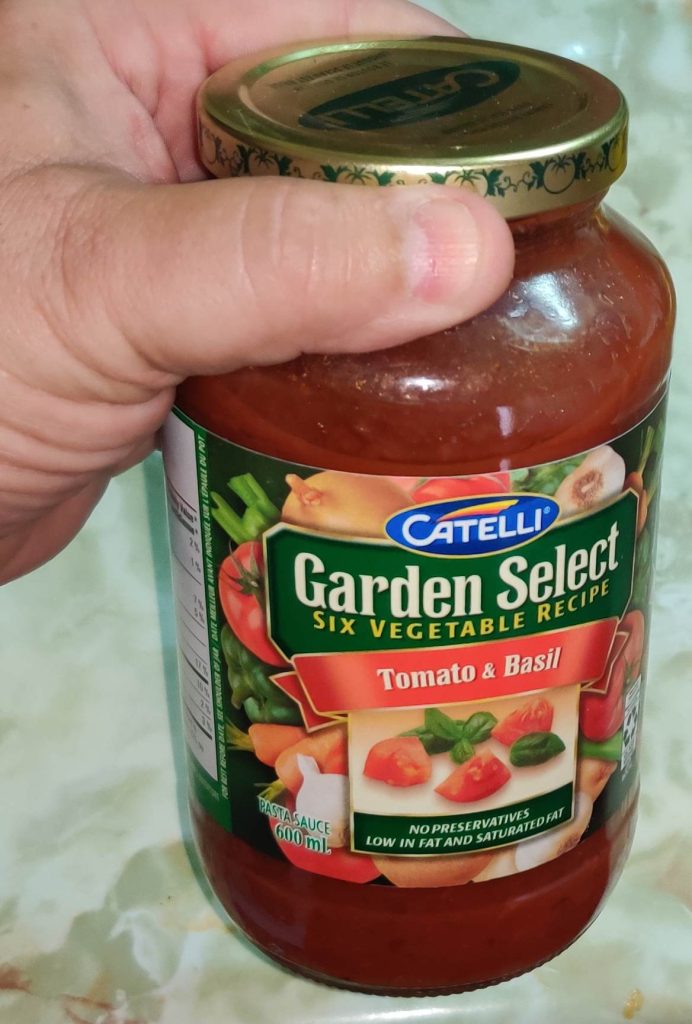
The jar of tomato sauce was opened:
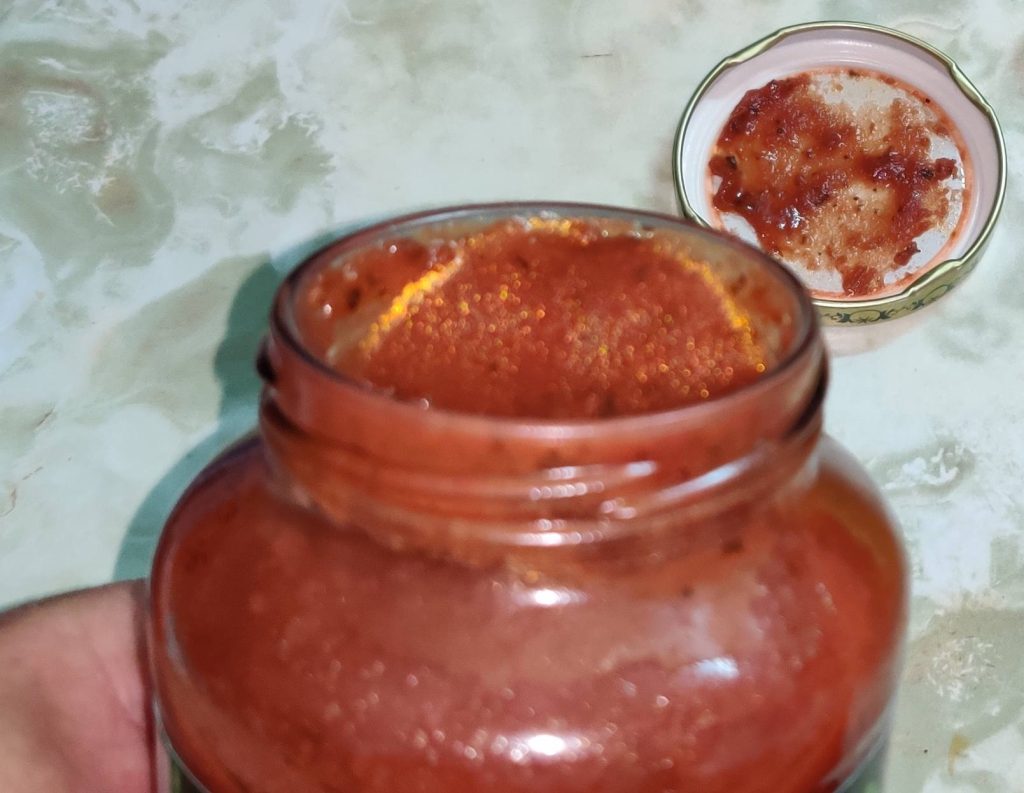
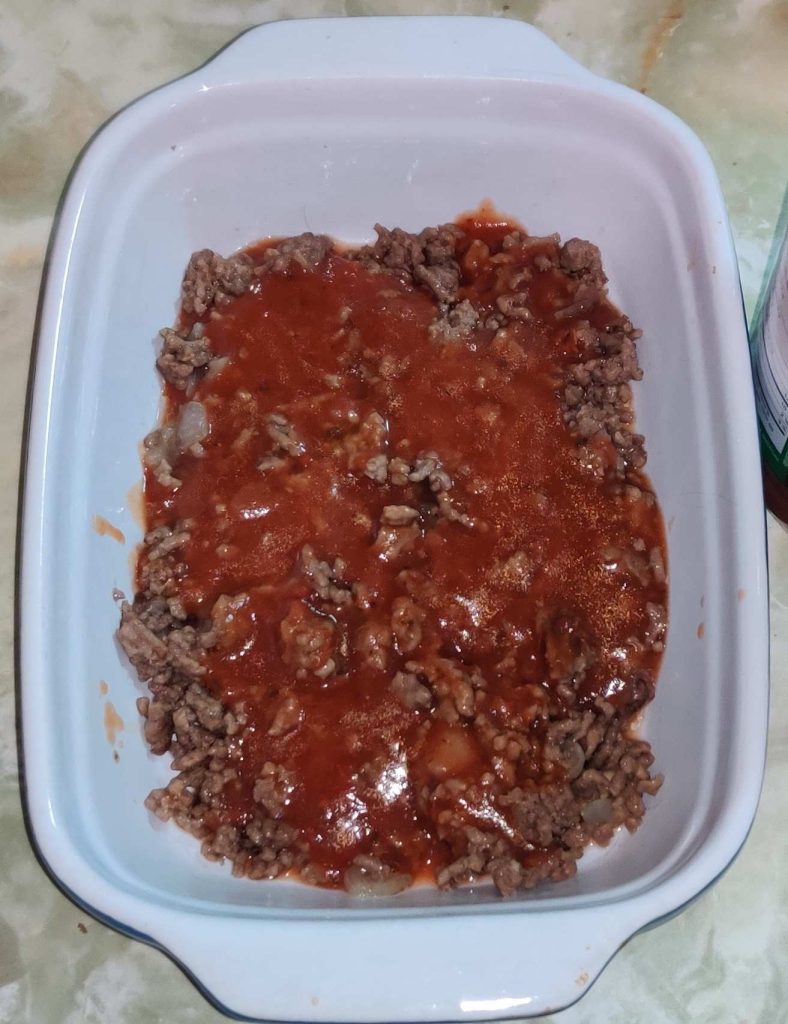
… and a portion of the tomato sauce from the jar was spread over the cooked ground beef and onion mixture:
A box of oven-ready lasagne sheets was taken out …
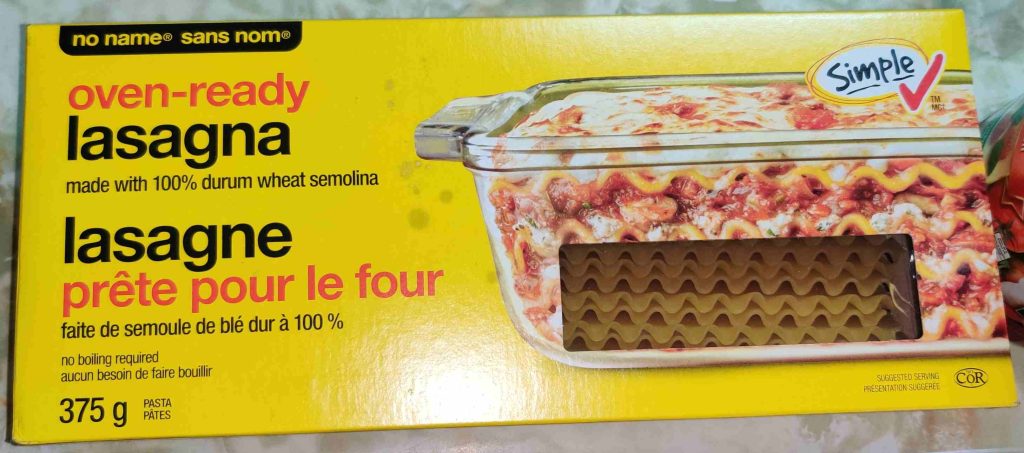
… and the box was opened:
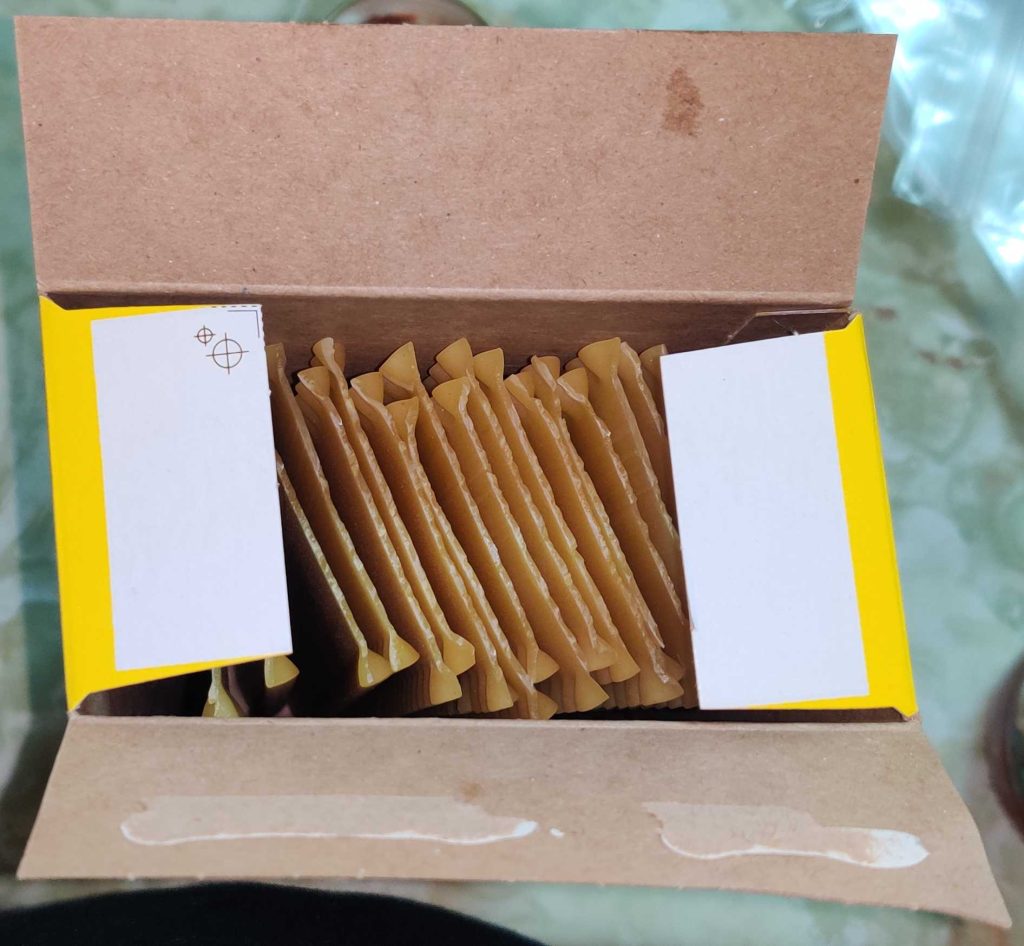
A sheet of lasagne was taken out of the box:
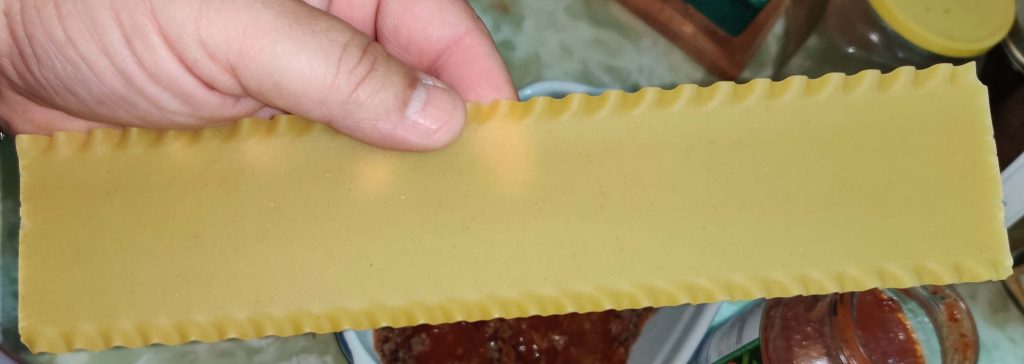
… and it was gently broken to size in order to fit in my baking pan:
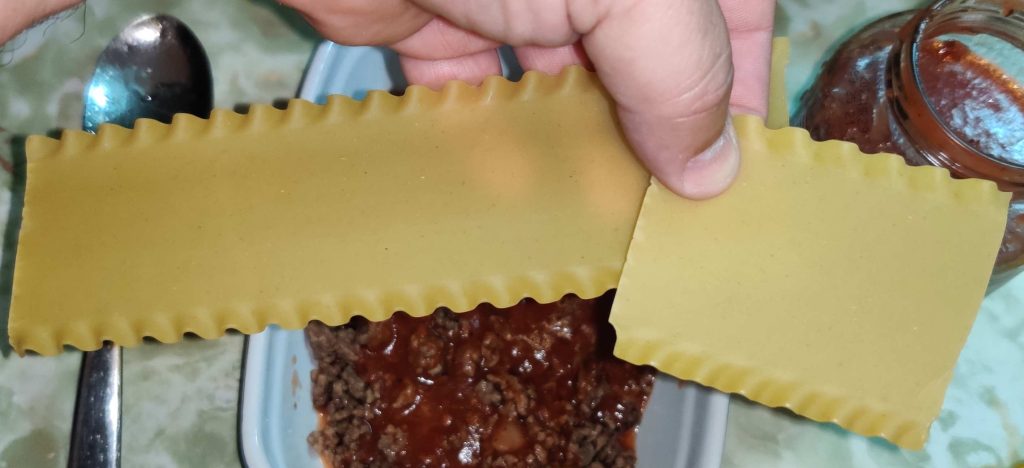
I began layering the lasagne sheets in the baking pan on top of the cooked ground meat and onion mixture:
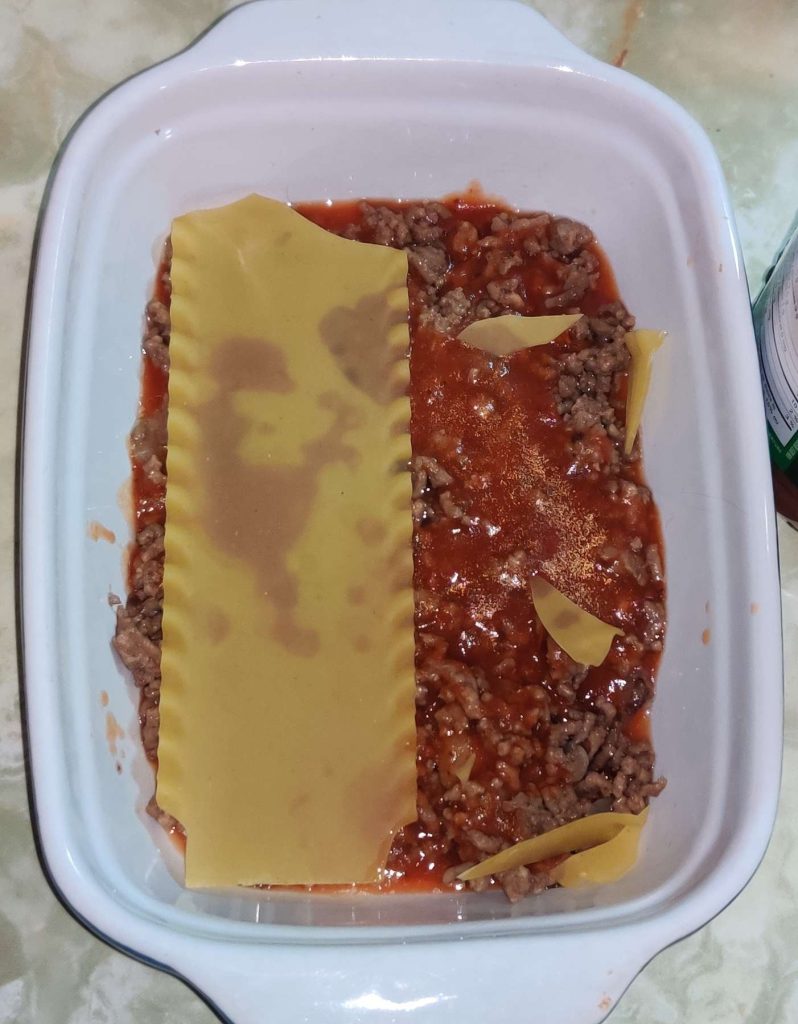
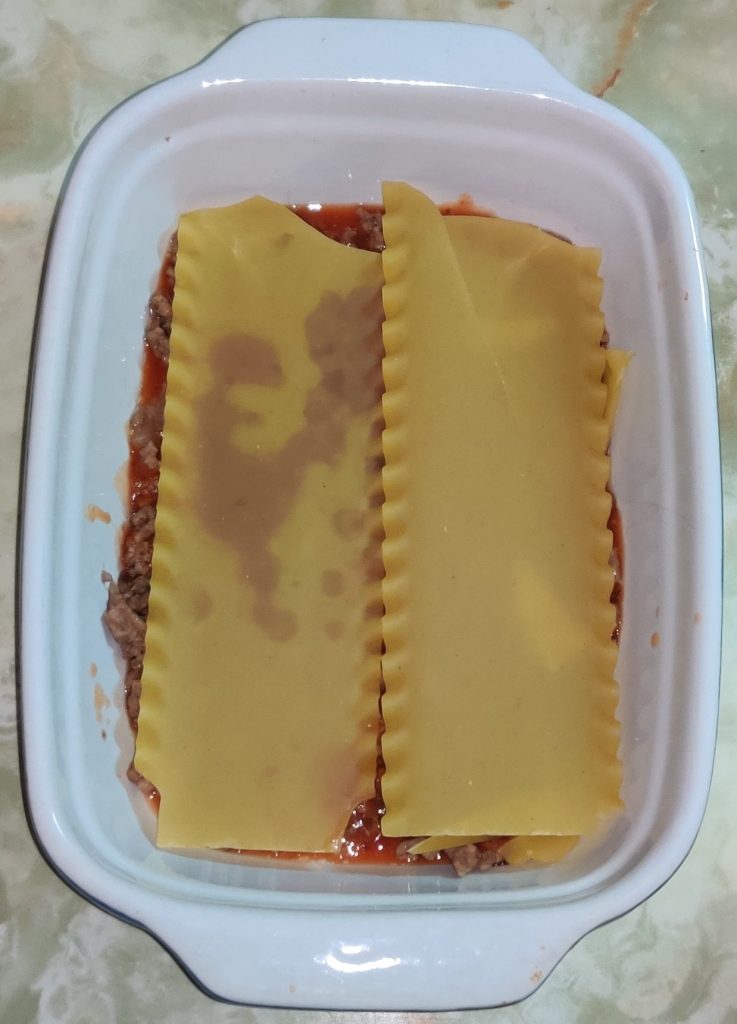
I began to repeat the layering with the cooked ground beef and onion mixture …
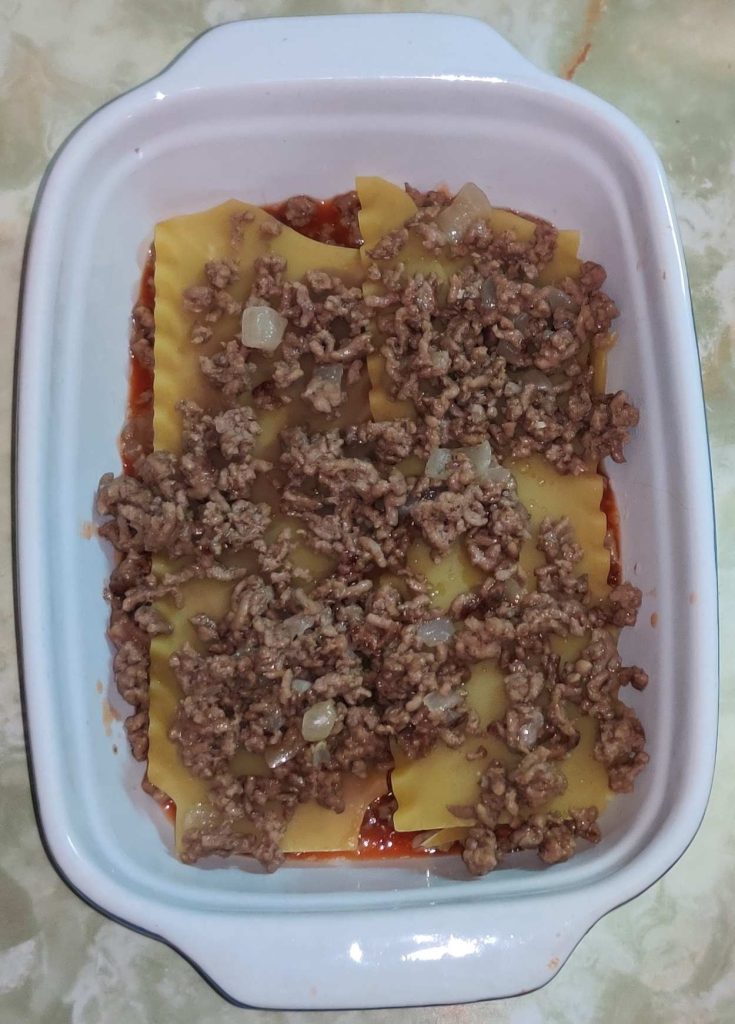
… until I had four layers of lasagne sheets, and five layers of cooked ground beef and onion mixture and tomato sauce:
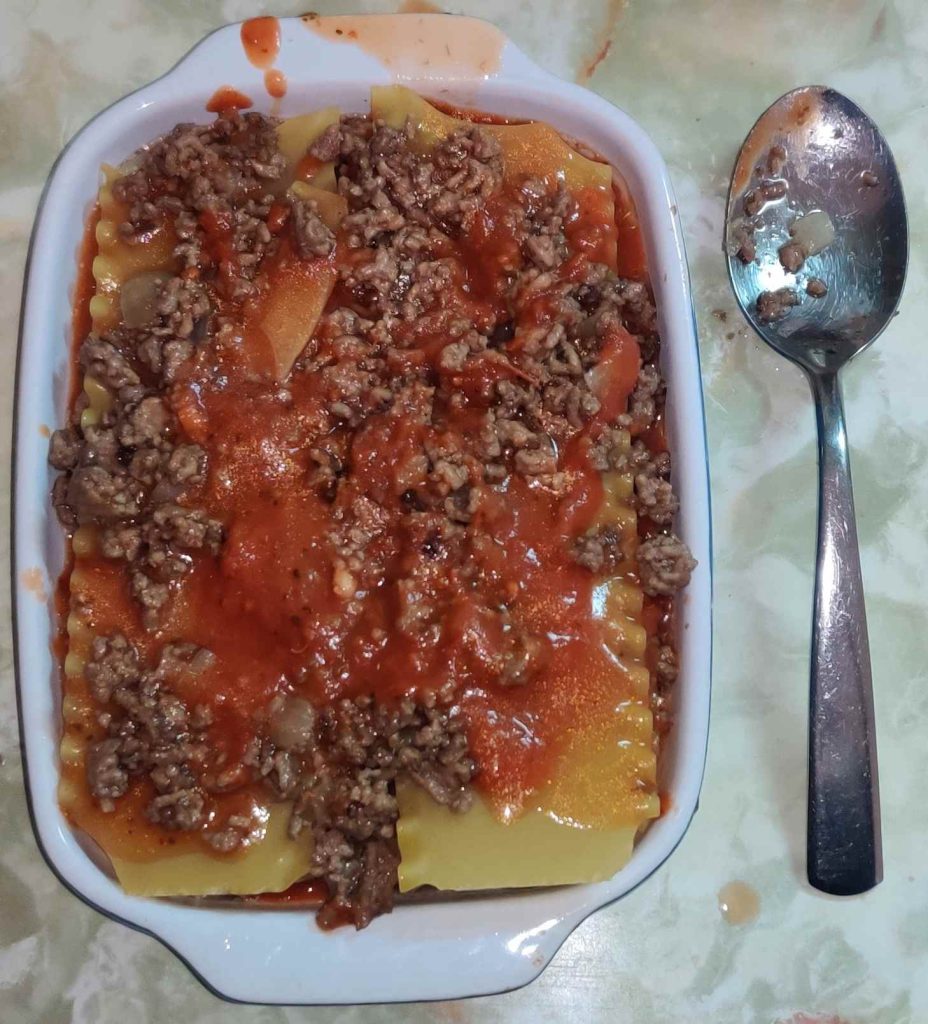
I should note that despite the lack of a photo, some of the layers of lasagne sheets were composed of varying amounts of the broken off pieces of lasagne sheets.
At this point, as planned, half of the cooked ground beef and onion mixture had been used up, and half remained:
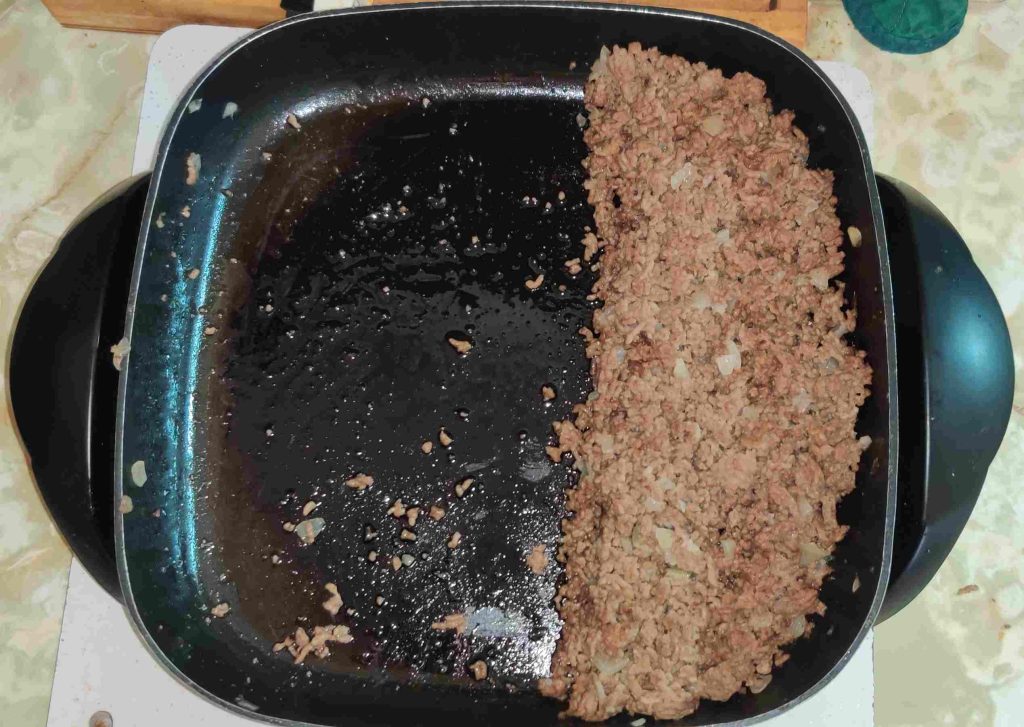
Because I had planned on making two small lasagnes, I continued by taking out the second baking pan, and starting the layering process again:
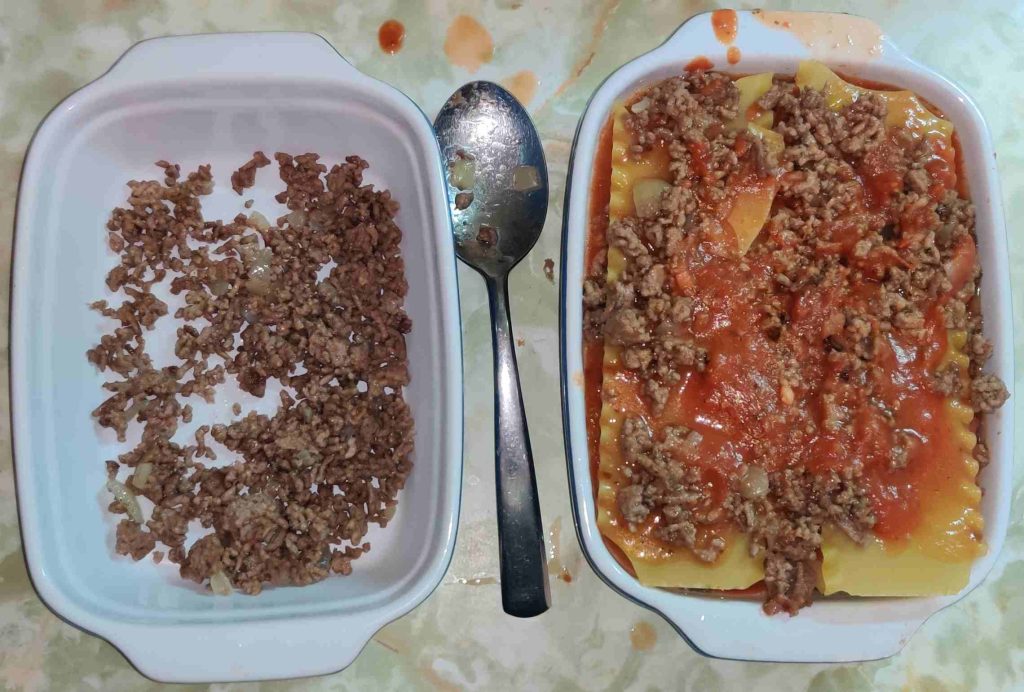
I continued with the layering of the second lasagne in the second baking pan — on the left — until I also had four layers of lasagne sheets and five layers of cooked ground beef and onion mixture and tomato sauce (yes, sometimes sauce distribution was somewhat uneven amongst the layers — although each lasagne contained a full jar of 600ml of sauce):
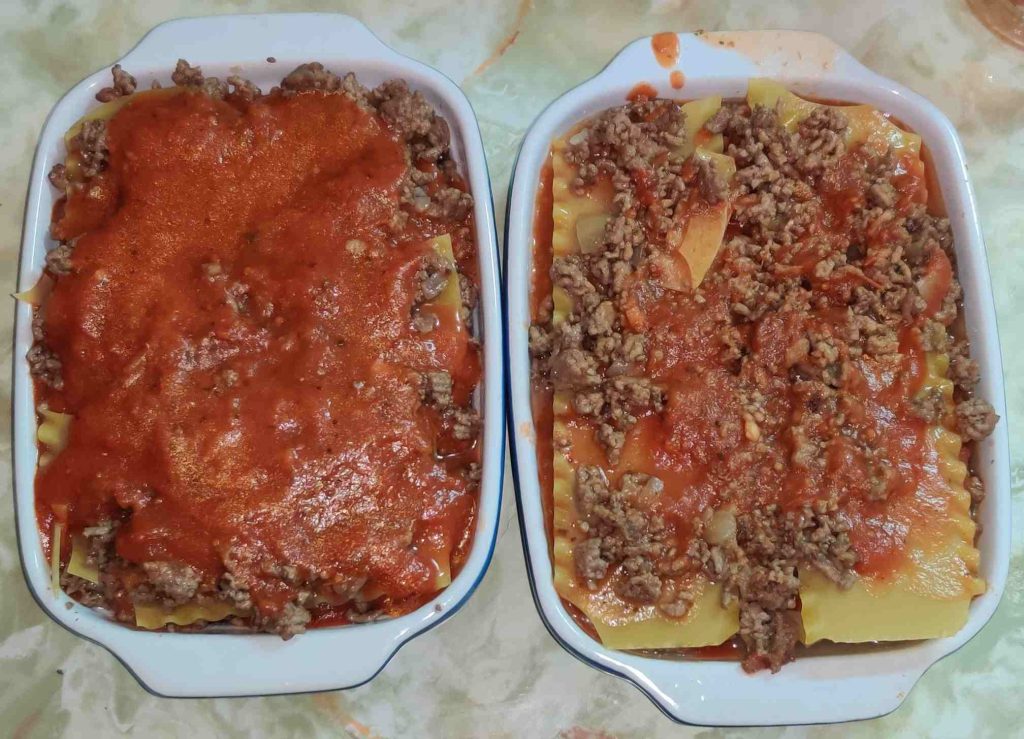
Again, at this point and as planned, the other half of the cooked ground beef and onion mixture had been used up:
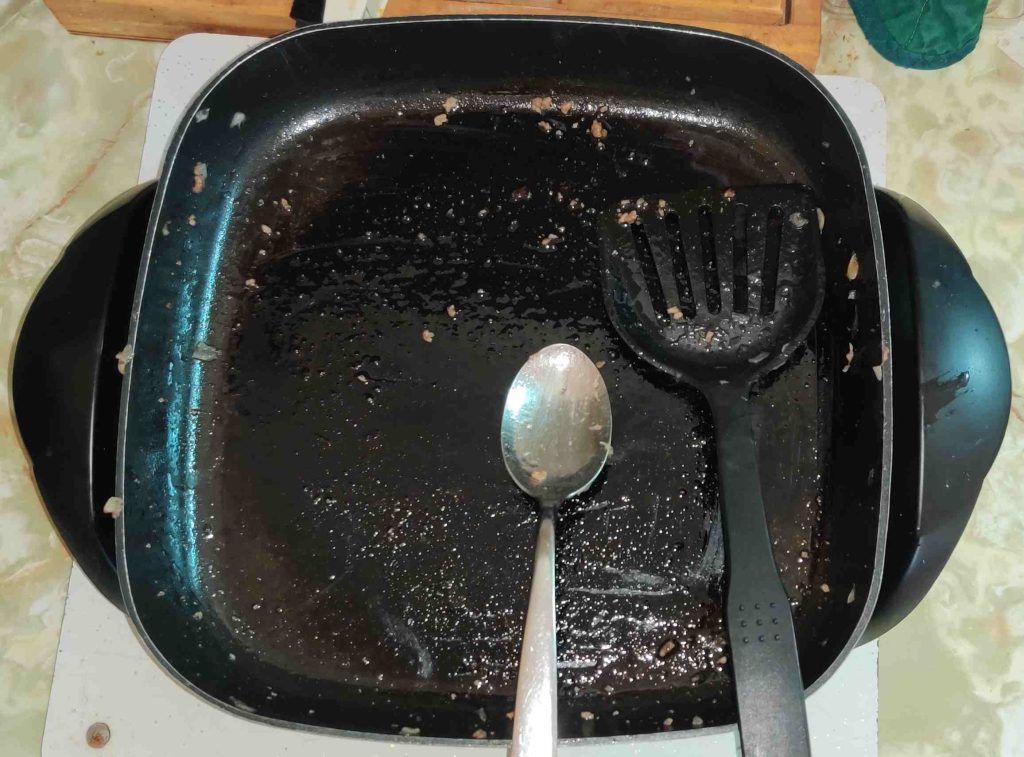
The frypan was brought over to the sink for washing later.
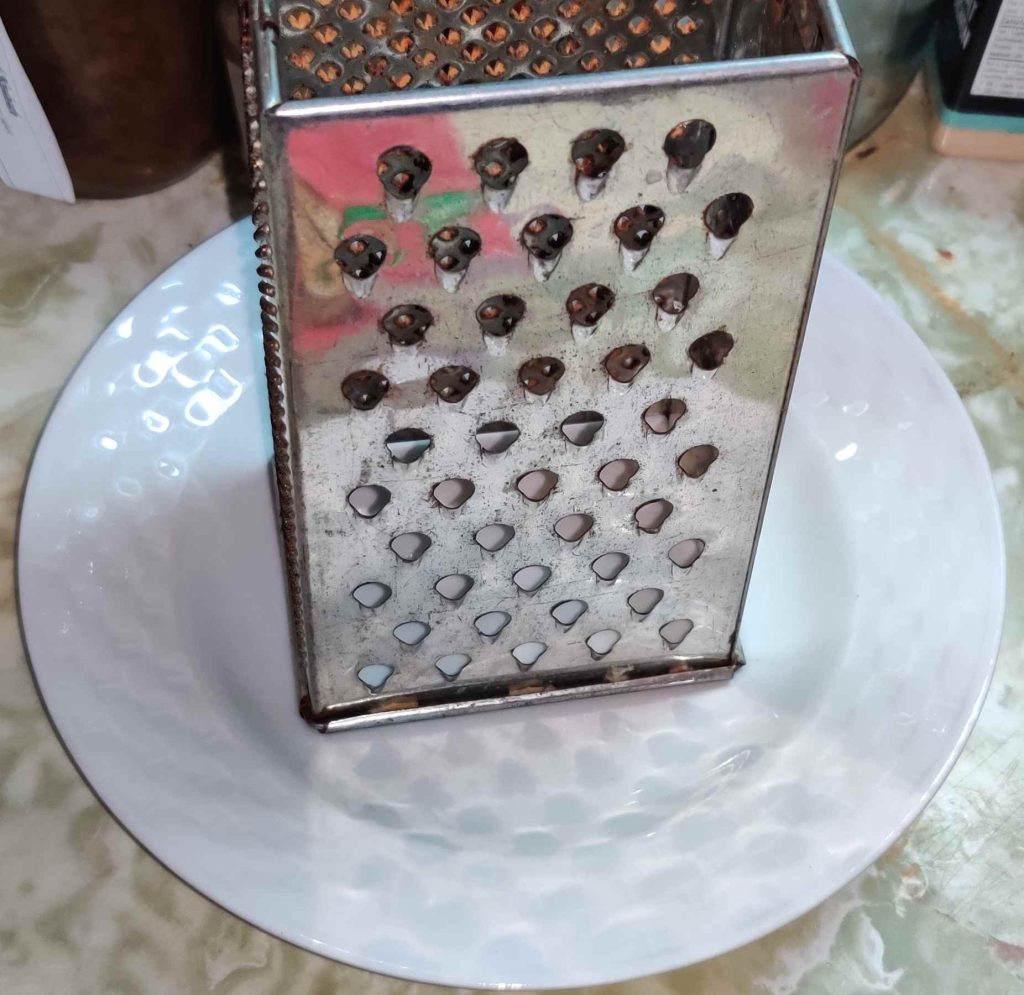
A box grater and a large soup bowl were taken out:
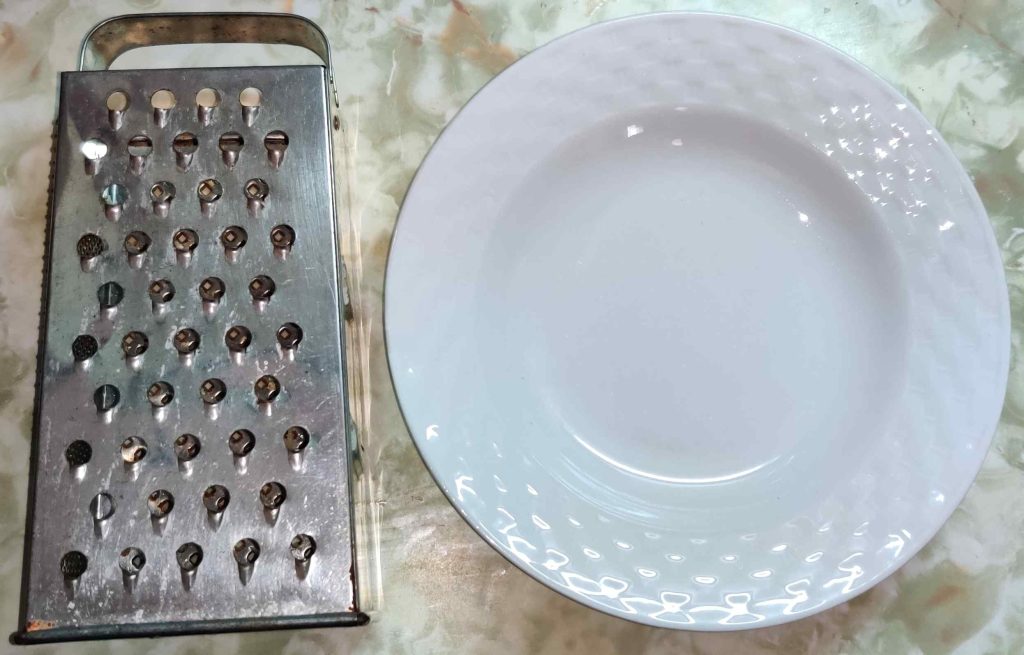
… and the box grater was placed in the soup bowl:
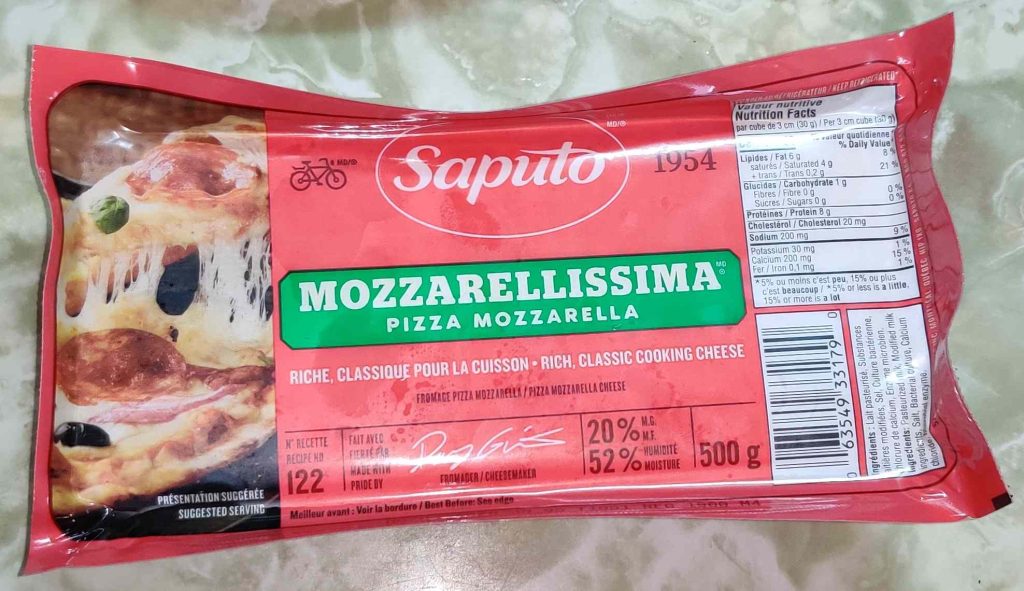
A block of mozzarella cheese was taken out:
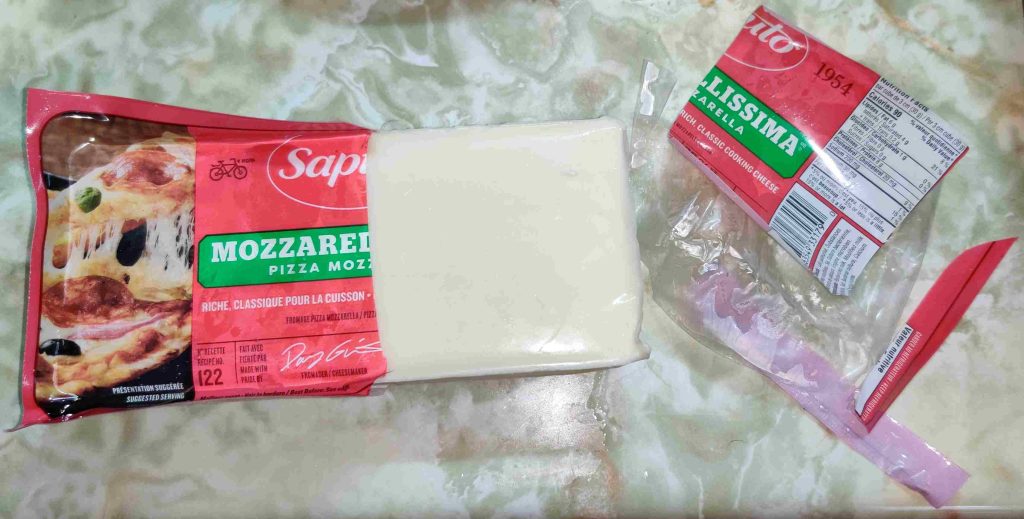
The package was partly removed to facilitate grating about 200 grams of cheese:
Approximately 200g of cheese, estimated visually as about two fifths of the 500g block, were grated off of the block of mozzarella cheese:
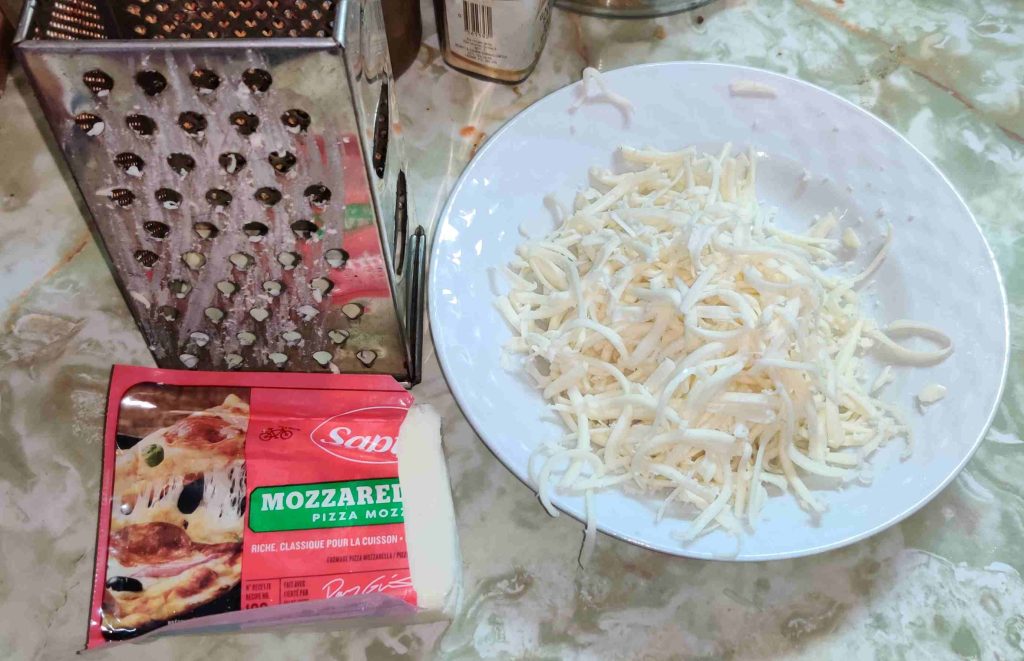
The bowl of cheese was brought over to the two baking pans of lasagnes:
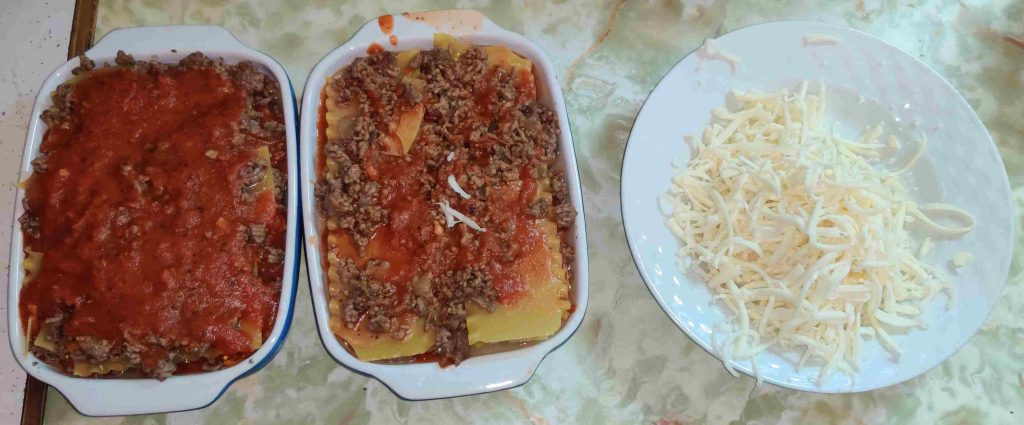
About half of the cheese, approximately 100g, was transferred to the top of a lasagne:
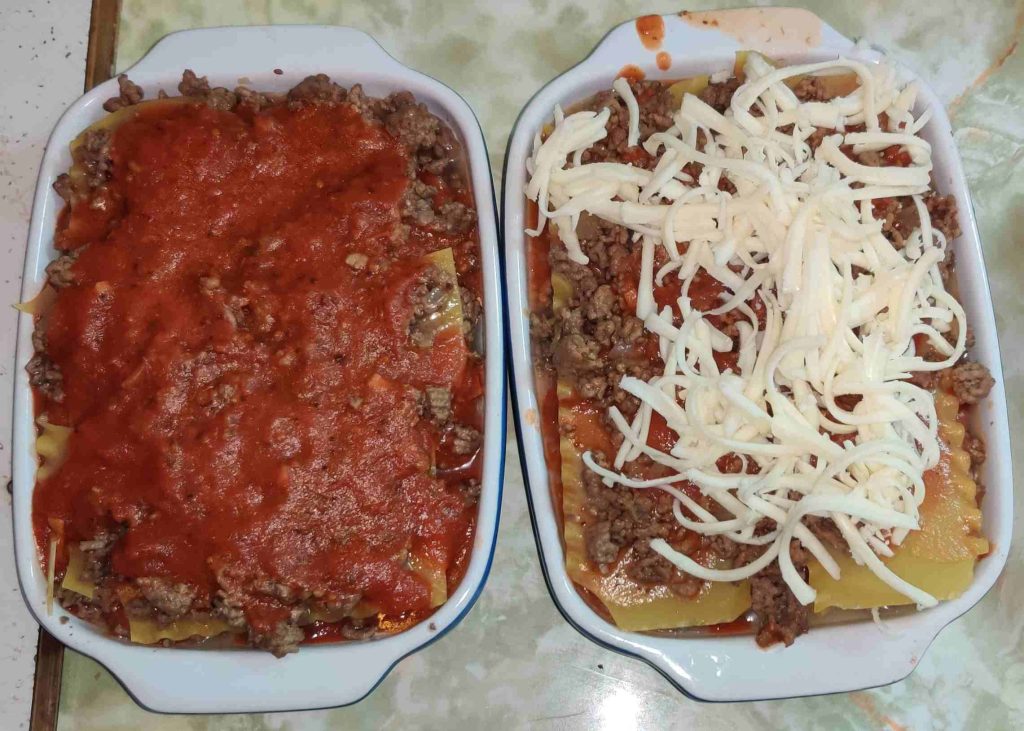
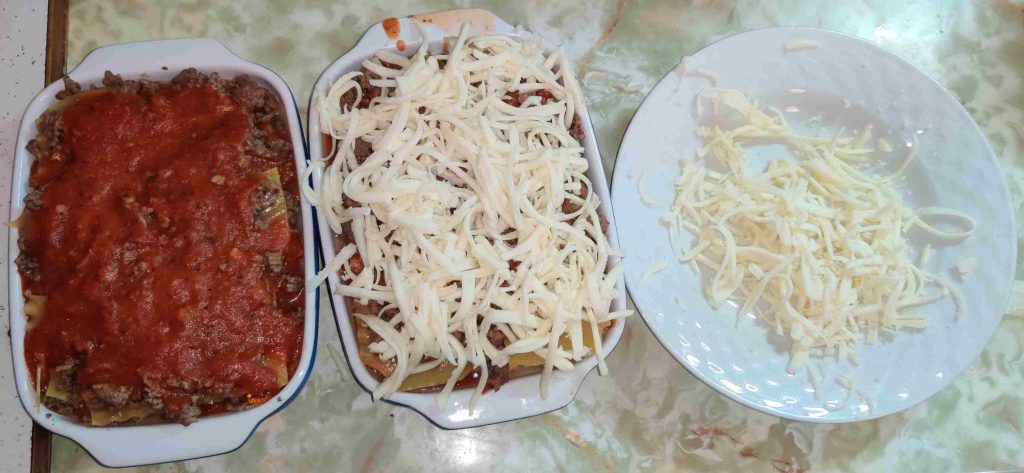
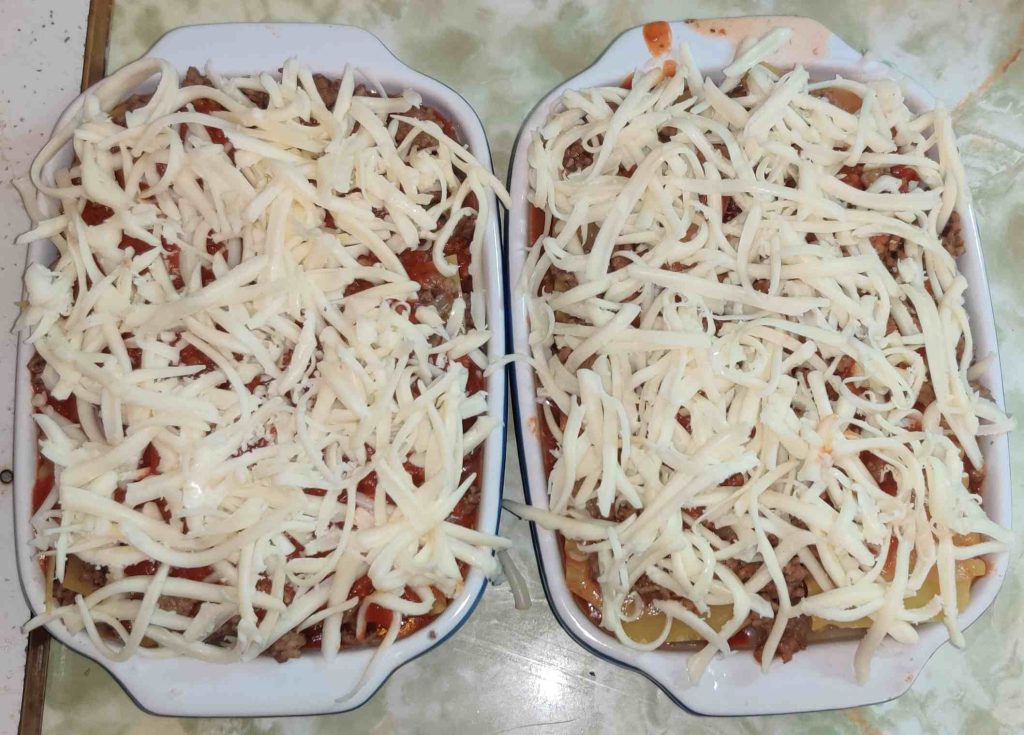
The rest of the cheese was transferred to the other lasagne, ensuring that each unit received approximately the same amount of cheese:
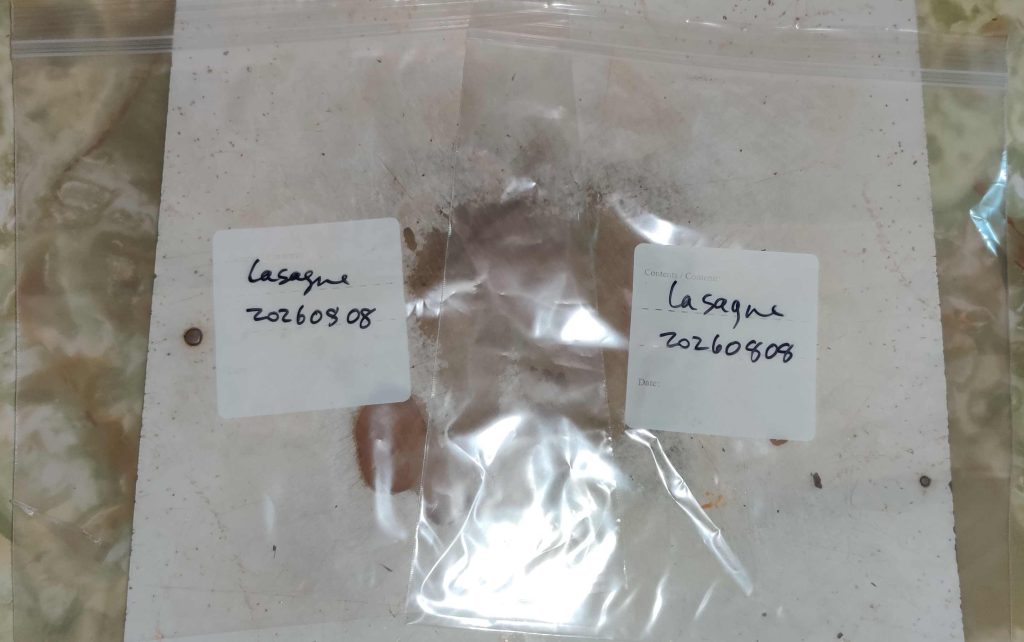
Two freezer bags were taken out, and identified and dated:
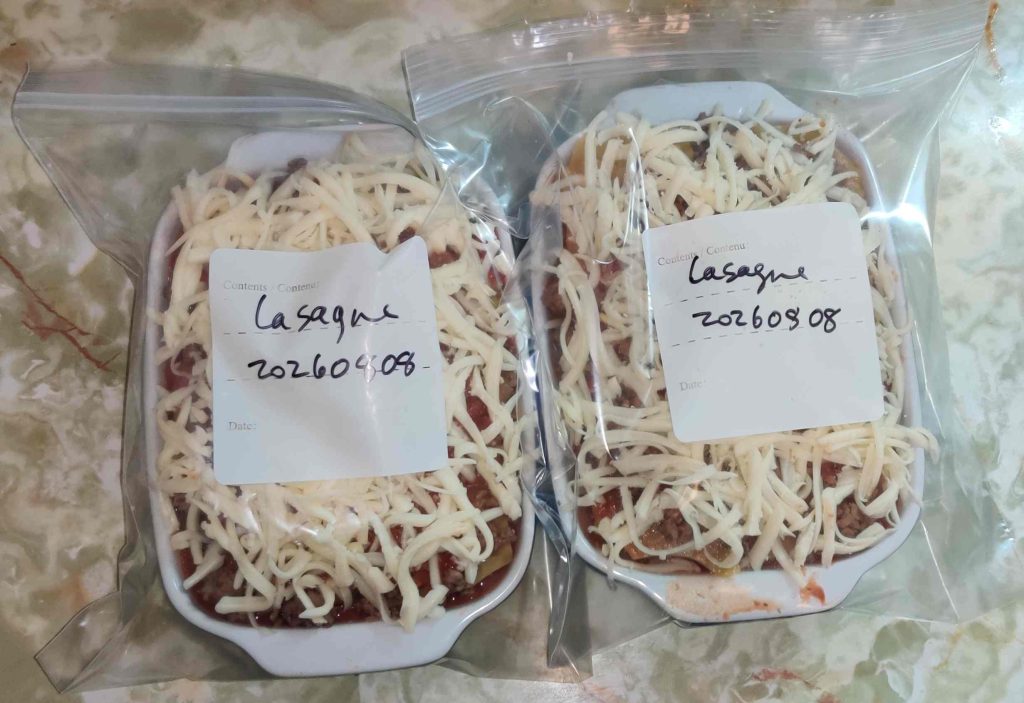
The lasagnes were individually placed in the bags:
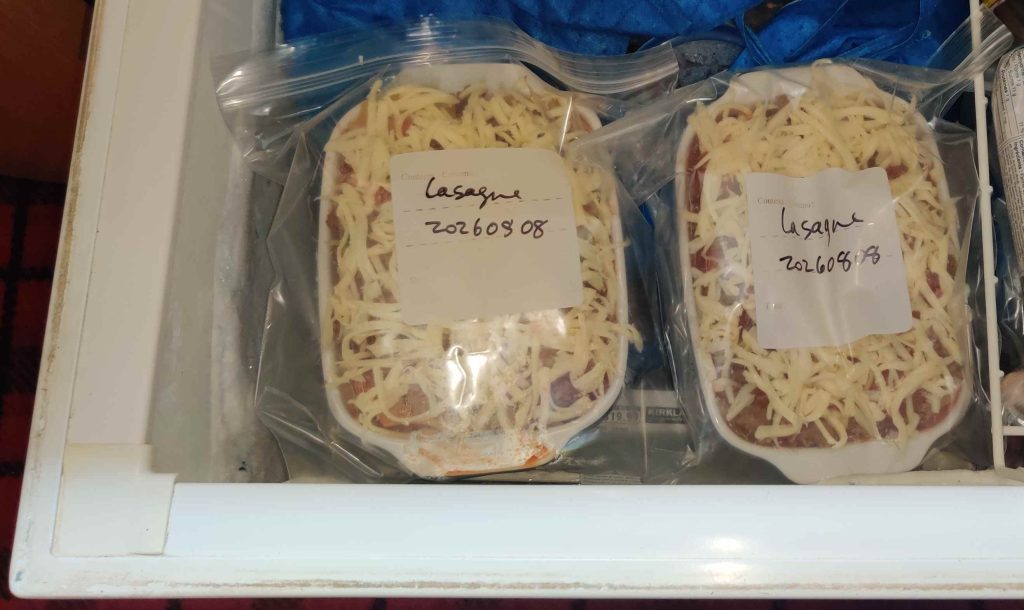
The lasagnes were then placed in my deep freezer for when I’ll want to take them out and bake them:
Are they tasty? Of course!
A little postscript: Canada — where I live, in the province of Québec — has this funny equilibrium about the spelling of a bunch of words due to simultaneous historical and current day British English and American English influences, as well as our own Canadian conventions (and even regional ones too!) In the case of this post, I use the spelling of “lasagne” due to British influence, as well as French influence, since Québec is a French-speaking region in Canada, instead of “lasagna”, the American spelling. Hence, please don’t write in telling me that I spelled “lasagne” wrong throughout this post. 🙂 (And, we also have lots of fun with measuring systems, too.)